The Complete Guide to Garden Fencing for Surrey Homes
Choosing new fencing involves more than picking a panel. Discover how to choose garden fencing for Surrey homes based on privacy, style, durability, planting, ground conditions and long-term use.
Garden fencing does much more than mark the edge of a property.
The right fence can improve privacy, create a stronger sense of security, frame a garden, support planting and help the whole outdoor space feel more considered. The wrong fence, on the other hand, can dominate the garden, look out of place with the property or fail when the ground and weather put it under pressure.
For Surrey homeowners, choosing fencing is often about balancing practical requirements with the appearance of the finished garden.
There are many different options available, from traditional closeboard and featheredge fencing to lap panels, trellis, slatted screens and more decorative styles. The best choice depends on the property, the garden, the location and how you intend to use the space.
Why Garden Fencing Matters
A boundary is one of the largest visual elements in many gardens, so it deserves to be considered as part of the overall design rather than treated as an afterthought.
Good fencing can help to:
Improve privacy from neighbouring properties
Define the boundary clearly
Add security and containment
Screen unattractive views
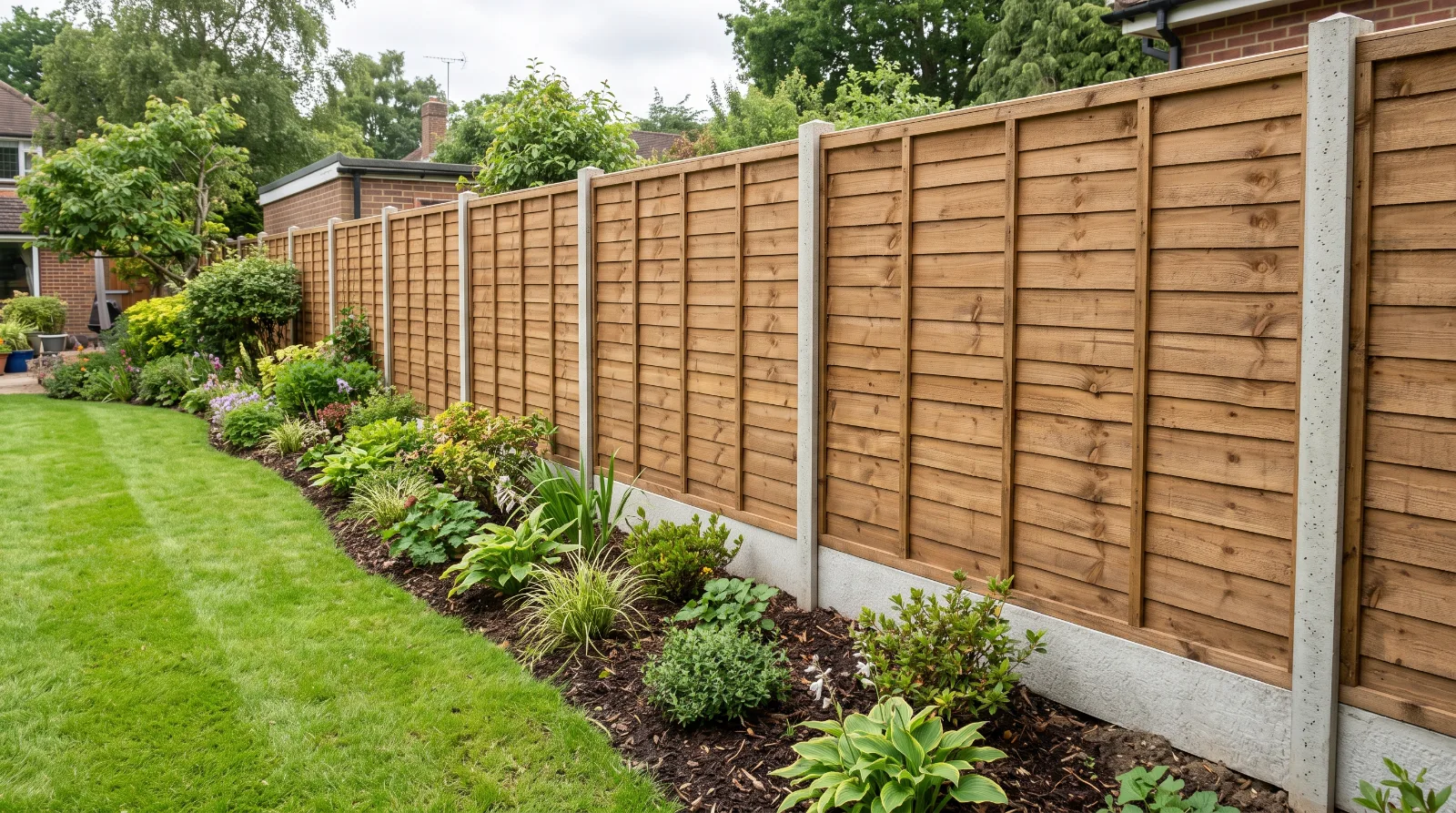
Create a backdrop for planting
Make a garden feel more enclosed
Provide support for climbing plants
Complement patios, paths and other landscaping
Improve the overall appearance of the garden
A fence does not necessarily need to be the main feature of the garden. In many projects, the best result comes from making the boundary feel integrated with everything around it.
Choosing the Right Type of Garden Fencing
Different fencing styles offer different levels of privacy, strength, appearance and flexibility.
Closeboard Fencing
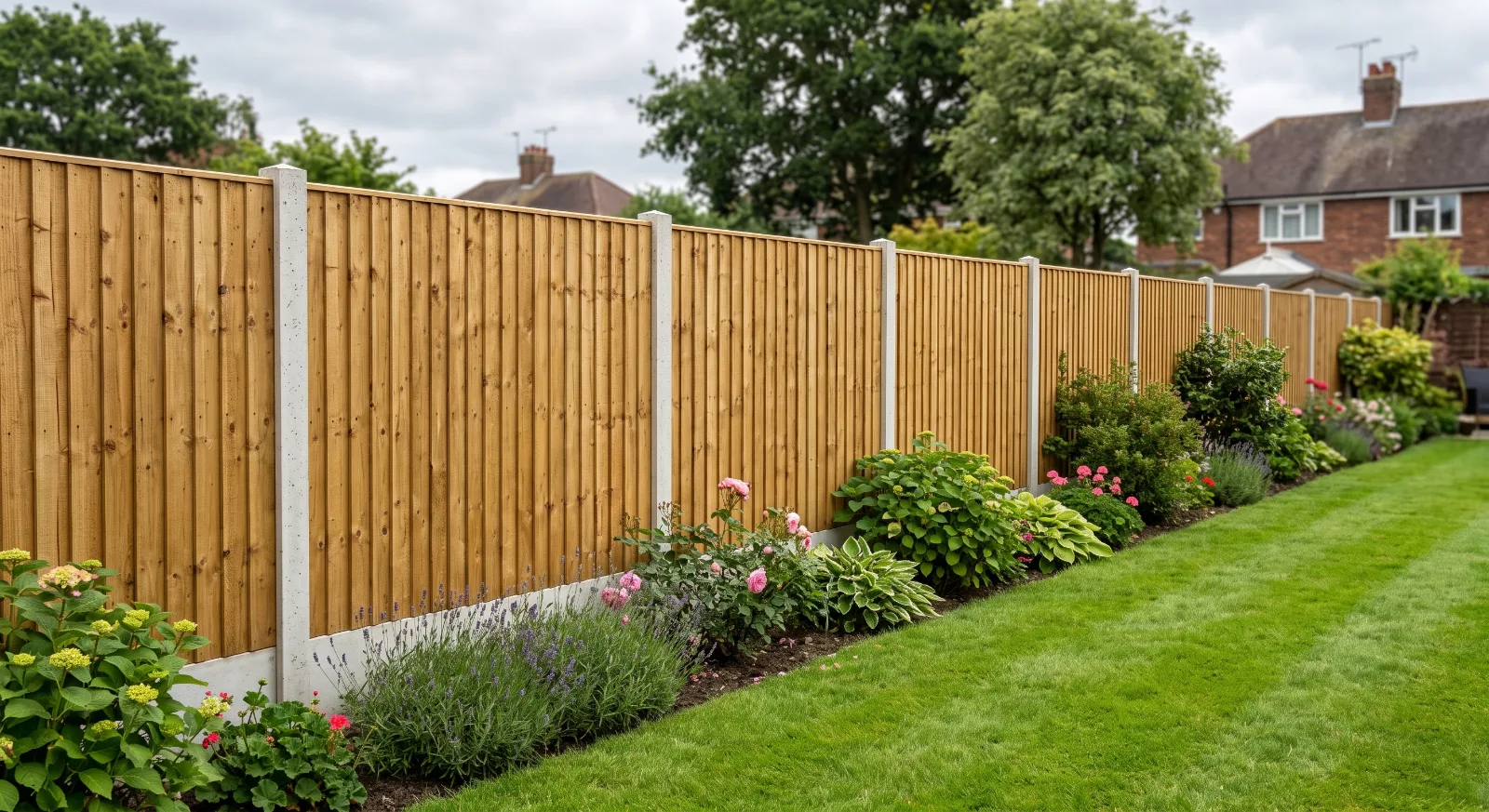
Closeboard fencing is one of the most established choices for residential gardens. It is generally constructed from overlapping vertical boards fixed to horizontal rails between posts, rather than relying on a single pre-made panel.
One of the advantages is flexibility. Because it can be constructed on site, it can follow changes in ground level more effectively than rigid panels. Individual boards can also be repaired or replaced if necessary.
Closeboard fencing is particularly suited to:
Rear garden boundaries
Higher privacy requirements
Traditional and period properties
Gardens with uneven or sloping ground
Projects where durability is important
Proper construction and strong supporting posts are important to the performance of the finished fence.
Featheredge Fencing
Featheredge fencing uses tapered vertical timber boards that overlap to create a continuous boundary.
It provides a traditional appearance and can work particularly well where you want a substantial timber fence with a more bespoke feel.
Because featheredge fencing can be built to suit the individual run of the boundary, it can also be useful where standard panel sizes do not work neatly.
Lap Panel Fencing
Lap panels are one of the most commonly available forms of domestic fencing. They use overlapping horizontal boards within a framed panel and are widely used for straightforward boundary fencing.
Their simplicity makes them practical for many gardens, but they are not always the best answer for every property.
Think carefully about wind exposure, the condition of the existing posts and the overall appearance you want before simply replacing an old fence with the same style.
Slatted and Hit-and-Miss Fencing
More contemporary fencing designs can create a very different feel.
Slatted fencing can give a garden a clean architectural appearance, while hit-and-miss arrangements can introduce gaps that soften the boundary and allow a degree of airflow.
These styles can be particularly effective in modern gardens where the fence needs to contribute to the design rather than simply disappear into the background. In exposed locations, allowing some airflow through a boundary can also be a useful consideration.
Trellis Fencing
Trellis has several uses in garden design.
It can be used as a decorative top to a solid fence, as standalone screening in suitable situations or as support for climbing plants.
Adding trellis above a standard-height solid fence can create a softer transition between garden and boundary while giving climbing plants somewhere to establish. Surrey fencing specialists commonly use trellis in this way as part of a wider screening solution.
Think About Privacy Before Choosing the Fence
Privacy is one of the biggest reasons homeowners replace fencing, but completely solid boundaries are not always necessary.
The right solution depends on where the overlooking comes from and how the garden is used.
For example, you might need greater screening along one particular boundary while another side of the garden could remain more open.
Privacy can also come from a combination of:
Fencing
Trellis
Slatted screens
Trees
Pleached planting
Hedging
Climbers
Layered shrubs
This can create a boundary that feels more like part of the landscape rather than a continuous wall.
Consider the Style of Your Home
Your fence should work with the architecture of the property.
A traditional timber boundary can suit a period or country-style home, while a more contemporary slatted design may work better alongside modern architecture.
That does not mean every traditional home needs traditional fencing or that every modern garden needs slats. The important thing is the relationship between the boundary, the house and the rest of the garden.
Consider:
The colour and materials of the property
Window styles and architectural details
Existing paving
Planting style
Garden furniture
The size and shape of the garden
Whether the fence will be a background feature or a focal point
The boundary should feel deliberate.
Don't Forget the Posts and Gravel Boards
The visible fencing boards are only part of the finished structure.
Posts provide the main structural support, while gravel boards can help separate timber from direct contact with the ground.
The exact specification should suit the project and the ground conditions. Timber posts, concrete posts and different gravel board options are all available, and the appropriate choice can vary depending on the site.
The construction beneath the finished fence is often what determines how well it performs over time. Fencing suppliers and installers consistently identify posts, gravel boards and fixings as important components of a complete fencing system.
Sloping Gardens Need More Thought
A standard panel fence works most simply on reasonably level ground.
When a garden slopes, the boundary may need to be stepped or constructed differently to follow the change in level.
This is one area where site-built fencing can offer greater flexibility. Closeboard and featheredge systems can be built to follow the site rather than forcing a standard panel arrangement onto uneven ground.
The way the fence meets the ground also affects the finished appearance, so levels should be considered before installation begins.
Surrey Gardens Can Present Different Conditions
Not every Surrey garden is the same.
A sheltered suburban garden, an exposed site, a property with mature trees or a sloping garden can all present different requirements.
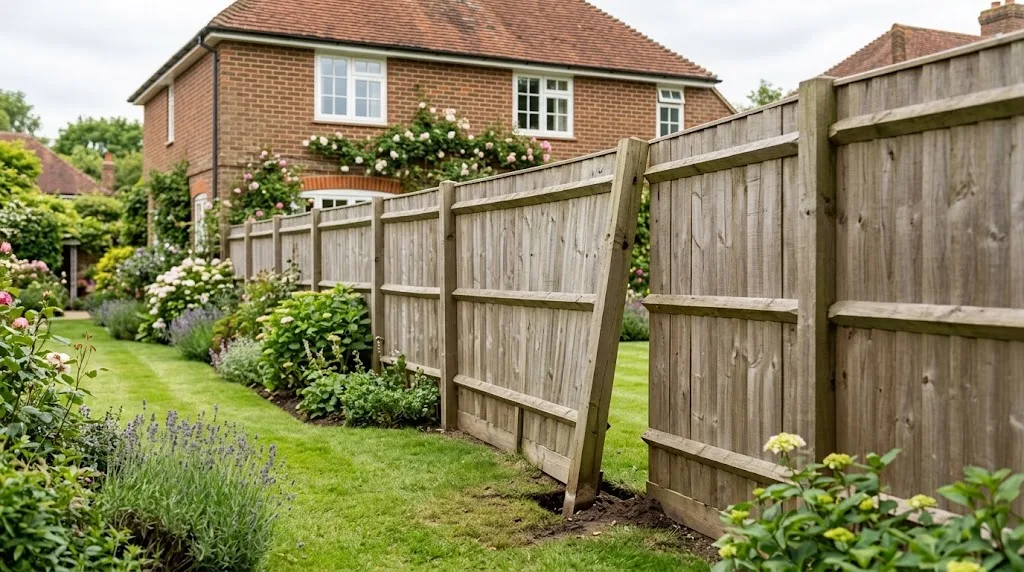
Wind exposure deserves particular attention. A completely solid boundary can experience significant wind loading, particularly in exposed locations. Fence design, construction and support all need to be considered together rather than choosing a style purely for appearance.
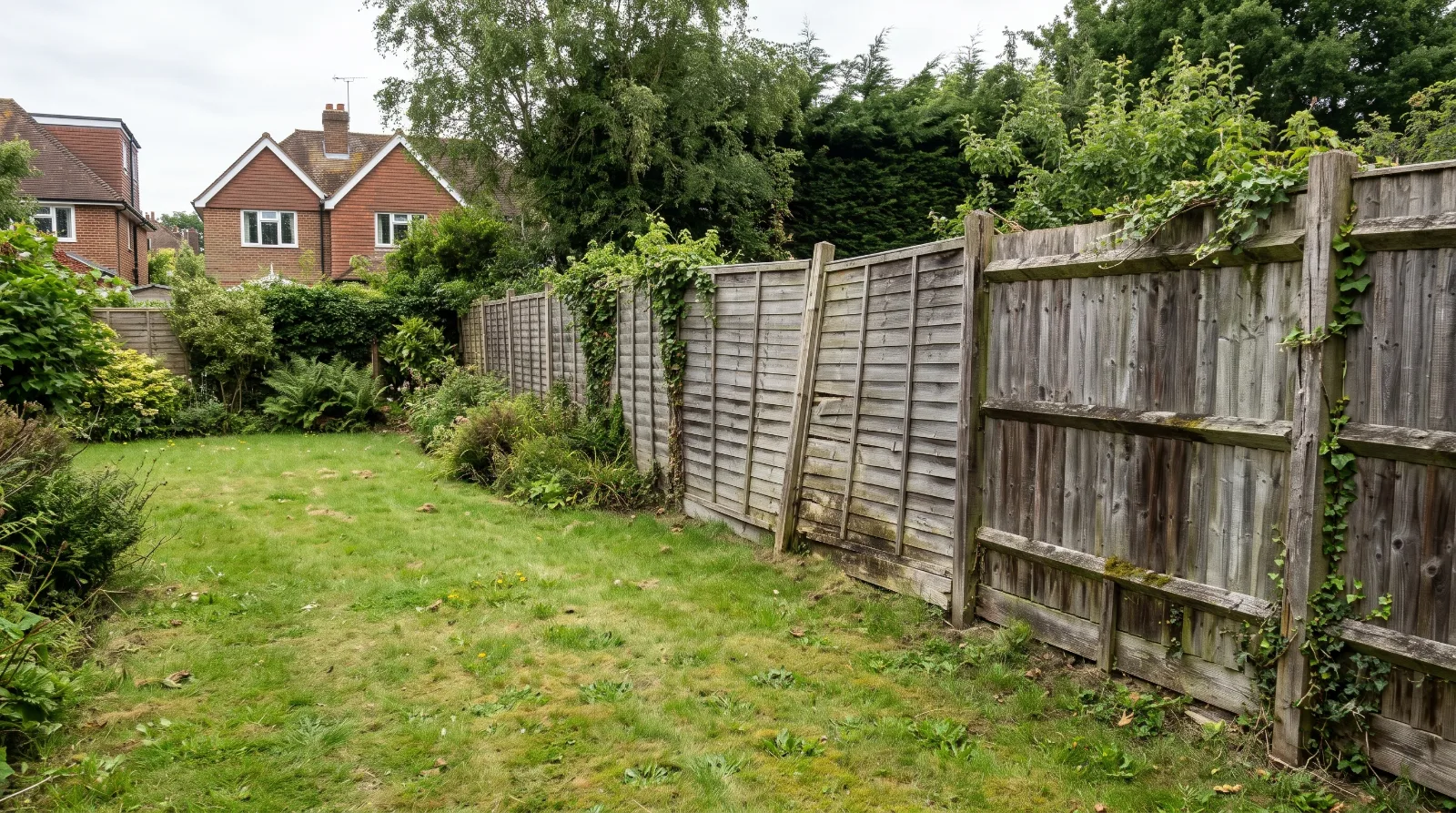
Existing ground conditions also matter. Removing an old fence can reveal poor-quality or damaged posts, buried concrete, uneven ground or other issues that need to be dealt with before the new boundary can be installed properly.
Use Planting to Soften the Boundary
One of the easiest ways to make fencing feel more integrated with a garden is to combine it with planting.
A timber fence can provide a simple background for:
Evergreen shrubs
Climbers
Ornamental grasses
Herbaceous planting
Multi-stem trees
Hedges
Seasonal planting
This is particularly useful where a tall or continuous fence would otherwise feel visually heavy.
Planting can also create additional screening, introduce seasonal interest and break up long runs of timber.
Rather than asking only, “Which fence should I choose?”, it can be more useful to ask, “What should this boundary look and feel like once the garden is finished?”
Think About Colour and Finish
Natural timber can work beautifully in a garden, but colour can also change how prominent the boundary feels.
A darker finish can make a fence recede behind planting, while a lighter timber finish can feel softer and more traditional.
The right choice depends on the rest of the garden.
Consider how the fence will relate to:
Paving
Brickwork
Garden furniture
Planting
Pergolas and garden rooms
Gates
Exterior lighting
The strongest landscape designs usually have a consistent material palette running through the different elements.
Gates Should Be Planned at the Same Time
A new fence can look unfinished if the gate is treated as a separate decision.
Think about how people will enter and move through the garden.
You may need:
A pedestrian side gate
A wider access gate
A matching timber gate
A more decorative entrance
Improved privacy around the entrance
A gate that works with existing paths or paving
Gate posts and fixings also need to be suitable for the size and weight of the gate.
Planning the gate and fencing together creates a much more cohesive result.
Choosing Fencing That Complements Your Garden
Fencing is one of the most visible elements of a garden, so the style you choose can have a significant effect on how the finished space feels.
A long stretch of plain fencing can make a garden feel enclosed, while a carefully considered boundary can provide a simple backdrop for planting, seating and other features.
Think about how the fencing will work with the rest of the space. For example, a darker timber finish can help planting stand out, while a more traditional timber fence can sit naturally alongside established borders and softer landscaping.
It is also worth considering what you will see from inside the garden. A boundary may be practical, but it can still form part of the overall view from a patio, seating area or garden room.
Where appropriate, fencing can be combined with planting, trellis or screening to create more depth and soften the boundary without losing privacy.
The aim is not simply to install a new fence, but to choose a boundary that feels right for the property and the garden around it.
Do You Need Planning Permission for Garden Fencing?
Fencing rules can depend on the height, location and circumstances of the property.
In many situations, planning permission is not required for a fence up to 2 metres high, although different limits can apply where a fence is beside a highway. Listed buildings, conservation areas, Article 4 directions and existing planning conditions can also affect what is permitted.
Because restrictions can vary between properties, it is sensible to check the requirements that apply to your particular project before work begins.
Things to Consider Before Installing a New Fence
The fence itself is only one part of the finished boundary.
Before starting, consider:
Why you are replacing or installing the fence
How much privacy you need
Whether the garden is exposed to wind
Whether the ground slopes
How the fencing will suit the property
Which materials and colours are already used
How the boundary will work with planting
Where gates are required
How the fence will look from inside the garden
How you want the finished garden to feel
A well-planned boundary should provide the privacy, security or screening you need while also fitting naturally into the garden.
Expert Garden Fencing for Surrey Homes
Whether you are replacing an ageing boundary, improving privacy or installing new fencing as part of a wider garden project, the details matter.
The right fencing style, construction and finishing touches can create a boundary that is practical, durable and well suited to the property.
Surrey Oak Landscapes can help with fencing projects across Surrey and the surrounding areas, from straightforward boundary replacement to fencing that forms part of a larger landscape transformation.
Get in touch with Surrey Oak Landscapes to discuss your project and request a free, no-obligation quote.
About the author