Garden Design Mistakes to Avoid in Surrey
Planning a new garden in Surrey? Learn the most common garden design mistakes, from poor drainage and planting choices to awkward layouts and difficult maintenance.
Designing a garden is about much more than choosing paving, planting flowers and adding a lawn. The best gardens work as a complete space, with the layout, levels, planting and materials all working together.
Many garden problems only become obvious once the work is finished. A patio may look attractive but leave nowhere for rainwater to go. Plants may look perfect when first installed but quickly outgrow their position. A garden can also end up feeling smaller simply because the proportions and layout were not thought through carefully.
Here are some of the most common garden design mistakes to avoid when planning a garden in Surrey.
1. Starting Without a Proper Plan
One of the biggest mistakes is beginning work before deciding how the whole garden will be used.
It is easy to focus on individual features such as a patio, lawn, planting bed or garden room without considering how they connect. This can result in wasted space, awkward access routes and a layout that does not suit the way the garden is actually used.
Before choosing materials or plants, think about:
Where you want to sit and entertain
How people will move through the garden
Where children or pets will use the space
How much lawn you actually need
Where planting will provide privacy or screening
How the garden will look from inside the house
A simple measured plan can help identify problems before construction begins and make it much easier to get the proportions right.
2. Ignoring Existing Levels and Drainage
Drainage is one of the least noticeable parts of a garden design until it goes wrong.
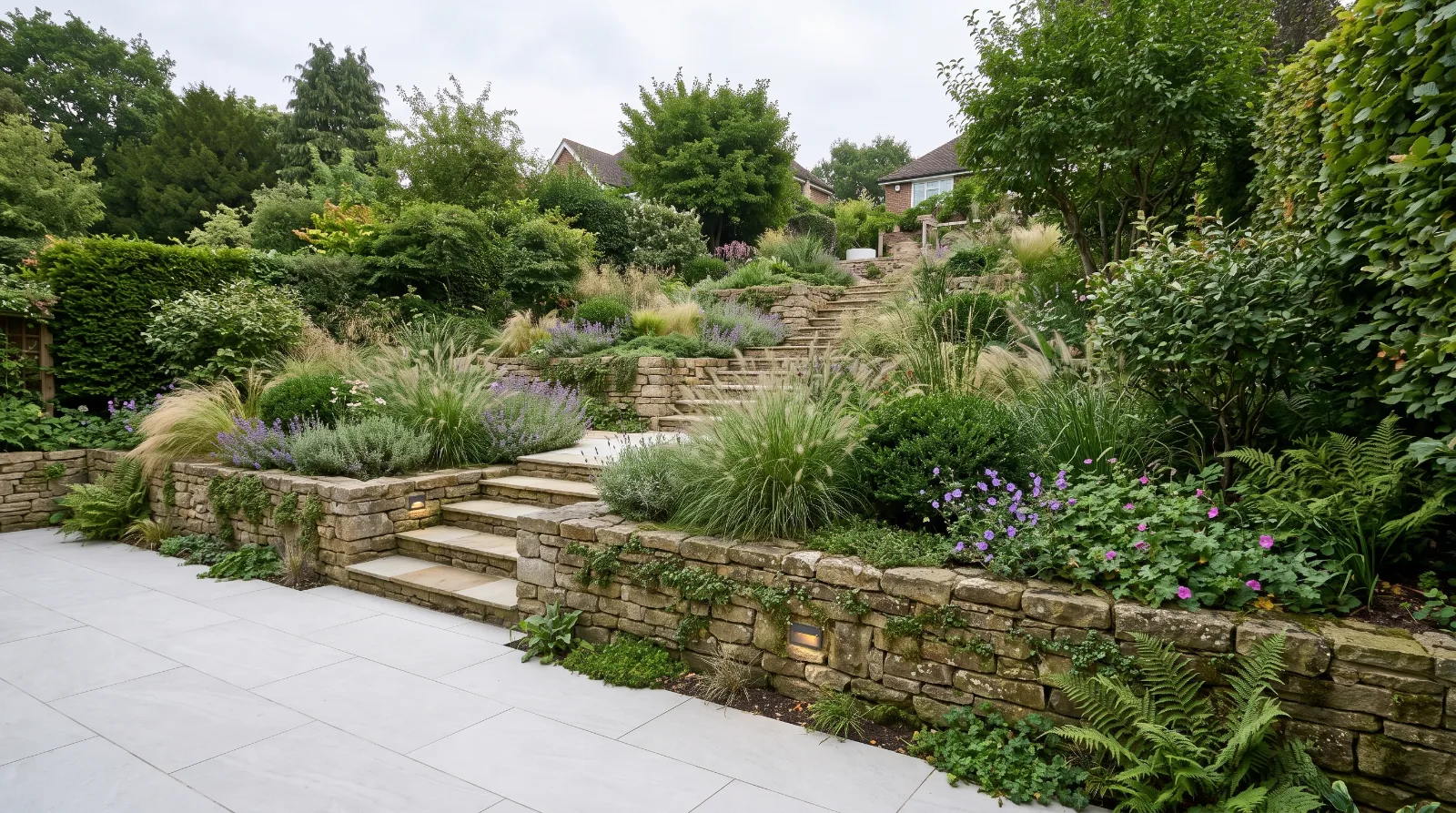
Existing levels can have a major effect on where water travels. Changing the height of a lawn, patio or planting area without considering the surrounding ground can create low spots where water collects. On poorly drained or compacted soils, this can become particularly noticeable after heavy rain.
This is why levels should be considered before hard landscaping is installed.
A good design should establish:
Existing ground levels
Finished levels
The direction of surface water
Patio and pathway falls
Door and threshold levels
Where excess water can be directed
Drainage is not something that should be added as an afterthought. It should form part of the design from the beginning.
3. Making the Lawn Too Large
A large lawn can make a garden look simple and open, but making it the dominant feature is not always the best use of space.
This is particularly important in smaller suburban gardens. A large rectangle of grass surrounded by narrow planting borders can make the boundaries feel more prominent and leave the rest of the garden looking disconnected.
Instead, consider how the lawn relates to the other areas.
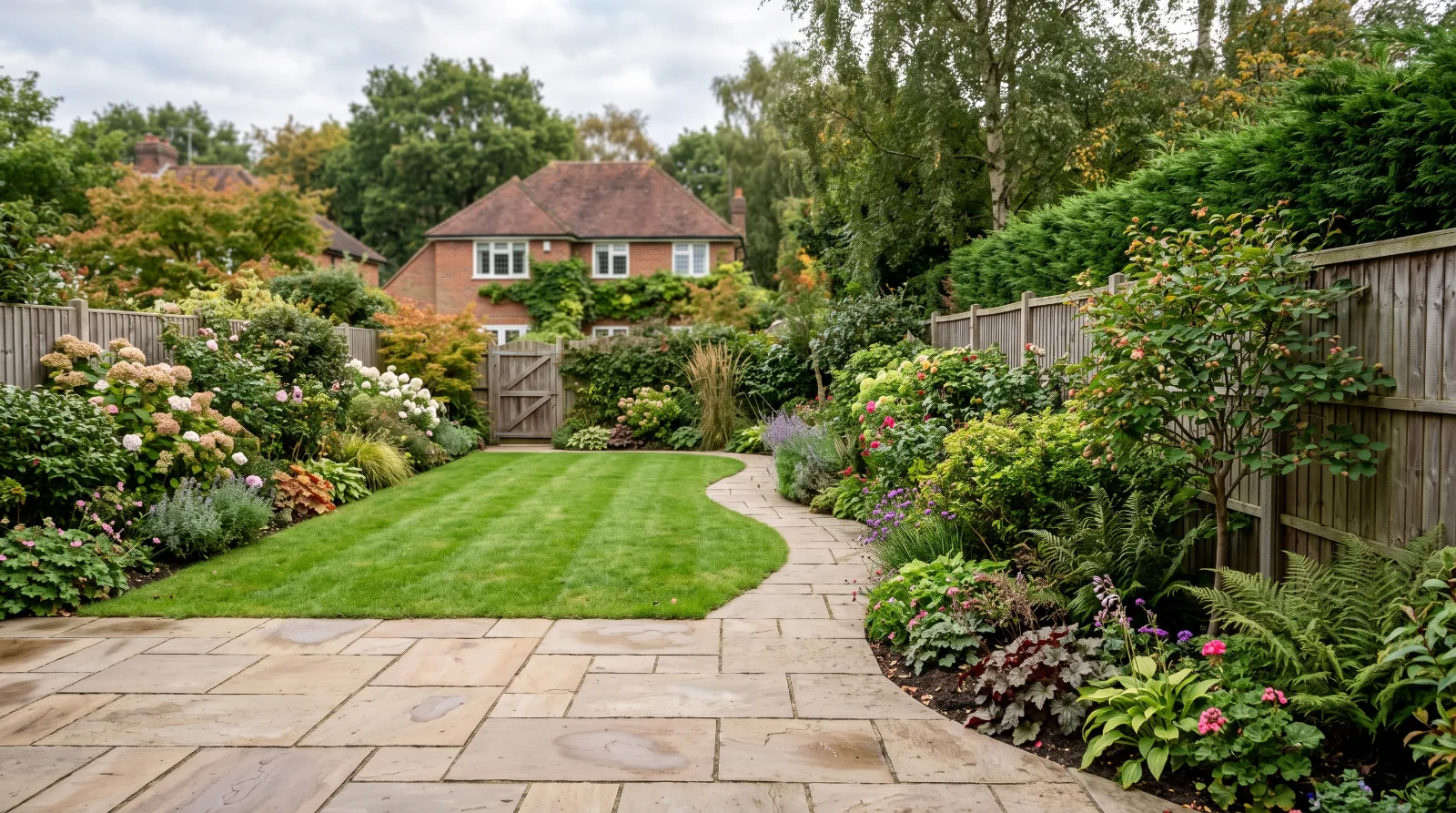
Curved or shaped borders, wider planting areas and well-positioned paving can help break up a rigid layout. In some gardens, reducing the lawn slightly can create space for seating, planting or entertaining without making the garden feel smaller.
The right balance depends on the size and shape of the garden rather than following a standard lawn-to-border ratio.
4. Choosing Plants Without Considering Their Mature Size
A common planting mistake is choosing a plant based on how it looks when purchased rather than how large it will become.
A small tree or shrub in a pot can look perfectly suited to a border, but its eventual height and spread may be several times greater. Planting too close to fences, buildings, paths or patios can create problems later.
Good garden design considers the mature size of plants and their position within the overall scheme.
It is also worth thinking about:
Root space
Eventual height and spread
Shade cast by larger plants
Maintenance requirements
Seasonal interest
Distance from buildings and structures
The same principle applies to specimen trees. The right tree can become a major feature of a garden, but the wrong tree in the wrong position can quickly dominate the space.
5. Designing for Appearance Without Considering the Soil
A planting scheme should suit the conditions already present in the garden.
Soil can vary considerably, even over relatively short distances, and different soil types affect drainage, moisture retention and the plants that are likely to perform well. Clay soils, for example, can hold plenty of moisture but become difficult to work when wet and compacted.
This does not mean a difficult soil type prevents good planting. It simply means the design needs to work with the site rather than against it.
Before finalising a planting scheme, consider:
Soil type
Drainage
Sun and shade
Exposure to wind
Available planting depth
Existing trees and roots
Choosing suitable plants from the start is usually more effective than trying to make unsuitable plants work later.
6. Using Too Many Different Materials
Another common design mistake is trying to introduce too many finishes into one garden.
Different paving, decking, gravel, brick, timber, rendered walls and other materials can all work individually, but using too many competing finishes can make the space feel disjointed.
A more considered palette usually creates a stronger result.
For example, one main paving material can be paired with a complementary wall finish and timber or planting used as secondary elements. Repeating materials in different parts of the garden can also help connect separate areas.
This is especially useful when a garden includes several functions such as dining, entertaining, planting and lawn areas.
7. Forgetting How People Will Move Around the Garden
A garden can look good on paper but still feel awkward to use.
Paths should connect the areas people actually need to reach. A route from the house to a seating area, lawn, garden room or side access should feel natural rather than forcing people to walk around unnecessary obstacles.
The width, surface and position of a path also matter.
A narrow decorative path might work between planting beds, while a main route used regularly may need more space. Steps, changes in level and transitions between different surfaces should also be considered during the design stage.
Thinking about movement early can prevent a garden from feeling like a collection of separate features.
8. Designing Without Thinking About Maintenance
A garden can look impressive when newly finished but become difficult to manage if maintenance has not been considered.
Large planting schemes, intricate borders and awkward corners can all increase the amount of work required later. The same applies to lawns in areas that are difficult to access or planting positioned behind structures where it is hard to reach.
Maintenance does not mean the garden has to be completely low maintenance.
It means the design should reflect how much time you actually want to spend looking after it.
Planting can be grouped into manageable areas, access can be built into borders and hard landscaping can reduce maintenance in areas where grass or large planting beds are unnecessary.
9. Treating Lighting and Irrigation as an Afterthought
Lighting and irrigation are often added after the main landscaping has already been completed, which can limit what is possible.
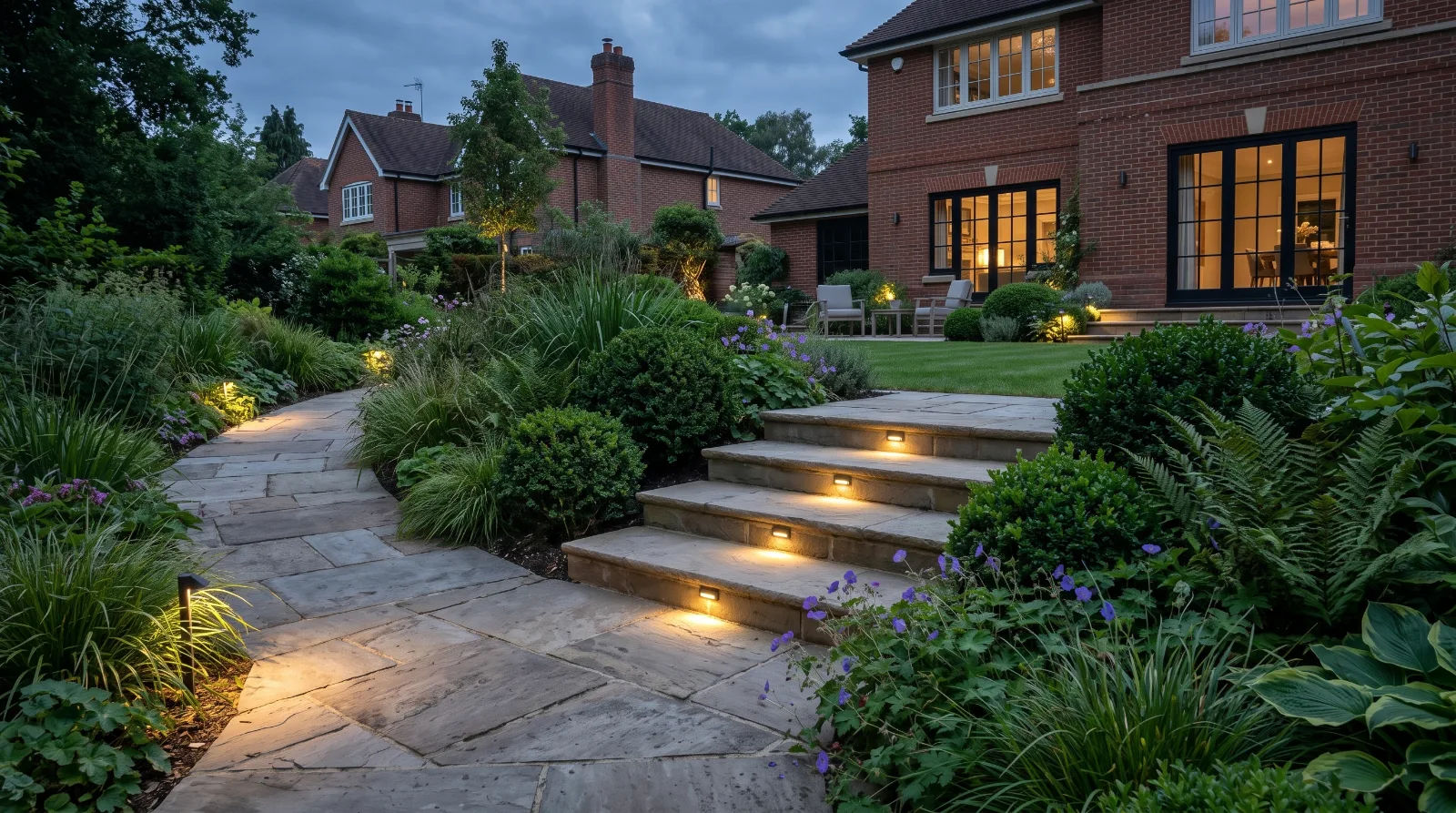
A garden lighting scheme works better when cable routes, power supplies and suitable locations for fittings are considered alongside the layout. The same applies to irrigation, particularly where planting beds, lawns and trees will require different watering requirements.
Planning these systems alongside the main design can avoid unnecessary disruption later.
Get the Design Right Before the Work Starts
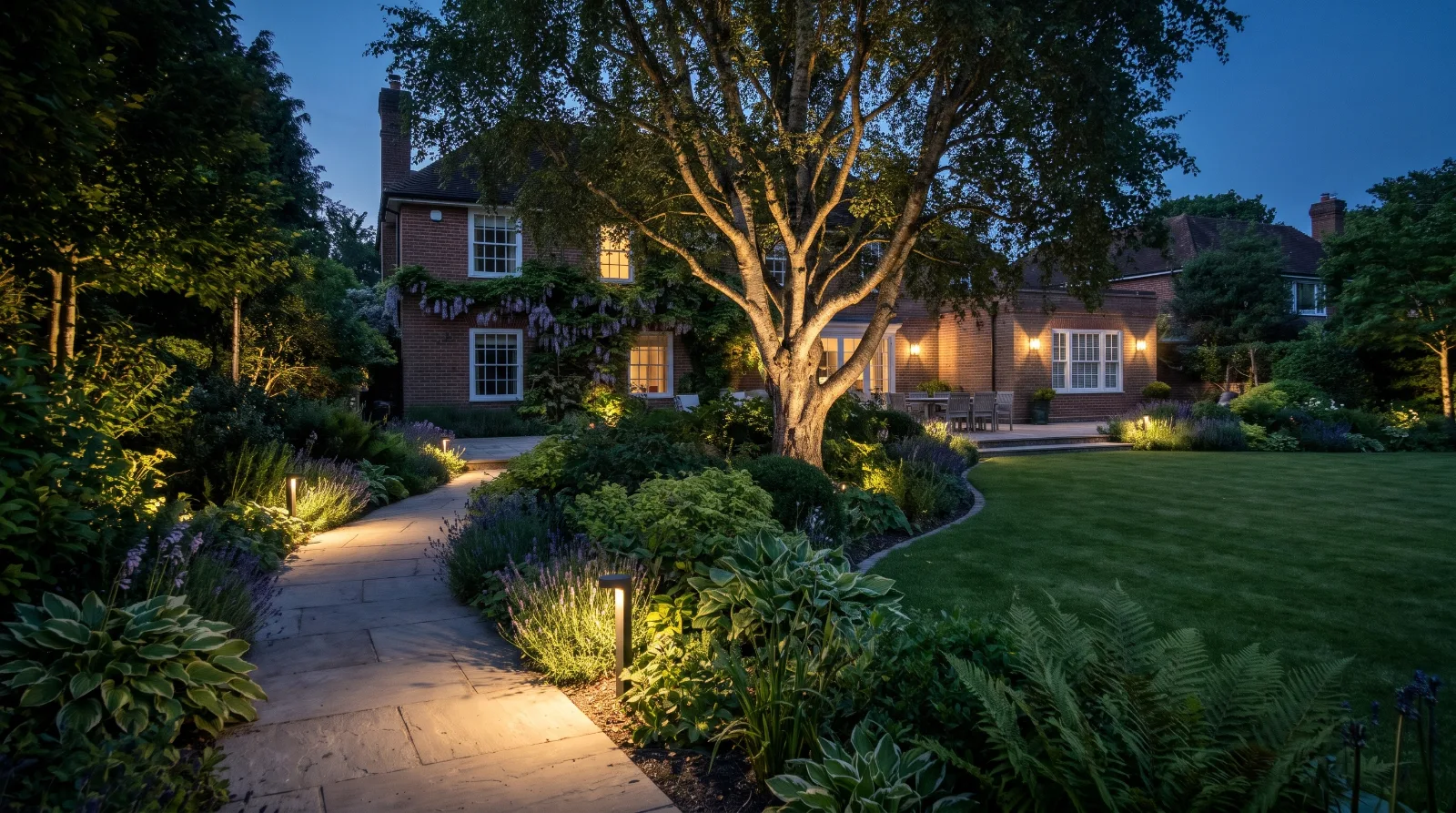
The most expensive garden design mistakes are usually not about choosing the wrong colour of paving or the wrong style of furniture. They tend to come from decisions that affect the structure of the garden: poor levels, inadequate drainage, incorrect proportions, unsuitable planting positions and a layout that does not match how the space will be used.
A well-planned Surrey garden should work from the ground up. Once the levels, circulation, drainage and main structure are right, the planting and finishing details can be used to bring the design together.
If you are planning a new garden or a complete garden transformation, Surrey Oak Landscapes can help with the design, landscaping, planting and groundwork needed to create a space that works for your property and how you want to use it.
About the author