Closeboard vs Fence Panels: What's the Difference?
Not sure whether to choose closeboard fencing or fence panels? Compare the differences in construction, privacy, flexibility, maintenance and cost.
When replacing a garden fence, one of the first decisions you may come across is whether to use closeboard fencing or traditional fence panels.
At first glance, they can look quite similar. Both can provide privacy, define a boundary and improve the appearance of a garden. However, the way they are constructed is different, and that can affect the appearance, strength, maintenance and overall cost of the finished fence.
So what is the difference between closeboard fencing and fence panels, and which option is more suitable for your garden?
What Is Closeboard Fencing?
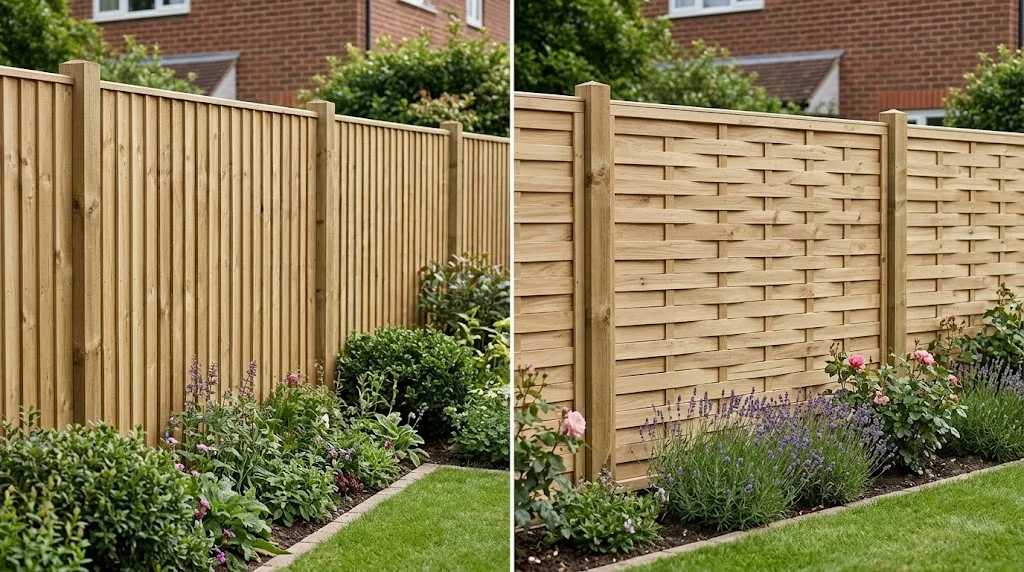
Closeboard fencing is built from individual timber boards that are installed vertically and closely alongside one another.
The boards are usually fixed to horizontal rails between the fence posts, creating a continuous run of fencing. The result is a solid, private boundary with relatively few gaps.
Closeboard fencing is sometimes also referred to as feather edge fencing, depending on the exact construction and profile of the boards.
Unlike a standard panel, it is generally constructed on site. This allows the fence to be adjusted to suit the exact length, changes in level and layout of the garden.
What Are Fence Panels?
Fence panels are prefabricated sections of fencing manufactured to standard sizes.
The complete panel is installed between fence posts, which means the fence can be constructed relatively quickly once the posts are in position.
There are many different panel styles available, including:
Traditional overlap panels
Close-boarded style panels
Decorative panels
Slatted panels
Contemporary horizontal designs
Trellis-topped panels
Standard fence panels are especially popular because they are widely available and can often be replaced individually if one section becomes damaged.
Closeboard vs Fence Panels: The Main Difference
The simplest way to understand the difference is this:
Closeboard fencing is built on site from individual components, while fence panels are manufactured as complete sections.
That difference affects how flexible each system is and how the finished fence can be installed.
Feature | Closeboard fencing | Fence panels |
|---|---|---|
Construction | Built on site | Pre-manufactured sections |
Appearance | Continuous and solid | Defined individual panels |
Flexibility | High | More limited |
Uneven ground | Can be adapted more easily | May require more adjustment |
Replacement | Individual boards can be replaced | Individual panels can be replaced |
Installation | More involved | Generally quicker |
Styles | More construction flexibility | Wide choice of ready-made designs |
Neither is automatically better. The right choice depends on the garden, the boundary and the look you want.
Which Looks Better?
This comes down largely to personal preference and the style of the property.
Closeboard fencing tends to create a more continuous appearance because the boards run along the boundary without obvious breaks between prefabricated panels.
This can work particularly well when you want a simple, solid and traditional-looking boundary.
Fence panels can have a more clearly defined structure because each panel sits between two posts. However, modern decorative panels can look very smart and can suit more contemporary properties.
The surrounding garden also matters.
A natural timber panel can work well in a traditional garden, while a slatted or horizontal panel may suit a more modern landscape design.
Which Provides More Privacy?
Both options can provide a high level of privacy, depending on the design.
A solid closeboard fence offers very little visual gap between boards, making it a popular choice where privacy is important.
Many solid fence panels can offer a similar level of screening.
The more important question is the specific panel design.
Some decorative panels are deliberately designed with gaps between the timber, meaning they may provide less privacy than a solid panel or closeboard fence.
If privacy is one of your main priorities, check the actual construction rather than choosing based only on the name of the fencing style.
Which Is Better on Uneven Ground?
This is one area where closeboard fencing can offer more flexibility.
Because the fence is constructed on site, the individual boards and rails can be adjusted to work with the shape and levels of the garden.
This can be particularly useful where:
The garden slopes gradually
The boundary changes height
There are awkward sections
The ground is not perfectly level
The fence needs to follow an unusual line
Standard fence panels are manufactured to fixed dimensions, so fitting them onto uneven ground may require additional planning or adjustments.
That does not mean fence panels cannot be installed on sloping gardens. It simply means the layout needs to be considered carefully.
Which Is Stronger?
Strength depends on the specification and quality of the installation rather than the name of the fencing system alone.
A well-built closeboard fence can be very robust because the boards, rails and posts form a continuous structure.
However, a properly installed panel fence can also provide a strong and durable boundary.
The quality of the posts, rails, boards, fixings and foundations all matter.
A strong fence can still fail prematurely if the posts are poorly installed or the structure is not suitable for the conditions of the site.
This is particularly important in exposed areas where the fence can be subject to strong winds.
What About Wind?
Wind resistance is worth considering when choosing any garden fence.
A solid fence catches more wind than a partially open design. This means the height, construction, post spacing, ground conditions and exposure of the site all need to be considered.
Closeboard fencing and solid fence panels can both create substantial wind load, so the supporting structure matters just as much as the visible boards.
On exposed sites, the fencing may need a stronger specification or a design that allows some airflow.
Which Is Easier to Repair?
Both systems can be repaired, but the process is slightly different.
With closeboard fencing, individual damaged boards can often be replaced rather than removing an entire section of fencing.
With panel fencing, a damaged panel can often be taken out and replaced with a new one.
This can make panel systems particularly convenient for homeowners who want straightforward replacement in the future.
However, the availability of matching panels can become a consideration if the fence has been installed for many years and the original style is no longer produced.
What Happens If One Panel Gets Damaged?
This is one of the practical advantages of a panel system.
If one panel becomes damaged, it can often be removed and replaced without rebuilding the entire fence.
That makes panel fencing appealing for households looking for easy future maintenance.
With closeboard fencing, the equivalent repair is usually carried out by replacing the affected boards or sections of the fence rather than replacing a complete panel.
So both can be repairable without replacing the entire boundary.
Which Is Faster to Install?
Fence panels can generally be installed faster because the main fencing sections are already manufactured.
Once the posts are properly positioned, the panels can be fitted between them.
Closeboard fencing involves more work on site because the rails and individual boards need to be installed as part of the construction process.
The actual timeframe will depend on the size of the boundary, access, ground conditions and whether the existing fence needs to be removed first.
For a larger fencing project, these differences can affect the overall labour involved.
Which Is More Flexible?
Closeboard fencing has a significant advantage when the boundary does not fit standard dimensions.
Because the fence is assembled on site, it can be adapted to:
Different lengths
Changes in ground level
Uneven boundaries
Angled sections
Irregular garden shapes
Specific height requirements
Fence panels are more constrained by their standard dimensions.
That said, panels are available in a wide range of sizes and styles, so they can still work for many garden boundaries.
What About Fence Posts?
The supporting posts are an important part of either system.
Depending on the design, fencing may use:
Timber posts
Concrete posts
Other specialist post systems
The choice will depend on the fence design, ground conditions and the desired appearance.
With panel fencing, the posts create the openings into which the panels are fitted.
With closeboard fencing, the posts support the horizontal rails and the boards attached to them.
A well-installed fence needs properly positioned and securely installed posts regardless of which system you choose.
What About Gravel Boards?
Gravel boards can be used beneath fencing to help keep timber away from direct contact with the ground.
They can also create a neat separation between the fence and soil, gravel or grass.
Both closeboard and panel fencing can be installed with gravel boards depending on the design.
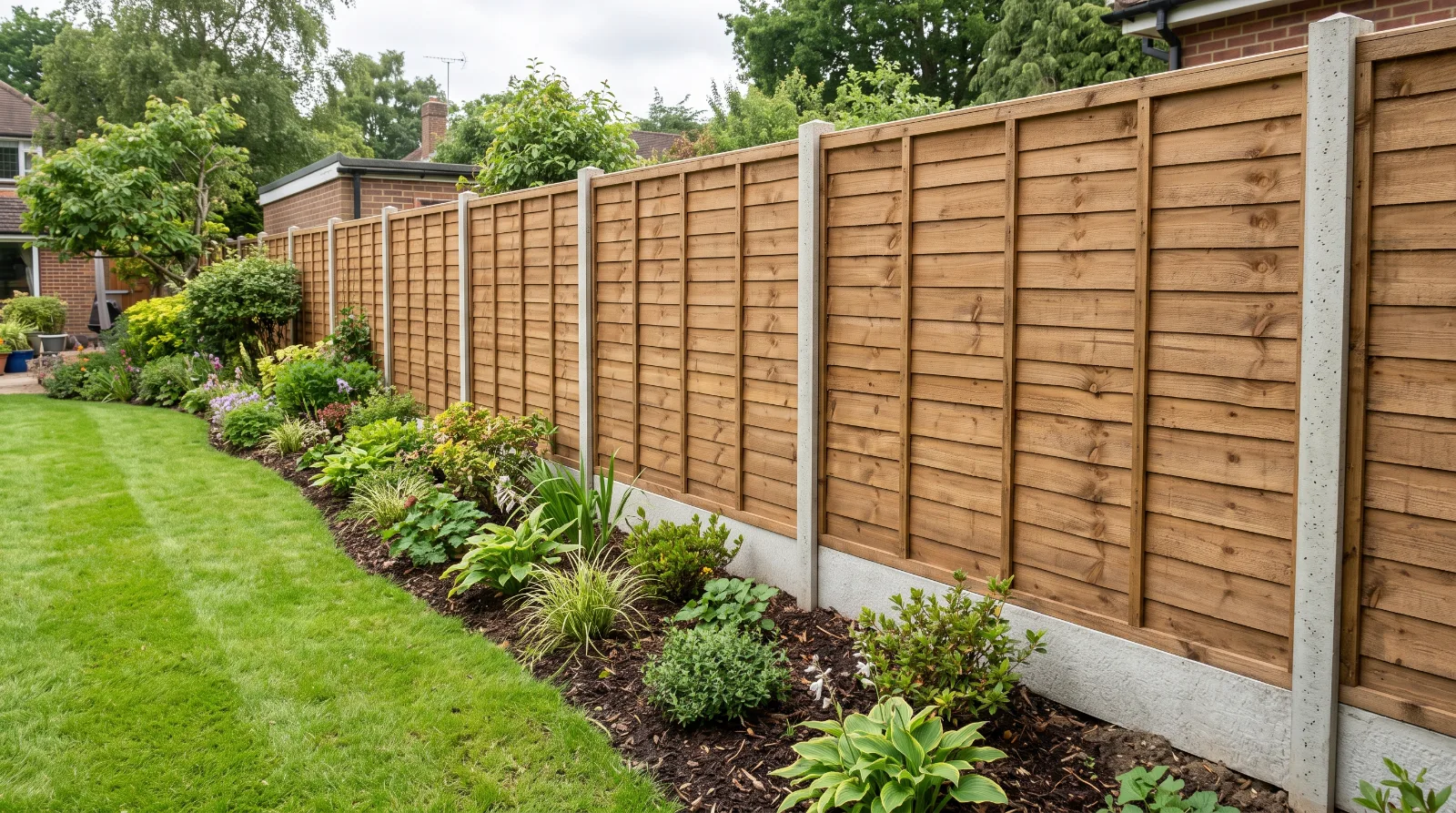
Concrete gravel boards are often chosen where durability is a priority, while timber versions can offer a more uniform appearance with timber fencing.
The right choice depends on the fence specification and the conditions at the property.
Which Is Easier to Maintain?
Neither option is maintenance-free.
Timber fencing can be affected by moisture, weather exposure and gradual deterioration over time.
Regularly checking for:
Rot
Cracked boards
Loose fixings
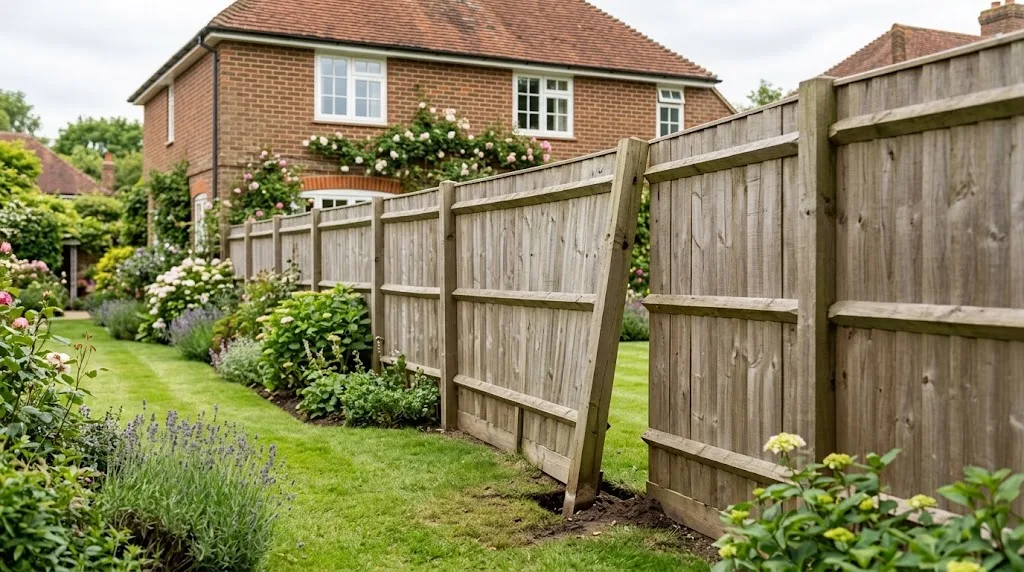
Leaning posts
Damaged sections
Signs of weathering
can help identify problems before they become more serious.
Panel fencing can be convenient because individual damaged panels can be replaced relatively easily.
Closeboard fencing offers similar repair flexibility because individual boards can be replaced.
The durability of either system will ultimately depend on the quality of the materials, installation and ongoing care.
Which Is More Expensive?
There is no universal price difference between the two.
The overall cost can be affected by:
Fence height
Total length
Timber quality
Number of posts
Gravel boards
Ground conditions
Access
Removal of the existing fence
Waste disposal
Labour
Finishing and treatment
Closeboard fencing can involve more installation work because it is assembled on site.
Fence panels can sometimes be quicker to install, although premium decorative panels can also be relatively expensive.
The best way to compare prices is to look at the complete specification rather than only the cost per panel.
Which Should You Choose?
The right option depends on what matters most to you.
Choose closeboard fencing if you want:
A continuous, solid appearance
Greater flexibility around uneven boundaries
A more bespoke installation
Individual boards that can be replaced
A traditional style of fencing
Choose fence panels if you want:
A quicker installation
Standardised sections
A wide range of ready-made styles
Straightforward future panel replacement
A convenient option for a standard boundary
There is no universal winner.
A well-installed fence that suits the property and the conditions of the site will generally matter more than choosing one system simply because it is considered better in general.
What About Sloping Gardens?
Sloping gardens deserve particular attention.
A fence can follow a slope in different ways depending on the design.
A closeboard fence can often be built to follow changes in level more continuously, while panel fencing may use stepped sections or other arrangements.
The correct approach will depend on how steep the slope is and how you want the finished fence to look.
A site survey can help determine the most practical installation method before work begins.
What About Gates and Other Features?
A new fence is often installed alongside a gate, trellis or screening feature.
If these elements are being added at the same time, it makes sense to consider them as part of the same design.
For example, a closeboard boundary could include a matching timber gate, while decorative fence panels could be combined with trellis to create a more open finish around a seating area.
Integrating everything together can make the finished boundary look much more cohesive.
Should You Replace the Whole Fence or Just the Panels?
This depends on the condition of the existing posts and supporting structure.
If the posts are still sound and correctly positioned, replacing panels may be possible.
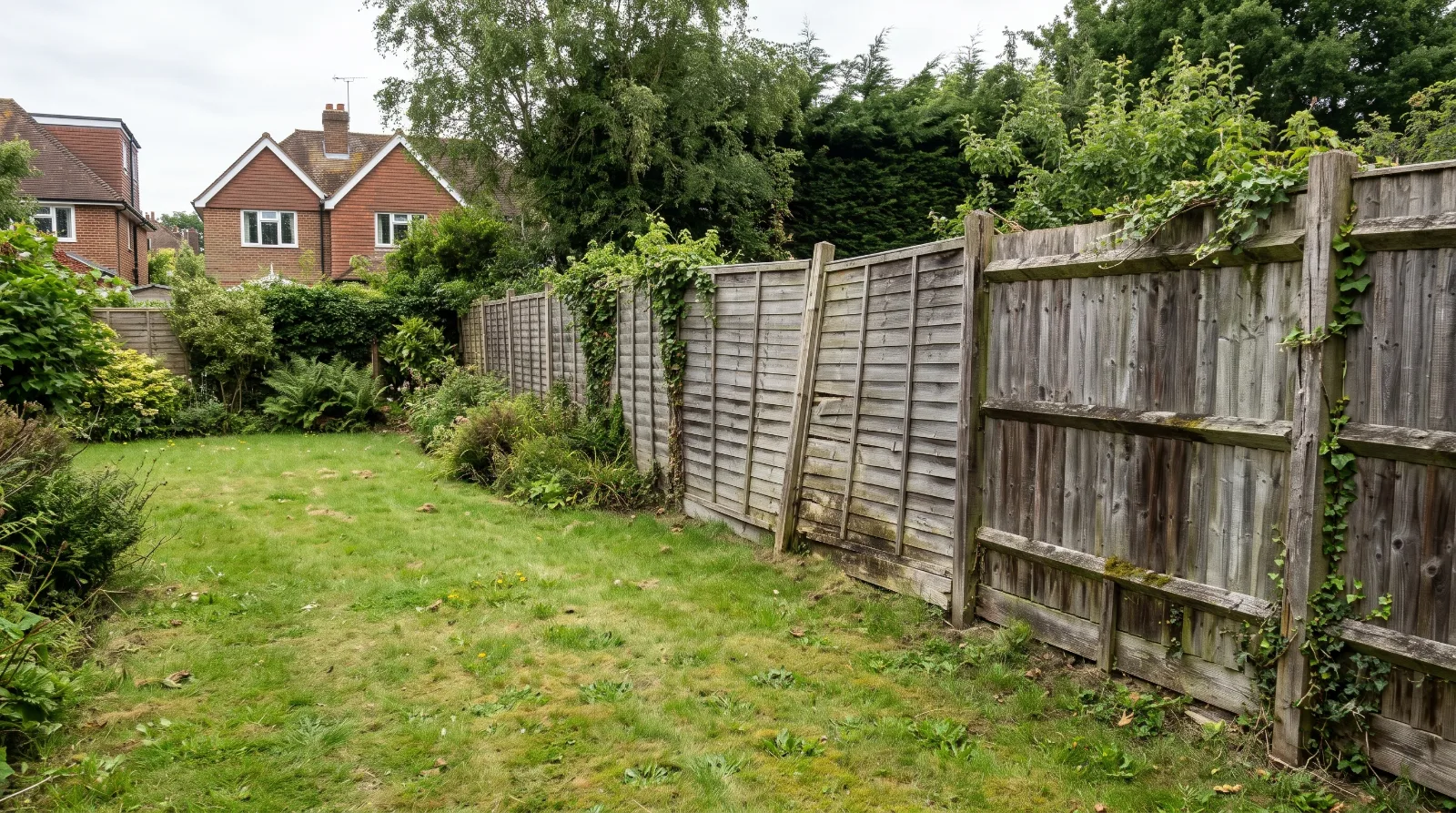
If the posts are leaning, rotten, damaged or otherwise unsuitable, replacing only the visible panels may not solve the underlying problem.
This is why the condition of the whole fence should be considered before deciding what to replace.
Closeboard or Fence Panels: Which Is Right for Your Garden?
Closeboard fencing and fence panels can both provide an attractive, practical boundary.
Closeboard fencing offers greater flexibility because it is constructed on site, making it particularly useful for irregular or sloping boundaries and homeowners looking for a continuous appearance.
Fence panels offer convenience, a wide choice of styles and straightforward replacement when individual sections become damaged.
The best choice comes down to the garden layout, desired appearance, privacy requirements, budget and condition of the existing boundary.
Rather than focusing only on the fencing itself, consider the posts, foundations, gravel boards, access and surrounding landscape as part of the complete installation.
Need New Fencing in Surrey?
Choosing the right fencing can make a significant difference to both the privacy and appearance of your garden.
Surrey Oak Landscapes can help with fencing as part of wider garden improvements, whether you need to replace an existing boundary, install new panels or create a complete landscaped garden.
Planning new fencing in Surrey? Get in touch with Surrey Oak Landscapes for a free, no-obligation quote.
About the author