Can Irrigation Be Installed in an Existing Garden?
Can you add irrigation to an established garden? Find out how systems can be installed around existing lawns, planting, patios and trees with minimal disruption.
If you already have an established garden, installing an irrigation system can seem like a major undertaking.
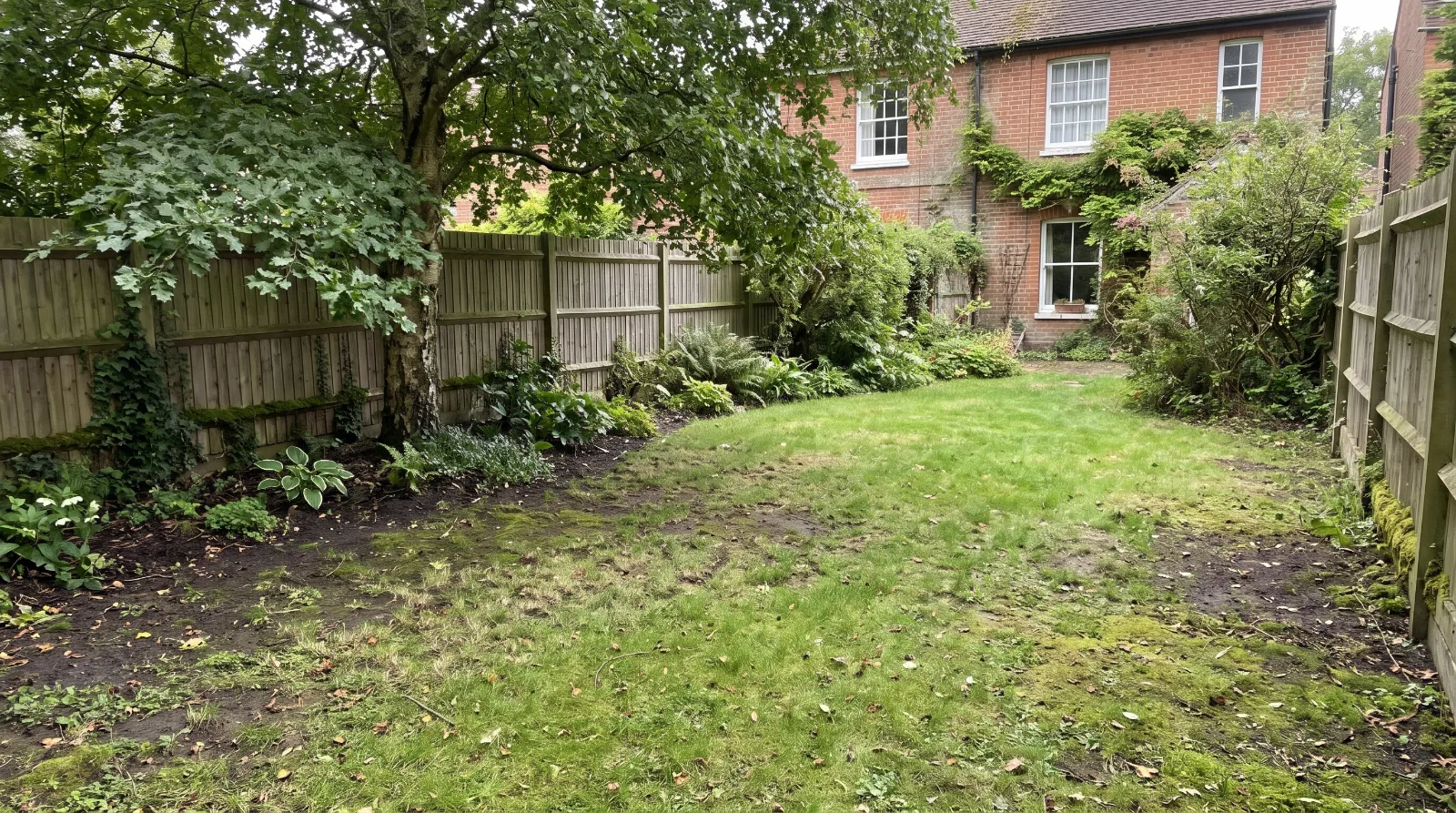
You may already have mature lawns, established borders, patios, paths, trees and planting that you do not want to disturb. It is understandable to assume that irrigation needs to be installed while a garden is being landscaped.
Fortunately, irrigation can often be installed in an existing garden.
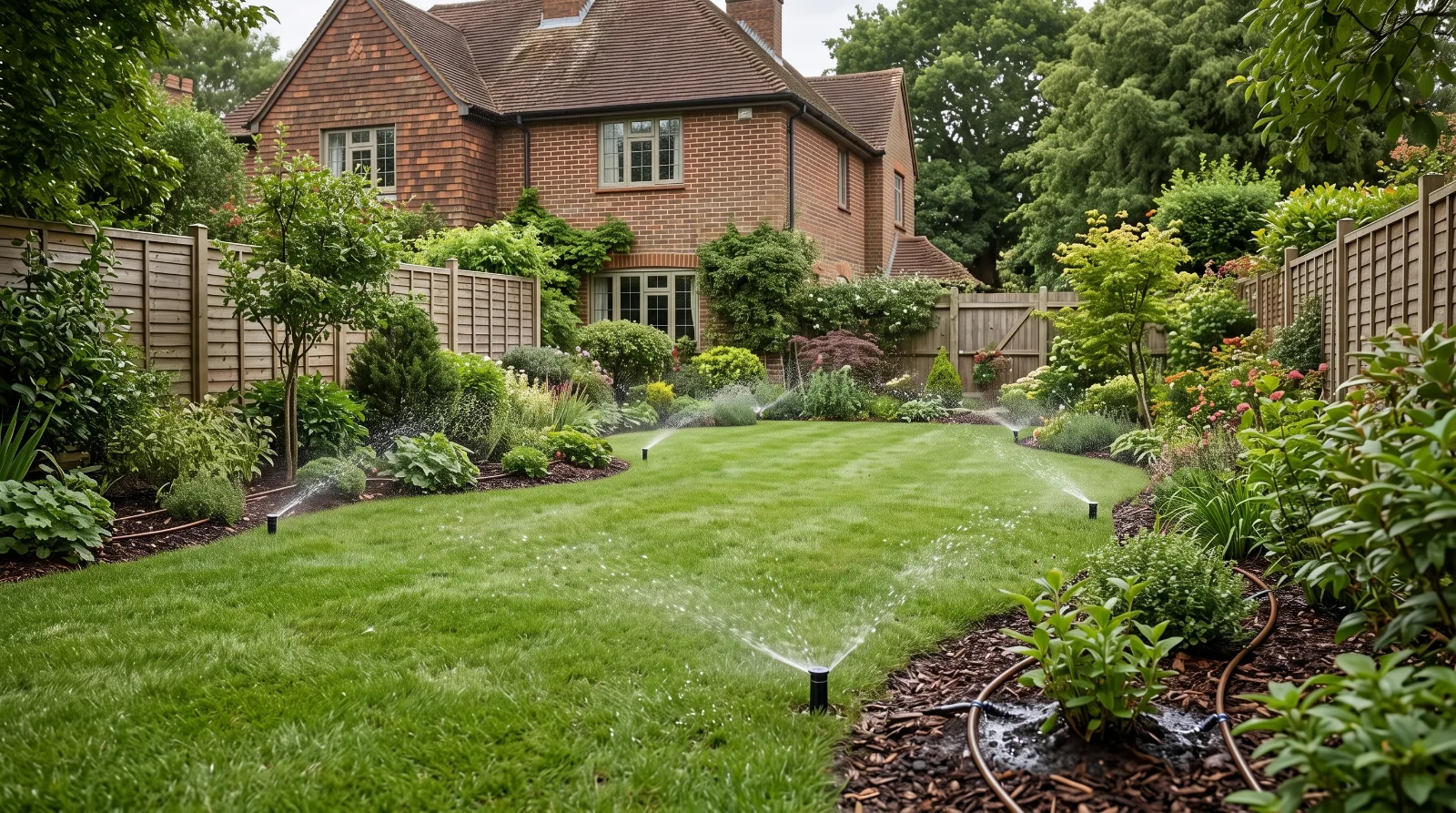
The system simply needs to be designed around what is already there. With careful planning and installation, pipes can be routed through the garden, watering zones can be created around existing planting and the finished system can be made relatively discreet.
The amount of disruption depends on the size of the garden, the type of irrigation required and how much existing landscaping needs to be worked around.
Can You Retrofit Irrigation Into an Existing Garden?
Yes.
An established garden does not prevent you from installing a permanent irrigation system.
In fact, retrofitting can be useful because you already know which parts of the garden are difficult to water.
You may have:
Large planting borders
Long hedges
Established trees and shrubs
Areas that dry out quickly
Containers that need frequent watering
A large lawn
Multiple garden zones
Areas that are difficult to reach with a hose
A professionally designed system can be built around these existing features rather than requiring the whole garden to be redesigned.
Will Installing Irrigation Damage an Existing Garden?
There can be some disruption, but a well-planned installation should aim to keep it under control.
Underground pipework needs to be routed around the garden, which can involve narrow trenches or carefully planned excavation.
The extent of the work depends on where the irrigation needs to reach.
For example, a simple system supplying a few borders may require considerably less excavation than a large system covering several lawn and planting zones.
Where possible, installation routes should be planned around existing features rather than directly through important planting areas.
What Happens to the Lawn?
Lawns usually need some preparation where underground pipework is being installed.
Depending on the installation method, narrow trenches can be created and then reinstated once the pipework is in place.
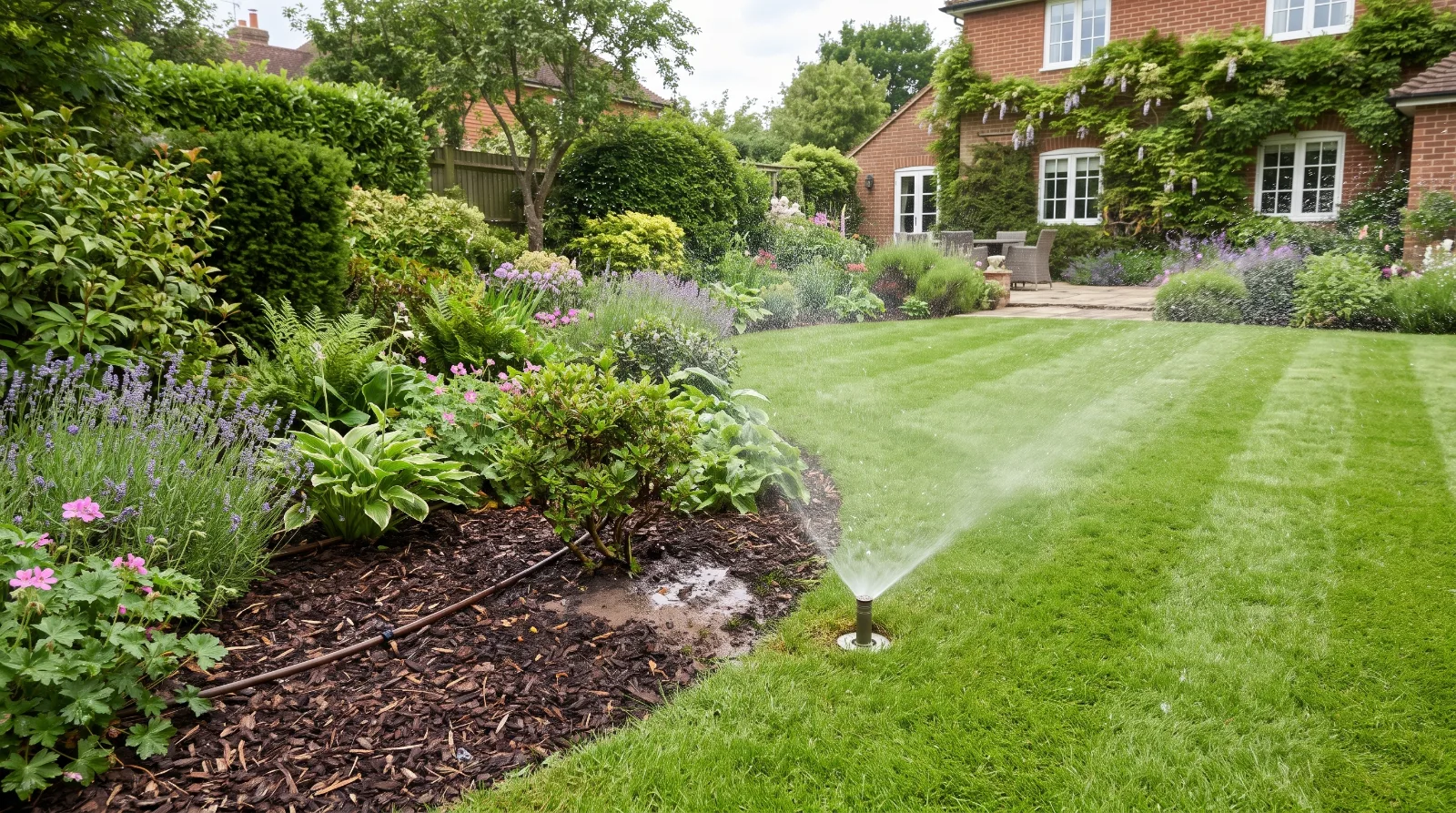
Pop-up sprinklers can be installed so that their heads sit flush with the lawn surface and only rise when the system is operating. This allows the lawn to continue being used normally without permanent obstacles across the surface.
After installation, the affected areas should be levelled and reinstated appropriately.
A good installation should leave the garden looking substantially the same once the work has been completed.
What Happens to Existing Planting Borders?
Borders can often be even easier to irrigate because drip lines and other low-level irrigation components can be positioned around individual plants.
Drip irrigation can deliver water slowly and directly around root zones, and the pipework can often be hidden beneath mulch or positioned discreetly among planting.
This can be particularly useful for:
Shrub borders
Hedges
New planting
Vegetable beds
Raised beds
Containers
Specimen plants
The irrigation can then be divided into zones so different parts of the garden receive water according to their requirements.
Can Irrigation Be Installed Without Removing Plants?
Often, yes.
The system can usually be designed around established plants rather than requiring them to be removed.
However, access and root systems need to be considered carefully.
A route directly through a heavily planted border may be avoided in favour of running pipework around the edge and branching into the individual areas that need watering.
The aim is to disturb as little established planting as reasonably possible.
What About Mature Trees?
Mature trees require particular care because excavation around their root systems can cause unnecessary disturbance.
Where trees are present, irrigation routes should be planned carefully rather than simply digging directly through major root areas.
The system also needs to account for the fact that a mature tree has different water requirements from a newly planted shrub or flower border.
One watering zone should not automatically be expected to suit everything in the garden.
Can Irrigation Be Installed Around a Patio?
Yes.
An existing patio does not necessarily prevent irrigation installation.
Pipework can often be routed around hard landscaping, while irrigation outlets can be positioned within planting areas or lawn zones.
Where pipework needs to cross an existing paved area, the installation method becomes more involved because lifting and reinstating paving may be necessary.
This is one reason the system should be planned around the existing layout before work begins.
If you are already planning to replace or extend a patio, driveway or path, installing irrigation at the same time can reduce disruption.
What About Fencing and Garden Walls?
Boundary features can also be incorporated into the irrigation design.
For example, pipework may need to travel along a fence line to reach a planting border or rear section of the garden.
Valves and controllers should ideally be positioned somewhere accessible but discreet.
The finished system should not leave a collection of obvious pipes, fittings and equipment across the garden.
What Does a Retrofit Irrigation Installation Involve?
Every garden is different, but the process will generally involve several stages.
1. Assessing the Garden
The existing layout is reviewed, including lawns, planting, trees, patios, paths, boundaries and areas that need watering.
2. Checking the Water Supply
The available water supply needs to be assessed to establish what the system can realistically support.
Larger systems may need multiple zones or additional equipment depending on the available flow and pressure.
A small domestic system may be able to operate from the existing supply, while a larger installation may require water storage or pumping equipment.
3. Dividing the Garden Into Zones
Different areas of the garden have different requirements.
A lawn, hedge and planting border should not necessarily be watered in exactly the same way.
Separating the garden into zones allows the system to be programmed more appropriately.
4. Planning Pipe Routes
Pipework is routed around existing features with the aim of minimising unnecessary excavation and damage.
5. Installing the Irrigation
The main pipework, valves, controllers, emitters or sprinkler heads are installed according to the planned design.
6. Testing the System
The system is tested to check pressure, coverage, leaks and individual zones.
7. Reinstating the Garden
Any disturbed lawn, soil, planting or other areas are reinstated as neatly as possible.
The result should be a working irrigation system without making the garden look like a construction site.
How Much Will You Need to Dig Up?
There is no standard amount.
A simple system for a few borders may require relatively limited excavation, whereas a larger automated system supplying a lawn, multiple borders and several distant areas can involve substantially more work.
The layout of the garden is one of the biggest factors.
A garden with wide access and large open planting beds may be easier to retrofit than a mature garden containing extensive paving, dense planting and multiple structures.
This is why an on-site assessment is much more useful than trying to estimate disruption from garden size alone.
Can Irrigation Be Installed in a Garden That Has Already Been Landscaped?
Yes, and this is one of the main reasons retrofit irrigation exists.
A landscaped garden can still be fitted with irrigation after the patio, lawn and planting have been installed.
The installation simply needs to take those finished features into account.
This can be particularly useful if you have recently completed a landscaping project and discovered that watering everything manually takes considerably longer than expected.
It can also make sense when a garden has matured and its watering requirements have changed.
Is It Better to Install Irrigation During Landscaping?
Where possible, installing irrigation during a new landscaping project can make the process easier.
Groundworkers already need to disturb parts of the garden for patios, paths, planting beds and other features, so irrigation pipework can often be installed before those areas are finished.
This can reduce the amount of additional excavation and reinstatement required later.
However, that does not mean an existing garden has missed its opportunity.
A well-designed retrofit can still be installed with relatively controlled disruption.
What Type of Irrigation Is Best for an Existing Garden?
There is no single system that suits every established garden.
The right solution depends on what needs watering.
For example:
Garden area | Suitable approach to consider |
|---|---|
Lawn | Pop-up sprinklers or suitable lawn irrigation |
Borders | Drip lines or targeted irrigation |
Hedges | Dedicated drip or targeted lines |
Raised beds | Drip irrigation |
Containers | Micro-irrigation |
Mixed garden | Multiple irrigation zones |
The system may combine several approaches.
You have already covered the differences between drip irrigation and sprinklers in your separate guide, so this article is less about choosing one technology and more about how those technologies can be incorporated into an existing garden.
Can the System Be Automated?
Yes.
An automated irrigation system can operate through a controller, allowing watering times and zones to be scheduled.
More advanced systems can also incorporate weather information or rain sensors so that watering is adjusted according to conditions.
Automation is particularly useful when:
You are away from home
The garden is large
There are many planting areas
New plants need regular watering
Manual watering takes considerable time
The goal is not simply to water more often.
A properly configured system should deliver water when the plants need it and in an appropriate amount.
Can Irrigation Help Newly Landscaped Gardens?
It can be especially useful.
New trees, shrubs and planting need reliable watering while they establish, particularly during dry periods.
A manually watered garden can be difficult to keep consistent when there are many newly planted areas.
An irrigation system can provide more targeted watering, helping new planting receive water at its root zone.
This can also be useful when a garden contains a mixture of established planting and newly installed beds because the different areas can be separated into appropriate zones.
Does an Existing Garden Need to Be Redesigned?
No.
The irrigation system should generally be designed around the garden that already exists.
You do not need to change your patio, replace your lawn or remove your borders simply because you want irrigation.
In fact, an established garden can make the planning process easier because you already know where watering is most difficult.
The irrigation design can respond to the garden's actual requirements instead of trying to predict how an unfinished landscape will eventually develop.
What About Areas That Are Difficult to Reach?
This is where irrigation can provide some of its biggest benefits.
A narrow side border, distant planting bed or awkward corner can be frustrating to reach with a hose.
Automated irrigation can deliver water directly to these areas without requiring you to manually move equipment around the garden.
This is particularly useful when planting is dense or when access becomes difficult during the growing season.
Can Irrigation Work With a Water Butt?
Potentially, although the feasibility depends on the irrigation system and water supply requirements.
Smaller systems may be able to use stored rainwater with suitable equipment, while larger automated installations can require more consistent pressure and volume than a typical water butt can provide.
The system should therefore be designed around the available water source rather than assuming that every irrigation setup can simply be connected to a storage container.
Does Installing Irrigation Increase Water Use?
It can, if the system is poorly designed or programmed.
Automation does not automatically mean water efficiency.
The advantage is that water can be targeted to the areas that actually need it. Drip irrigation, for example, can deliver water directly around plant root zones rather than spraying large areas indiscriminately.
Good system design should therefore consider:
Plant requirements
Soil type
Weather
Irrigation zones
Water pressure
Run times
Coverage
The aim should be appropriate watering rather than maximum watering.
How Much Does It Cost to Install Irrigation in an Existing Garden?
There is no standard price because retrofit installations vary considerably.
The main cost factors include:
Garden size
Number of irrigation zones
Type of irrigation
Existing planting
Lawn area
Amount of excavation
Access
Water supply
Controller
Valves and other components
Pump or storage requirements
Reinstatement work
A smaller system supplying a few borders can be relatively simple, while a fully automated installation covering a large established garden can require significantly more equipment and labour.
The level of disruption can also affect the cost.
Is Retrofitting Irrigation Worth It?
For the right garden, it can be.
It is particularly worthwhile when you find yourself regularly spending a significant amount of time watering, when parts of the garden are difficult to reach or when new planting needs reliable aftercare.
It can also be valuable for people who are frequently away from home.
The benefit is not just convenience.
A well-designed system can provide more consistent watering and allow different areas of the garden to be managed according to their specific requirements.
What Should You Ask Before Installing Irrigation?
Before arranging a retrofit system, consider:
Which areas actually need irrigation?
How much of the garden needs regular watering?
Is the existing water supply adequate?
Will pipework need to cross patios or paths?
How much existing planting needs to be worked around?
Would automation be useful?
Where will the controller and valves be located?
How will the garden be reinstated after installation?
These questions help turn irrigation from a generic product into a system designed around the actual garden.
Can Irrigation Be Installed Without Ruining an Established Garden?
Yes.
It requires more planning than installing irrigation during a new landscaping project, but an established garden is not a barrier.
The system can be designed around existing lawns, planting, patios, trees and boundaries, with pipework and irrigation components positioned as discreetly as possible.
The amount of disruption will depend on the garden and system, but careful routing and reinstatement can keep it under control.
For many homeowners, that makes retrofit irrigation a practical way to improve watering without starting the garden all over again.
Give Your Existing Garden an Easier Way to Stay Watered
You do not need to wait for your next garden transformation to install irrigation.
An established garden can be assessed as it is, allowing the system to be designed around the areas that actually need reliable watering.
With appropriate zoning, discreet pipework and suitable irrigation components, the finished system can become part of the garden without dominating it.
The biggest advantage is simple: less time spent dragging hoses around the garden and more consistent watering where it matters.
Need Garden Irrigation in Surrey?
Surrey Oak Landscapes can help incorporate irrigation into existing gardens as well as new landscaping projects.
From watering established borders and lawns to supporting new planting, the irrigation system can be designed around your garden, its layout and how you use the space.
Thinking about installing irrigation in an existing Surrey garden? Get in touch with Surrey Oak Landscapes for a free, no-obligation quote.
About the author