Block Paving Maintenance: How to Keep Your Driveway Looking New
Keep your block-paved driveway looking its best with practical maintenance advice covering cleaning, weeds, jointing, stains, drainage and repairs.
Block Paving Maintenance: How to Keep Your Driveway Looking New
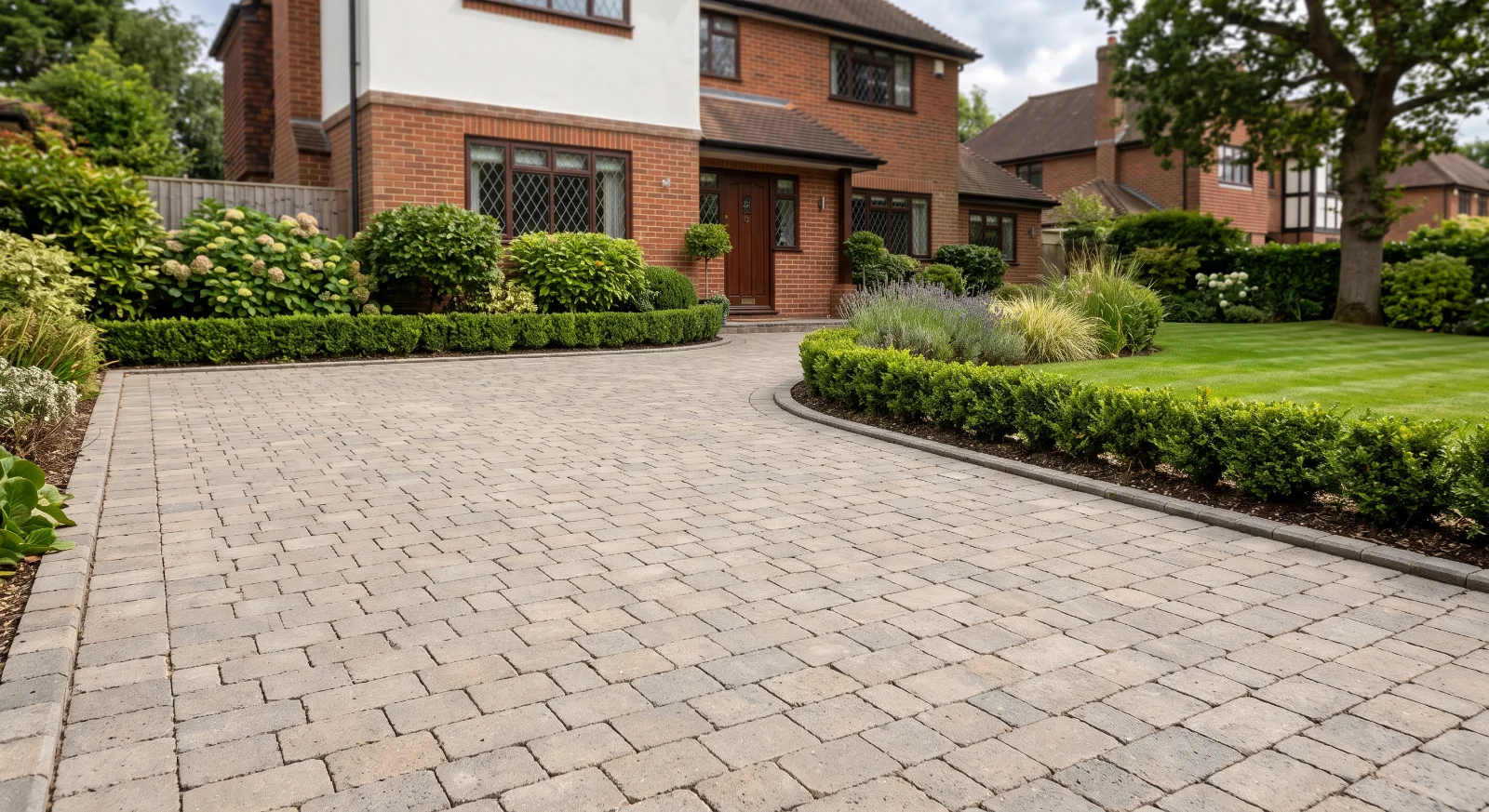
Block paving is one of the most versatile choices for a residential driveway. With different colours, sizes and laying patterns available, it can suit everything from traditional Surrey homes to contemporary properties.
But even a well-installed block-paved driveway needs some maintenance.
Dirt, leaves, moss, weeds, tyre marks and oil can gradually affect the appearance of the surface, while neglected joints or early signs of movement can become more difficult to deal with later.
The good news is that regular maintenance does not have to be complicated.
With a simple routine of sweeping, cleaning, checking the joints and dealing with small problems early, a block-paved driveway can continue to look its best for many years.
A Simple Block Paving Maintenance Routine
Maintenance Task | Recommended Approach |
|---|---|
Sweep the driveway | Regularly remove leaves, dirt and loose debris |
Remove weeds | Deal with weeds as soon as they appear |
Clean the surface | Carry out a deeper clean when dirt, algae or staining builds up |
Check the joints | Look for areas where jointing material has become low or missing |
Inspect the blocks | Check for damaged, loose or sunken areas |
Deal with stains quickly | Treat oil and other spills before they become established |
Check drainage | Keep channels, gullies and edges clear |
Consider sealing | Optional, depending on the paving and the protection you want |
There is no need to carry out every task every week. The aim is simply to prevent small maintenance issues from becoming larger ones.
Keep the Surface Clear
One of the easiest things you can do is also one of the most effective.
Regularly sweep the driveway with a stiff outdoor broom to remove leaves, soil, grit and other debris.
This is particularly important during autumn when fallen leaves can quickly build up between paving blocks and along the edges.
Organic debris left on the surface can hold moisture and contribute to moss, algae and weed growth, particularly in shaded areas.
Keeping the driveway clean also makes it much easier to spot problems early.
Deal With Weeds Before They Establish
Weeds are one of the most common complaints with block paving.
It is worth understanding where they usually come from.
In a properly constructed block-paved driveway, weeds generally establish within the joints or from debris that has accumulated on the surface, rather than growing up through the entire driveway construction.
Once you see a few small weeds appearing, remove them rather than allowing them to become established.
For larger growth, carefully remove the plant and as much of the root as possible without unnecessarily damaging the surrounding paving.
Don't forget the joints
Removing an established weed can sometimes disturb the jointing material around it.
If a joint has become noticeably empty or low, replace the missing material once the area has been cleaned.
Maintaining filled joints is important because the jointing material contributes to the stability of block paving.
Keep the Jointing Sand in Good Condition
The joints between block pavers are easy to overlook, but they have an important structural role.
Over time, jointing material can be lost through cleaning, heavy surface water, general wear or movement.
A simple visual inspection every few months can identify areas that need attention.
Look for:
Empty joints
Low or uneven jointing
Crumbling material
Areas where weeds are repeatedly appearing
Water washing across the same sections of paving
If only a small amount of jointing material has been lost, topping it up may be all that is required.
If joints continue to disappear or blocks are moving, however, there may be a deeper problem that needs investigating.
How to Clean Block Paving
A regular sweep may be enough to keep a well-maintained driveway looking tidy, but eventually most driveways benefit from a deeper clean.
This can remove accumulated dirt, algae, moss, tyre marks and other surface deposits.
Start with the simplest approach
Before reaching for strong cleaning products or a pressure washer, remove loose debris with a stiff brush.
For general dirt, a suitable paving cleaner and thorough rinsing may be enough.
Always check that any cleaning product is appropriate for your particular block paving and follow its instructions.
Pressure washing can be useful — but use care
A pressure washer can be effective for heavily soiled block paving, but excessive pressure can cause problems.
A powerful jet held too close to the surface can damage some paving finishes and remove jointing material.
It can also leave the joints partially empty, meaning they may need to be refilled afterwards.
Use a sensible pressure, keep the nozzle moving and avoid concentrating the jet on one area for too long.
For older or more delicate paving, professional cleaning can be a better option than aggressive DIY pressure washing.
Dealing With Moss and Algae
Moss and algae are more likely to appear where a driveway remains damp and receives limited sunlight.
This can be especially noticeable on shaded driveways, beneath trees and along areas that receive little vehicle or foot traffic.
Regular sweeping can help prevent organic material from building up.
Where growth has become established, the surface can be cleaned using an appropriate paving treatment, followed by thorough rinsing.
Do not assume that every "moss killer" or cleaning chemical is suitable for every type of paving. Some products can affect the colour or finish of certain materials.
Remove Oil Stains as Soon as Possible
Oil marks are particularly common on driveways and can be difficult to remove once they have penetrated the surface.
The best time to deal with an oil spill is straight away.
Absorb as much of the fresh spill as possible before cleaning the area with a product suitable for the paving.
Avoid aggressive chemicals without checking their suitability first.
For an older, heavily marked driveway, complete cleaning may improve the appearance considerably, although some staining can remain.
In particularly bad cases, individual paving blocks can sometimes be lifted and replaced rather than attempting to remove a deeply established stain.
What About Sealing Block Paving?
Sealing is not essential for every block-paved driveway, but it can be worth considering depending on the type of paving and the finish you want.
A suitable sealer may help:
Protect against certain stains
Improve colour
Make some surfaces easier to clean
Reduce the loss of jointing material
Provide additional protection from weathering
However, sealers are not a substitute for maintenance.
The paving should be properly cleaned and allowed to dry before sealing, and the product should be suitable for the particular blocks and jointing system.
It is also important to think about the finished appearance.
Some sealers can create a noticeably darker or glossier finish, while others are designed to be much more subtle.
For a natural-looking driveway, a suitable matt or low-sheen product may be preferable.
Don't Seal a Dirty Driveway
One of the biggest mistakes is treating sealing as a quick way to improve a neglected driveway.
If dirt, algae, moss or stains are already present, sealing over them will not solve the problem.
The driveway should first be thoroughly cleaned, the joints checked and any necessary repairs completed.
Only then should sealing be considered.
This is particularly important with older block paving where pressure washing or deep cleaning may have removed some of the jointing material.
Check for Loose or Sunken Blocks
A driveway that has been installed correctly should remain stable, but individual areas can sometimes move over time.
Keep an eye out for:
Blocks that rock when walked or driven over
Areas that have visibly sunk
Uneven sections
Gaps appearing between blocks
Damaged or cracked blocks
Depressions where water begins to collect
Do not simply fill the surrounding joint with extra material and assume the problem is fixed.
If paving has sunk, there may be an issue beneath it involving the bedding layer, sub-base or underlying ground.
A localised repair can often be much simpler when the cause is identified early.
Keep Drainage Clear
Good drainage is important for both the appearance and performance of a driveway.
Leaves, soil and other debris can collect around drainage channels and gullies, particularly during autumn and winter.
Clear these areas regularly so that rainfall can drain freely.
After heavy rain, take a quick look at the driveway.
If you notice water repeatedly collecting in the same location, it may be worth investigating rather than assuming it is simply normal after a downpour.
Persistent standing water can indicate problems with surface falls, drainage or local settlement.
Maintain the Edges
The edges of a block-paved driveway help keep the paving in place.
Check the perimeter regularly for movement or damage, particularly where vehicles frequently turn or park.
Pay attention to areas where the paving meets:
Lawn
Planting beds
Walls
Paths
Gates
Drainage channels
If the edge begins to move, dealing with it early can help prevent movement spreading into the rest of the driveway.
Be Careful With Winter Grit and Salt
Winter can bring frost and icy conditions, particularly on shaded driveways.
If you use de-icing products, choose products that are appropriate for your particular paving and use them as directed.
Avoid excessive application simply because the surface feels slippery.
It is also sensible to remove accumulated leaves before winter, as wet organic matter can make the driveway slippery and encourage moss growth.
A Seasonal Maintenance Guide
Different times of year bring different maintenance priorities.
Season | What to Focus On |
|---|---|
Spring | Deep clean, remove winter debris, check joints and inspect for movement |
Summer | Remove weeds, deal with stains and keep the surface free from dirt |
Autumn | Sweep regularly, clear leaves from drainage and monitor moss growth |
Winter | Keep drainage clear, remove wet debris and monitor slippery areas |
You do not need to follow a rigid schedule.
A driveway that sits under trees may need much more frequent sweeping than one in an open, sunny position.
How Often Should You Clean Block Paving?
There is no single schedule that suits every driveway.
A sensible approach is to carry out regular light cleaning throughout the year and a more thorough clean when the surface needs it.
You may need to clean more frequently if your driveway:
Sits beneath mature trees
Is mostly shaded
Receives heavy vehicle traffic
Is close to a lawn or planting area
Has developed algae or moss
Has visible oil or tyre marks
The objective is not to make the driveway look freshly installed every week.
It is to prevent dirt and organic material from being allowed to build up for months at a time.
When Maintenance Is No Longer Enough
Sometimes a driveway needs more than cleaning.
If blocks are repeatedly sinking, moving or breaking, the problem may be underneath the surface.
Likewise, if drainage problems continue despite keeping channels clear, there may be an issue with the driveway's levels or drainage design.
At that stage, cleaning and sealing will only address the appearance rather than the underlying cause.
Depending on the condition, the solution could involve:
Localised block replacement
Re-bedding individual areas
Replacing damaged jointing
Repairing edge restraints
Improving drainage
Reconstructing a section of the driveway
Complete driveway refurbishment
A professional assessment can help determine whether the issue is cosmetic or structural.
How to Keep a New Block-Paved Driveway Looking Its Best
If your driveway has recently been installed, good maintenance from the beginning can make future cleaning much easier.
Sweep regularly
Don't allow leaves and dirt to build up.
Deal with spills quickly
Oil and other stains are easier to address when they are fresh.
Keep the joints filled
Check for areas where jointing material has become low or missing.
Avoid aggressive cleaning
A pressure washer used incorrectly can cause more harm than good.
Watch for movement
Small changes are easier to repair than widespread settlement.
Keep drainage clear
Water should always have an appropriate route away from the driveway.
Should You Clean or Replace Your Driveway?
This depends on its condition.
A driveway that is structurally sound but looks dirty, stained or overgrown may respond very well to professional cleaning, joint repairs and other maintenance.
A driveway with widespread settlement, damaged foundations, failing edges or persistent drainage problems may need more substantial work.
Condition | Likely Approach |
|---|---|
Surface looks dirty | Cleaning |
Weeds in joints | Weed removal and joint maintenance |
Missing jointing material | Re-sanding or appropriate joint repair |
Minor damaged blocks | Individual block replacement |
Small sunken area | Investigate and locally reconstruct |
Poor drainage | Assess and improve drainage |
Widespread movement | Structural repair or refurbishment |
Severely deteriorated driveway | Consider replacement |
Cleaning should not be used to disguise a structural problem.
A Little Maintenance Goes a Long Way
Block paving does not need constant attention to remain attractive.
Regular sweeping, sensible cleaning, keeping the joints maintained and dealing with stains or movement early can make a significant difference.
It is also worth remembering that no outdoor driveway remains completely untouched by the British weather. Some natural weathering is inevitable.
The aim is to prevent normal ageing from becoming neglect.
With the right care, a well-installed block-paved driveway can continue to complement your home for years.
Keep Your Surrey Driveway Looking Its Best
For homeowners in Surrey, a driveway is often one of the first things visitors see, so keeping it clean, stable and well maintained can make a noticeable difference to the overall appearance of your property.
At Surrey Oak Landscapes, we work with homeowners on driveways, paving and wider front garden landscaping, from new installations to improvements that help bring an established outdoor space back up to standard.
If your block paving is looking tired, has developed drainage or settlement problems, or you are considering a completely new driveway, we can assess the space and help determine the most suitable approach.
About the author