What Is the Best Surface for a Driveway?
Choosing a new driveway in Surrey? Compare block paving, resin-bound, tarmac, gravel and permeable paving, with practical advice on drainage, maintenance and design.
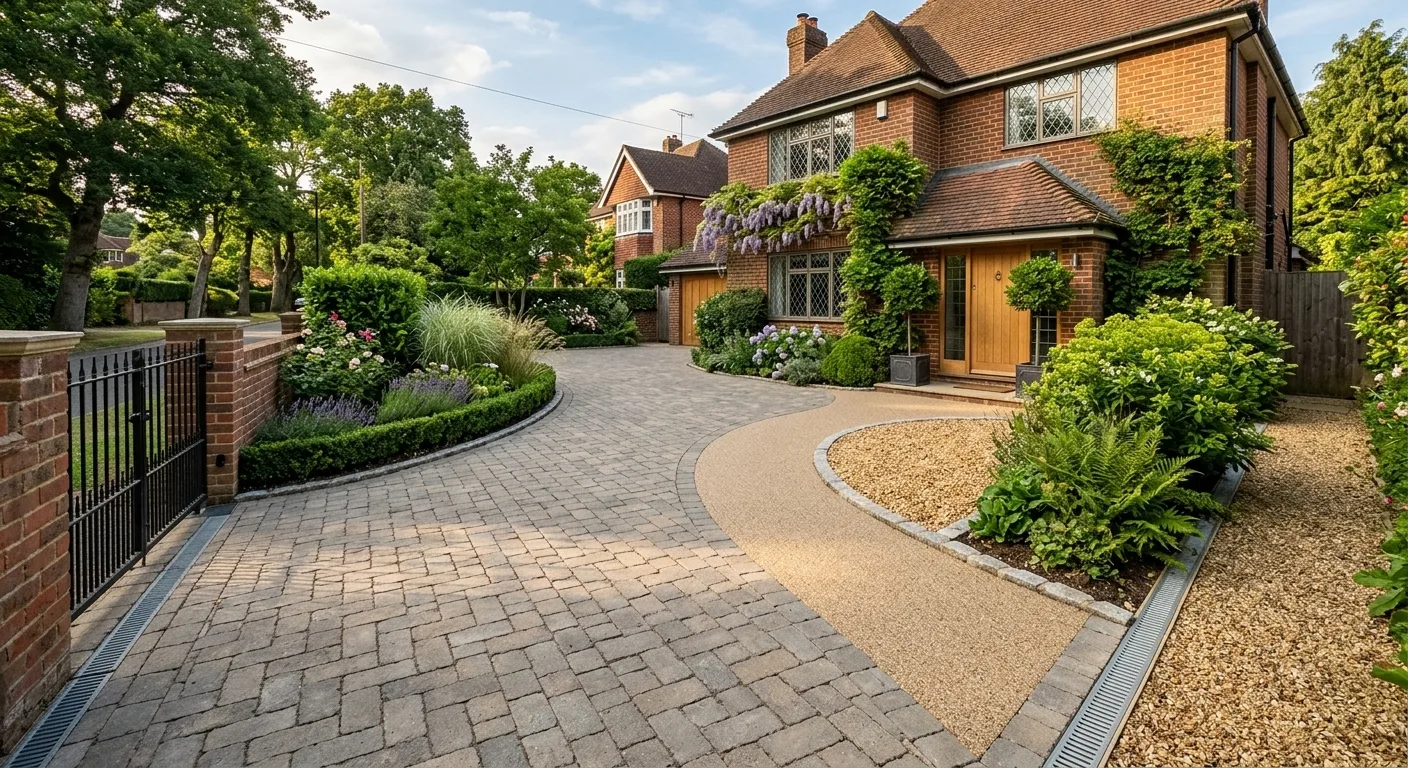
Choosing a new driveway is about more than picking a colour or material that looks good outside your home.
The surface needs to cope with vehicles, rainfall, everyday use and regular maintenance, while also complementing the style of the property. Drainage is another important consideration, particularly for front gardens where replacing a large area of lawn or planting with hard surfacing can change how rainwater moves across the site.
There is no single driveway surface that is right for every home. Block paving, resin-bound, tarmac, gravel and permeable paving all have different strengths.
The best choice depends on how you want the driveway to look, how much maintenance you are prepared to do, how much traffic it will take and, importantly, how the site deals with rainwater.
The Main Driveway Surfaces Compared
Surface | Appearance | Maintenance | Drainage Potential | Design Flexibility | Best Suited To |
|---|---|---|---|---|---|
Block paving | Traditional to contemporary | Medium | Excellent with permeable systems | Excellent | Homeowners wanting a highly customisable driveway |
Resin-bound | Smooth and contemporary | Low | Excellent when correctly constructed | Excellent | Modern homes and homeowners wanting a neat finish |
Tarmac | Simple and practical | Low | Usually requires separate drainage | Limited | Larger driveways and practical everyday use |
Gravel | Natural and informal | Medium | Naturally permeable | Good | Rural or traditional properties |
Permeable paving | Similar to block paving | Medium | Designed for water infiltration | Excellent | Properties where drainage is a priority |
The surface is only part of the driveway, however. The foundation underneath has a major influence on how well any system performs.
1. Block Paving
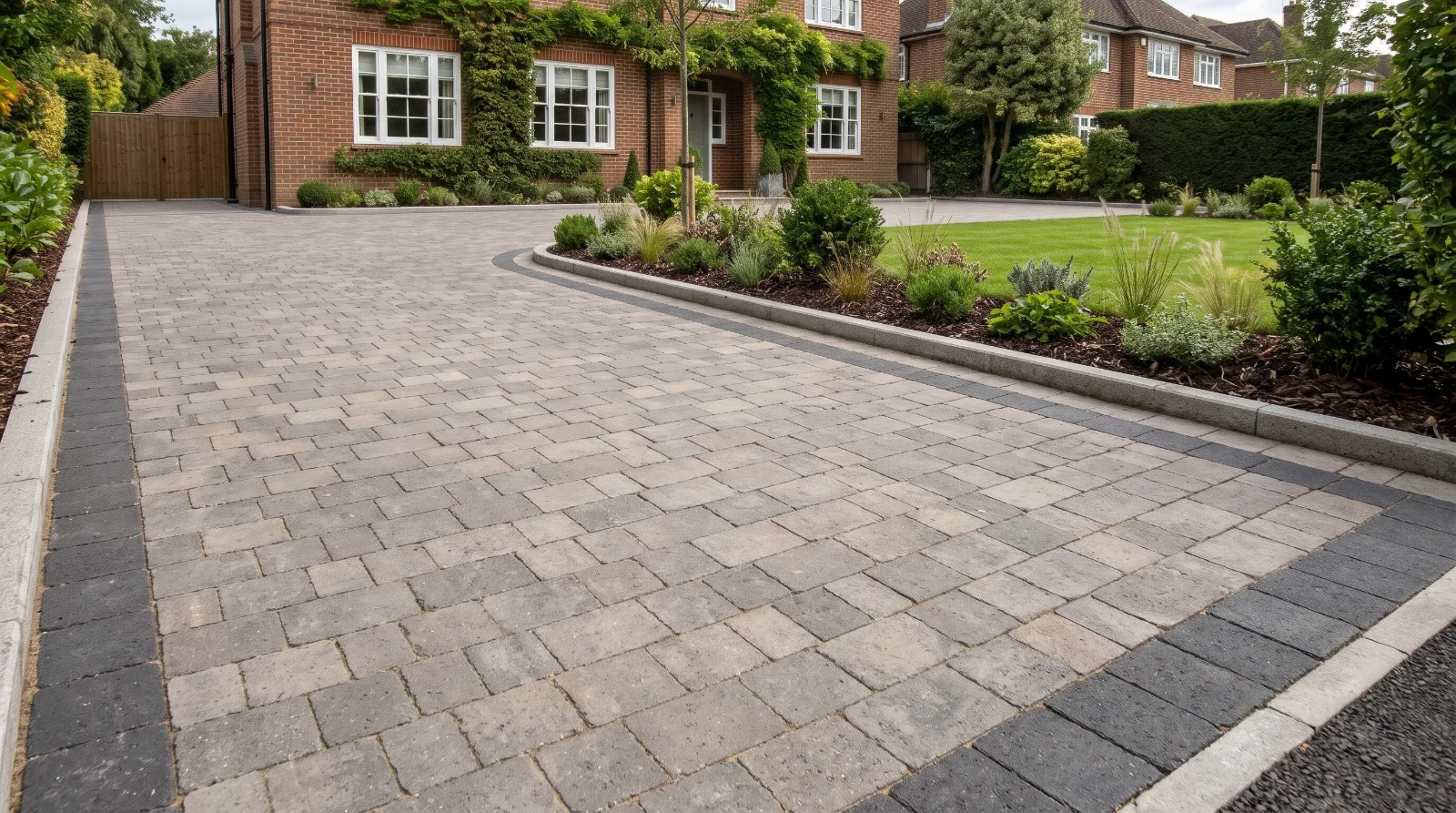
Block paving remains one of the most versatile options for residential driveways.
Individual blocks are available in different colours, sizes and patterns, allowing the driveway to be designed around the property rather than treated as one large uniform surface.
Herringbone, stretcher bond and other laying patterns can create very different appearances, while contrasting borders can be used to define the edges or separate parking areas.
Why choose block paving?
Highly customisable
There is a wide choice of colours, formats, textures and patterns.
Easy to repair locally
Individual blocks can usually be lifted and replaced if a section becomes damaged or needs access for underground services.
Works with many property styles
Traditional brick homes, period properties and contemporary houses can all be suited to block paving when the right colours and pattern are chosen.
Permeable options are available
Permeable block paving systems can allow rainwater to pass through the surface and into the supporting construction below.
What should you consider?
Block paving generally requires more maintenance than a completely smooth surface. Joints can collect dirt and organic material, and weeds may develop if the surface is neglected.
The quality of the installation is also crucial. Poorly prepared ground, inadequate edge restraints or insufficient compaction can lead to movement and settlement regardless of how good the paving itself is.
2. Resin-Bound Driveways
Resin-bound surfacing has become increasingly popular for homeowners looking for a clean, contemporary alternative to block paving.
The aggregate is mixed with resin before being trowelled onto the prepared surface, creating a smooth finish with the appearance of natural stone.
One of its biggest advantages is that the finished surface contains small voids that allow water to pass through when the system has been installed over an appropriate permeable base.
Why choose resin-bound?
Clean appearance
The relatively seamless finish works particularly well with contemporary properties.
Large choice of colours
Different aggregate blends can create subtle or more distinctive finishes.
No loose gravel
Unlike a traditional gravel driveway, the aggregate is fixed into the resin.
Permeable
A correctly constructed resin-bound system can allow rainfall to infiltrate through the surface.
One important distinction
Do not confuse resin-bound with resin-bonded.
They are different systems.
Resin-bound aggregate is mixed with resin and then trowelled into place, producing a permeable surface.
Resin-bonded surfacing involves applying resin to a base and spreading aggregate over it. The resulting surface is generally not permeable because the resin forms a continuous layer underneath the aggregate.
This distinction matters when drainage is part of your driveway design.
3. Tarmac
Tarmac is one of the most practical driveway options and has been used on UK driveways for decades.
It provides a relatively uniform surface and is particularly suited to larger areas where keeping the design simple can make the project more economical.
Why choose tarmac?
Practical and durable
It provides a hard-wearing surface suitable for regular vehicle use.
Simple appearance
Its understated finish works well when the driveway is intended to complement rather than dominate the property.
Fast installation
Tarmac can generally be installed more quickly than intricate block paving because there is less individual laying involved.
What are the drawbacks?
Standard tarmac is not permeable, so drainage needs to be considered as part of the overall driveway design.
That could mean directing rainwater towards a suitable permeable area or incorporating appropriate drainage infrastructure.
Tarmac also offers less scope for decorative patterns and detailing than block paving or resin-bound surfacing.
For a large driveway where practicality is the main priority, however, it can be a sensible solution.
4. Gravel
For the right property, gravel can create a very attractive driveway.
It works particularly well with rural homes, cottages and properties where a softer, more natural appearance suits the surrounding landscape.
It is also naturally permeable, allowing rainfall to pass through the surface rather than simply running across it.
Advantages of gravel
Naturally permeable
Rainwater can pass through loose aggregate.
Natural appearance
It can work particularly well with traditional landscaping and planting.
Flexible design
Different stone colours and sizes can create very different looks.
Generally lower initial material cost
Gravel can be a cost-effective option compared with some more elaborate driveway systems, although the overall project cost still depends on excavation, edging, sub-base and installation.
What about maintenance?
Loose gravel can move under vehicle traffic and may spread onto paths or roadsides.
It can also require occasional raking and topping up.
Edging and a properly prepared base can help keep the aggregate where it belongs, particularly on larger or sloping driveways.
5. Permeable Paving
Permeable paving deserves a separate mention because drainage is becoming an increasingly important part of driveway design.
Rather than simply making the visible surface porous, a permeable paving system is designed as a complete construction that allows water to pass through the surface and into the sub-base beneath.
The sub-base itself is designed to store and manage water, allowing it to infiltrate into the ground where conditions permit or be directed into an appropriate drainage arrangement.
Permeable block paving can therefore provide much of the visual flexibility of conventional block paving while addressing surface-water management as part of the construction.
Why Drainage Should Influence Your Decision
One of the easiest mistakes when choosing a driveway is thinking only about the surface.
A driveway changes the area of ground available for rainfall to soak away.
In England, specific rules apply to paving front gardens. A new or replacement driveway can generally use permeable surfacing or direct rainwater to a permeable area without planning permission, while a traditional impermeable surface covering more than 5 square metres may require planning permission unless the water is dealt with appropriately. There can also be additional considerations for particular properties or locations.
That does not mean every driveway needs a permeable surface.
An impermeable driveway can still be designed with suitable drainage, for example by directing water towards a lawn, planted border or appropriate drainage system.
The important thing is to consider where the rainwater will go before choosing the finish.
What Matters More: The Surface or the Base?
The visible surface is what you notice first, but much of a driveway's long-term performance comes from what sits underneath it.
A properly constructed driveway normally involves excavation, preparation of the ground, a suitable sub-base and the correct laying or surfacing system.
The exact construction depends on the material, ground conditions and expected traffic.
For example, permeable driveway systems use different sub-base arrangements from conventional impermeable construction because the supporting layers need to accommodate the movement and temporary storage of rainwater.
This is why two driveways using the same surface can perform very differently.
A premium material cannot compensate for a poorly prepared foundation.
Which Surface Suits Different Homes?
The style of the property should influence the decision just as much as the material itself.
Contemporary homes
A clean resin-bound surface, large-format paving or simple block paving can work well with modern architecture.
Keep the detailing restrained and use colours that complement the house rather than competing with it.
Traditional properties
Block paving, gravel and natural-looking materials can suit older homes particularly well.
A contrasting border or traditional laying pattern can add character without making the driveway look overly elaborate.
Larger properties
Tarmac can be practical for larger driveways where there is considerable vehicle movement.
Block paving or resin can then be introduced as borders or feature areas to add visual interest.
Rural or country homes
Gravel can provide a softer transition between the house, driveway and surrounding planting.
Block paving or natural stone detailing can also be incorporated around entrances and paths.
How Much Maintenance Do You Want?
Your preferred maintenance level is another useful way to narrow the options.
If you want... | Consider... |
|---|---|
A highly customisable design | Block paving |
A smooth, contemporary finish | Resin-bound |
A practical surface for a larger driveway | Tarmac |
A natural, informal appearance | Gravel |
Drainage built into the paving system | Permeable paving |
No driveway is completely maintenance-free.
Leaves, dirt, algae and organic material can affect any external surface, particularly in shaded areas or where the driveway sits beneath trees.
Permeable surfaces also need to be kept clear of debris so that their drainage performance is not compromised. Guidance on permeable surfacing recommends regular sweeping and preventing soil and other fine material from clogging the surface.
What About Cost?
There is no meaningful single price for a driveway surface without knowing the site.
The total project cost can change considerably depending on:
The size of the driveway
Existing surface removal
Ground conditions
Required excavation
Drainage requirements
Access for machinery
Choice of edging
Surface material
Design complexity
Number of parking spaces
Current UK driveway comparison guides show substantial variation between materials and projects, which is why published per-square-metre figures should be treated as broad indicators rather than quotations.
For example, a straightforward tarmac driveway may be considerably cheaper to install than an intricate block-paved design, while a resin-bound driveway can sit somewhere between depending on its base and preparation requirements.
A site assessment gives a much more useful indication of the actual cost.
Common Driveway Mistakes to Avoid
Choosing the surface before considering drainage
Drainage should be part of the design from the beginning.
Focusing only on the cheapest quote
Two quotes can look similar on paper while using very different levels of preparation or different construction methods.
Choosing a material that doesn't suit the property
A driveway should complement the house and wider garden rather than being selected in isolation.
Underestimating access requirements
The ability to bring machinery and materials onto the site can significantly affect the installation process.
Forgetting about maintenance
Think about what the driveway will look like after several years, not just on the day it is completed.
Ignoring the base
The quality of the preparation beneath the surface is fundamental to long-term performance. (marshalls.co.uk)
So, What Is the Best Surface for a Driveway?
There isn't one answer for every property.
Block paving is particularly suitable when design flexibility and local repairability are priorities.
Resin-bound is a strong option for homeowners who want a smooth, contemporary appearance with good drainage potential.
Tarmac makes sense where practicality, simplicity and efficient installation are important.
Gravel works well where a natural appearance and permeability are priorities.
Permeable paving is worth considering when you want the appearance and flexibility of paving while making surface-water management a central part of the design.
The most suitable choice ultimately depends on your property, how the driveway will be used, the existing ground and drainage, the appearance you want and the level of maintenance you are comfortable with.
Choosing the Right Driveway for Your Surrey Home
A new driveway can completely change the first impression of a property, but the best results come from treating it as part of the wider landscape rather than as a standalone surface.
At Surrey Oak Landscapes, we can help you consider the driveway as part of the overall front garden, including paving, edging, drainage, planting and access.
Whether you are replacing an old driveway, creating additional parking or completely redesigning your front garden, the right combination of materials and professional preparation can create a driveway that looks good and works properly for years to come.
Ready to transform your driveway?
About the author