Are Garden Rooms High Maintenance? What to Expect
Are garden rooms difficult to maintain? Discover what regular upkeep is required and how materials, drainage, ventilation and landscaping can affect maintenance.
A garden room can be a great way to add usable space without extending the main house, but many homeowners have the same concern before committing:
How much maintenance does a garden room actually need?
The good news is that a well-designed and properly constructed garden room should not require constant upkeep. Most of the work is straightforward and involves the same sort of tasks you would carry out around the rest of your property.
However, low maintenance does not mean maintenance-free.
The amount of care required depends on the building's materials, roof, windows, doors, heating and ventilation, as well as the landscaping immediately around it.
What Maintenance Does a Garden Room Need?
A garden room can be broken down into a few main areas when thinking about ongoing maintenance.
Area | Typical Maintenance |
|---|---|
External walls | Cleaning and occasional treatment depending on the cladding |
Roof | Visual inspections, cleaning gutters and checking for damage |
Windows & doors | Cleaning, checking seals and keeping moving parts clear |
Interior | General cleaning and good ventilation |
Heating & electrics | Routine checks and servicing where required |
Grounds | Keeping drainage, planting and access around the building clear |
Timber elements | Periodic maintenance depending on finish |
Roof drainage | Clearing leaves and debris from gutters and outlets |
The exact requirements will depend on how your garden room has been built.
Which Parts Need the Most Attention?
Not every component of a garden room needs the same level of maintenance.
Some areas may only need an occasional inspection, while others benefit from regular attention.
External Cladding
The external finish is one of the biggest factors affecting long-term maintenance.
Timber cladding can look excellent in a garden and suits both traditional and contemporary designs, but the amount of upkeep depends on the type of timber and finish used.
Some timber finishes are designed to weather naturally, while others need periodic treatment to maintain their colour and appearance.
A garden room finished in a lower-maintenance external material may require considerably less regular treatment.
This is why maintenance should be considered before the garden room is built, rather than after.
The Roof
The roof is another area that deserves regular checks.
You do not necessarily need to carry out extensive work every year, but it is sensible to inspect the roof periodically for obvious signs of damage or deterioration.
Look out for:
Damaged areas
Standing water
Debris accumulation
Visible deterioration around roof details
Blocked drainage outlets
If the building has gutters, keep them clear of leaves and other debris.
This becomes especially important during autumn, particularly if the garden room sits beneath or close to mature trees.
Windows and Doors
Windows and doors generally need no more attention than those elsewhere on a property, but they should still be kept clean and checked periodically.
Pay attention to:
Door and window seals
Opening mechanisms
Locks and handles
Drainage channels
Sliding door tracks
Visible gaps or deterioration
Sliding doors can collect dirt and debris in their tracks, so keeping them clean helps maintain smooth operation.
If a door or window becomes noticeably difficult to close, it is better to investigate the problem early rather than continuing to force it.
Does Timber Make a Garden Room High Maintenance?
Not necessarily.
Timber is often chosen because it creates a warm, natural appearance that works particularly well in a garden.
The key question is what type of timber finish is being used.
A timber-clad garden room may be designed to weather naturally, gradually developing a more weathered appearance over time.
Alternatively, it may have a protective coating that needs to be maintained periodically.
This means two timber garden rooms can have very different maintenance requirements.
If reducing future upkeep is important to you, discuss the intended finish and maintenance schedule before choosing the cladding.
How Much Maintenance Does Composite Cladding Need?
Composite cladding is often chosen by homeowners looking for a more consistent external appearance with less ongoing maintenance than some traditional timber finishes.
It does not normally require the same type of regular staining or painting associated with certain timber systems.
That does not mean it can simply be ignored.
Dirt, algae, leaves and other organic material can still accumulate, especially on shaded elevations.
Occasional cleaning and visual checks will help keep the exterior looking its best.
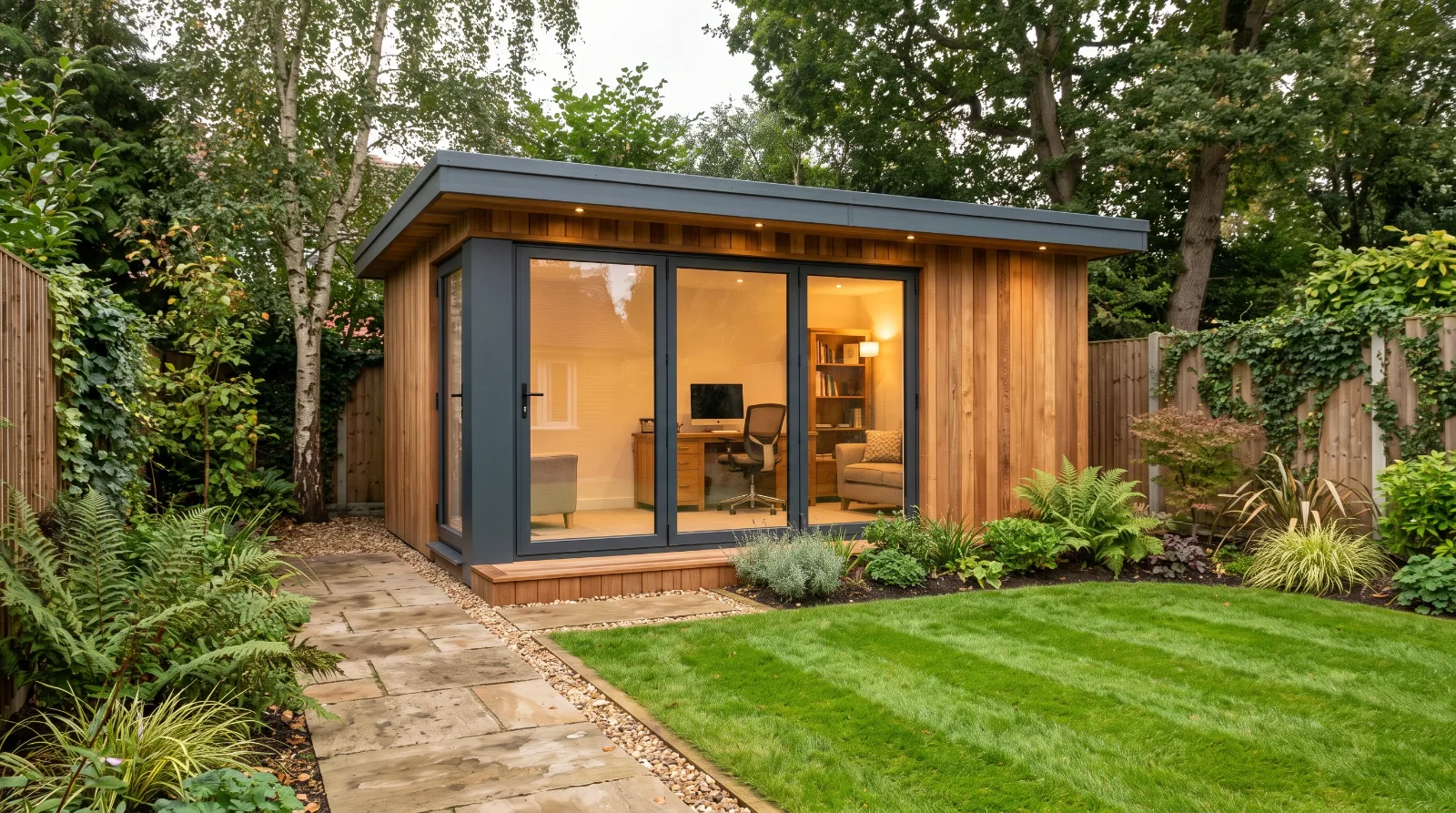
Does the Garden Around the Room Affect Maintenance?
Yes — and this is often overlooked.
A garden room may be low maintenance by itself, but the area immediately around it can create additional work.
For example, planting that grows directly against the building can make access difficult, increase moisture around the exterior and create more cleaning work.
Trees close to the roof may also increase the amount of leaves collecting in gutters.
A good landscape design should therefore consider a practical maintenance zone around the building.
This could include:
A clear path around the room
Gravel or paving beside the walls
Controlled planting
Space for gutter access
Proper drainage
Low-maintenance borders
The landscaping should make the garden room easier to maintain rather than creating obstacles around it.
Don't Let Planting Take Over
Plants can make a garden room look much more integrated into the garden, but positioning matters.
Large shrubs pushed directly against walls can become difficult to maintain and may hide areas that need to be inspected.
Climbing plants can also require regular control.
A better approach is to create layers.
Use lower planting close to the building, introduce shrubs further out and use taller plants or trees where screening is needed.
This gives the garden room a softer setting without making the exterior difficult to access.
What About the Interior?
The inside of a garden room generally requires no more cleaning than another room in the house.
Vacuuming, dusting and cleaning windows will make up most of the routine work.
The bigger consideration is ventilation.
Because garden rooms are often well insulated and tightly built, moisture produced indoors needs to be allowed to escape.
Opening windows when appropriate, using designed ventilation and keeping the room at a suitable temperature can all help manage condensation.
This becomes particularly important during colder months when warm indoor air meets cooler surfaces.
If you notice persistent condensation, damp smells or visible mould, do not simply clean the affected area and ignore the cause. It is worth checking ventilation, heating and the building itself.
Does a Garden Room Need Heating in Winter?
If the garden room is intended for year-round use, heating becomes part of its normal operation.
A well-insulated room should be easier to heat than a basic outdoor structure, but keeping it comfortable still requires sensible use of the heating system.
Many homeowners choose systems that can be controlled by a thermostat or smart controls, allowing the room to be warmed before use rather than left permanently overheated.
If the room is used as a home office, gym or regular living space, maintaining a comfortable and reasonably consistent environment can also make the space feel much more like an extension of the home.
What About Summer Maintenance?
Winter is not the only time to think about the condition of a garden room.
During warmer months, check that:
Windows and doors are opening correctly
Ventilation is working effectively
External walls are clean
Gutters are clear
Shading is adequate if the room becomes very warm
Plants have not grown into windows or access areas
A garden room with large glazed doors can gain considerable heat during sunny weather, so the position of the building, glazing and shading should all be considered when designing it.
External planting can provide useful shade, but it should not be positioned so closely that it becomes difficult to maintain.
A Simple Garden Room Maintenance Schedule
You do not need a complicated maintenance programme.
Frequency | Useful Checks |
|---|---|
Monthly | General visual check, clean obvious dirt and keep access clear |
Seasonally | Clean glazing, inspect external walls, check drainage and gutters |
Spring | Inspect after winter and look for any damage or deterioration |
Autumn | Clear leaves, clean gutters and check drainage before wetter weather |
Winter | Monitor condensation, heating and signs of water ingress |
As required | Timber treatment, repairs and servicing of specialist equipment |
This is a general guide rather than a fixed schedule. Always follow the maintenance requirements of the materials and equipment used on your particular garden room.
What Usually Causes Garden Room Maintenance Problems?
Most problems are easier to prevent than to fix.
Poor drainage
Water should have a suitable route away from the building rather than being allowed to sit around the base.
Blocked gutters
Leaves and debris can prevent rainwater from draining correctly and may cause overflow during heavy rain.
Overgrown planting
Vegetation pressed against the building can make inspections, cleaning and repairs more difficult.
Neglected timber
Where timber has a maintenance finish, allowing it to deteriorate for too long can mean a more involved restoration later.
Poor ventilation
A lack of airflow can contribute to condensation and moisture problems inside.
Ignoring small defects
A damaged seal, gutter or external finish is generally easier to deal with early than after the problem has worsened.
How Much Maintenance Should You Expect From Different Garden Rooms?
The materials and specification have a significant effect on the amount of work required.
Garden Room Type | General Maintenance Level | Main Consideration |
|---|---|---|
Timber-clad | Low to moderate | External finish may require periodic attention |
Composite-clad | Low | Occasional cleaning and inspection |
Highly glazed | Moderate | More frequent glass cleaning and attention to seals/tracks |
Green roof | Moderate | Vegetation and drainage need monitoring |
Basic seasonal-use room | Low to moderate | Less frequent use but still requires exterior checks |
Year-round insulated room | Low | Ventilation, heating and general building upkeep |
There is no universally maintenance-free specification.
The right choice depends on the balance you want between appearance, performance and how much ongoing upkeep you are comfortable with.
How to Reduce Garden Room Maintenance
If keeping maintenance to a minimum is important, think about it during the design stage.
Choose practical materials
External finishes that require less regular treatment can reduce ongoing work.
Plan drainage properly
Make sure rainwater is dealt with around the building from the beginning.
Leave enough access
Do not surround the garden room with planting so tightly that gutters, walls and windows become difficult to reach.
Keep planting under control
Choose plants that suit the space and allow enough room for them to mature.
Make maintenance easy
A clear path around the building can make cleaning, inspections and future repairs much simpler.
Think about the whole garden
The garden room should work with the surrounding landscape rather than being squeezed into whatever space happens to remain.
Is a Garden Room Worth the Maintenance?
For most homeowners, maintenance is unlikely to be one of the biggest drawbacks of owning a garden room.
A well-specified garden room should mainly require routine cleaning, occasional inspections and periodic attention to certain materials or equipment.
The amount of work can be reduced further by making sensible choices during the design and installation stage.
In other words, the question is not really whether a garden room requires maintenance.
It does.
The more useful question is how much maintenance will this particular garden room require?
That is influenced by the cladding, roof, glazing, ventilation, surrounding planting, drainage and how the room is used.
Don't Forget the Landscaping Around Your Garden Room
The building itself is only part of the finished project.
The surrounding landscape can have a major impact on both appearance and maintenance.
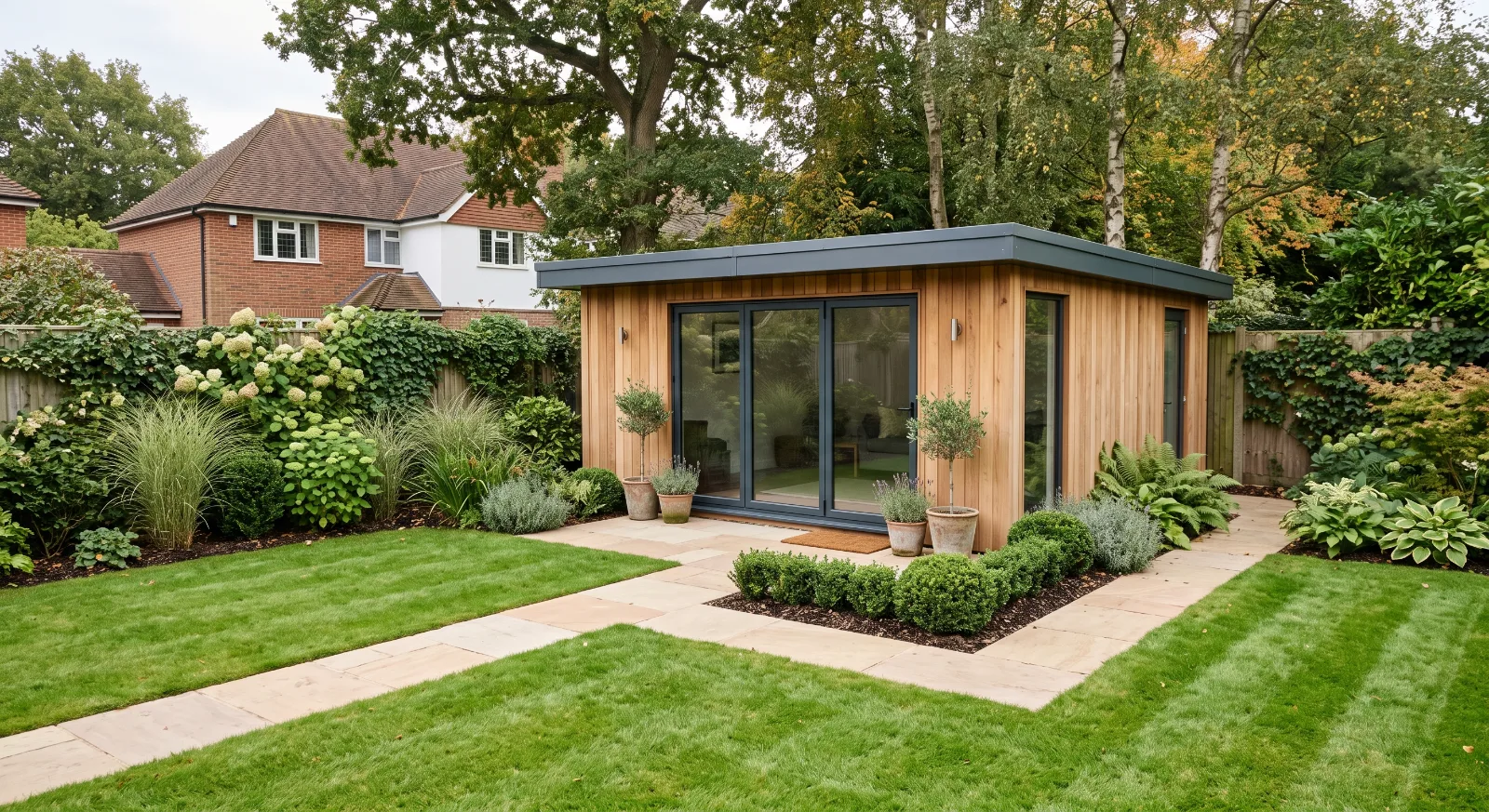
A well-designed patio can create a practical transition from the garden room into the garden. Planting can soften the building and improve privacy, while pathways provide easy access for cleaning and maintenance.
Irrigation and lighting can also be incorporated discreetly without cluttering the space.
This is particularly important when a garden room is being installed as part of a larger garden transformation.
Instead of treating the building and landscape as two separate projects, the whole area can be designed as one connected outdoor space.
A Garden Room Shouldn't Become Another Chore
A garden room should add something useful to your property, not become a constant maintenance project.
With suitable materials, good drainage, sensible planting and a little regular care, most of the maintenance is straightforward and manageable.
The key is to think about long-term upkeep before the room is installed.
At Surrey Oak Landscapes, we can help design and landscape the garden around a garden room, including patios, planting, pathways, screening, irrigation and lighting.
The result is a space that not only looks good when it is finished, but is also practical to use and maintain.
Ready to make more of your garden?
Whether you're planning a new garden room or improving the garden around an existing one, we can help create a landscape that works with the space rather than around it.
About the author