Why Is My Garden Always Waterlogged?
Is your garden constantly wet after rain? Learn why gardens become waterlogged and explore practical drainage solutions for Surrey homes.
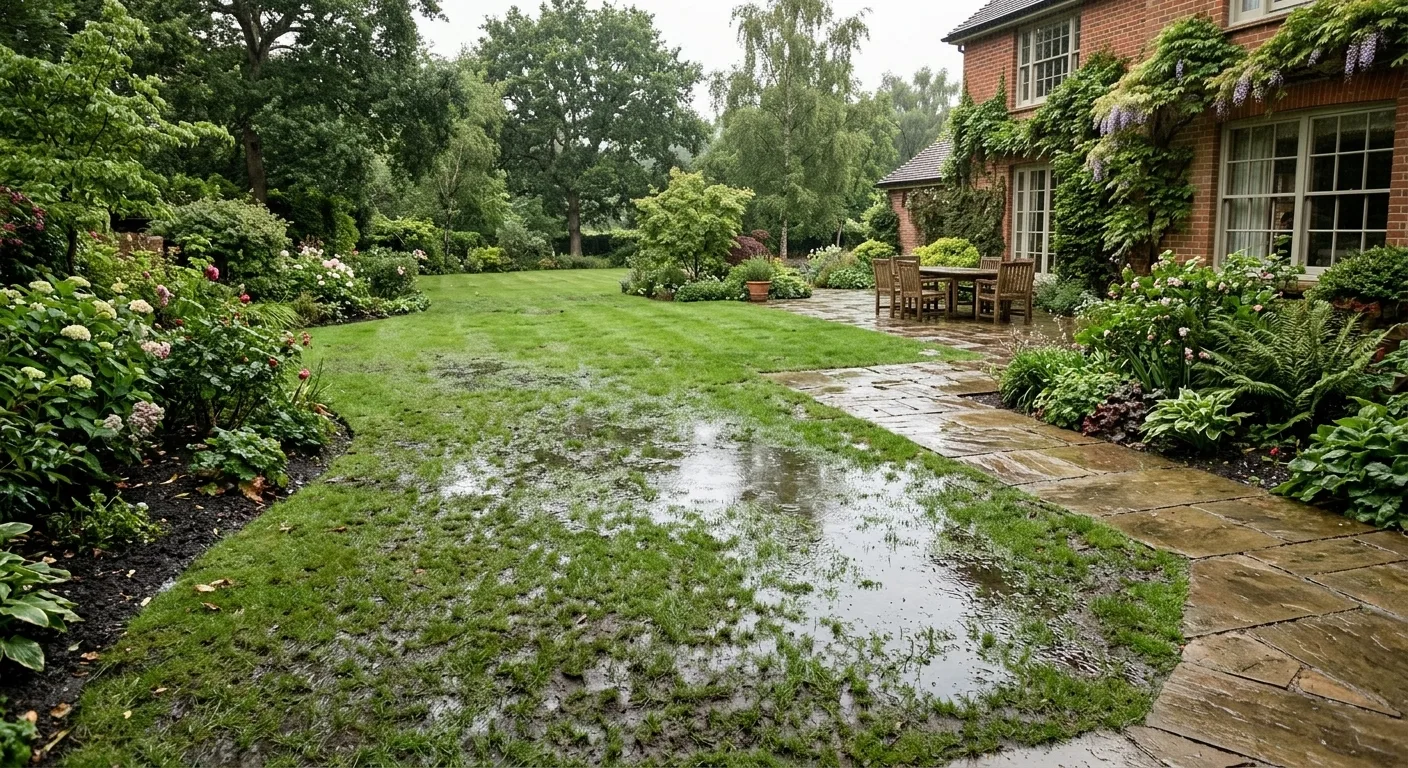
A garden that stays wet for days after rain can quickly become difficult to use. Lawns turn muddy, patios develop standing water and plants can struggle when their roots remain saturated.
For homeowners across Surrey, the reason is not always obvious. Different parts of the county have different soil and geological conditions, and areas with clay-heavy soils can naturally drain more slowly. Surrey's geology includes London Clay in the north and Weald Clay across parts of the south, alongside sand, gravel and chalk in other areas.
The good news is that persistent waterlogging can often be improved once the underlying cause has been identified.
What Causes a Waterlogged Garden?
There is rarely one solution that works for every garden. Water can remain on the surface because of the soil, the garden's levels, runoff from hard surfaces or a combination of several problems.
1. Heavy or Clay Soil
Clay soil contains very fine particles that hold onto water and can drain slowly, particularly after periods of heavy rainfall.
This is relevant to parts of Surrey, where clay formations occur across the county. Weald Clay, for example, has low permeability, meaning water can move through it relatively slowly.
If your garden becomes waterlogged across a large area rather than in one isolated spot, the soil itself could be contributing to the problem.
2. Compacted Ground
Soil can become compacted through regular foot traffic, vehicles, construction work or heavy machinery.
When soil becomes heavily compacted, there is less space for water and air to move through it. This can leave rain sitting near the surface rather than draining into deeper layers of soil.
Compaction is particularly common in gardens that have recently undergone building or landscaping work.
3. Poor Garden Levels
Low spots can collect water simply because the surrounding ground naturally directs rainfall towards them.
A garden does not necessarily have to be visibly sloped for this to happen. Even relatively small changes in level can create areas where water gathers instead of flowing towards an appropriate drainage point.
In these situations, improving the levels may be more effective than simply installing a drain where the water happens to collect.
4. Runoff From Patios and Other Hard Surfaces
Patios, paths and other hard surfaces can change where rainwater goes.
If water from paving runs directly onto a lawn or planting border, the surrounding soil can quickly become saturated, particularly during periods of heavy rain.
Depending on the garden, solutions such as permeable paving, rain gardens or soakaways can help manage excess water and reduce runoff.
This is why drainage should be considered as part of a patio or landscaping project from the beginning, rather than treated as an afterthought.
5. Blocked or Poorly Positioned Drainage
A blocked drain, gully or channel can cause water to back up into areas that would normally stay relatively dry.
Likewise, a downpipe discharging directly onto a lawn or border can introduce a surprising amount of water into one small area during heavy rainfall.
Before carrying out major work, it is worth checking whether existing drainage points are blocked, damaged or simply unable to deal with the amount of water reaching them.
6. A High Water Table or Naturally Wet Ground
Sometimes the problem is bigger than surface drainage.
If groundwater is naturally close to the surface, particularly in a low-lying part of the garden, the ground may remain wet even when surface water has been directed away.
This can make a simple soakaway unsuitable because the surrounding ground may not be able to absorb additional water effectively.
How Can You Tell What Is Causing the Problem?
Start by looking at where, when and how long the water remains.
If puddles only appear immediately after heavy rain and disappear relatively quickly, the issue may simply be temporary surface runoff.
If the same areas remain wet for days, even after normal rainfall, there may be an underlying drainage or soil problem.
It can also help to look at patterns across the garden:
Is the whole lawn wet, or just one section?
Does water collect at the bottom of a slope?
Does the problem occur next to a patio or driveway?
Is water coming from a downpipe?
Does the garden become worse after particularly heavy rain?
Has the problem appeared after building or landscaping work?
These observations can help identify whether the main issue is soil, levels, runoff or drainage infrastructure.
Ways to Improve a Waterlogged Garden
Once the cause has been identified, there are several possible approaches. The right option depends on the site and where the excess water can safely go.
Improve Soil Structure
Where compaction is the main problem, improving the soil structure may help water move through the upper layers more effectively.
For smaller areas, aeration can sometimes help. However, heavily compacted ground or persistent waterlogging across an entire garden may require more substantial work.
Simply adding materials to the surface will not necessarily solve a deeper drainage problem.
Improve the Garden Levels
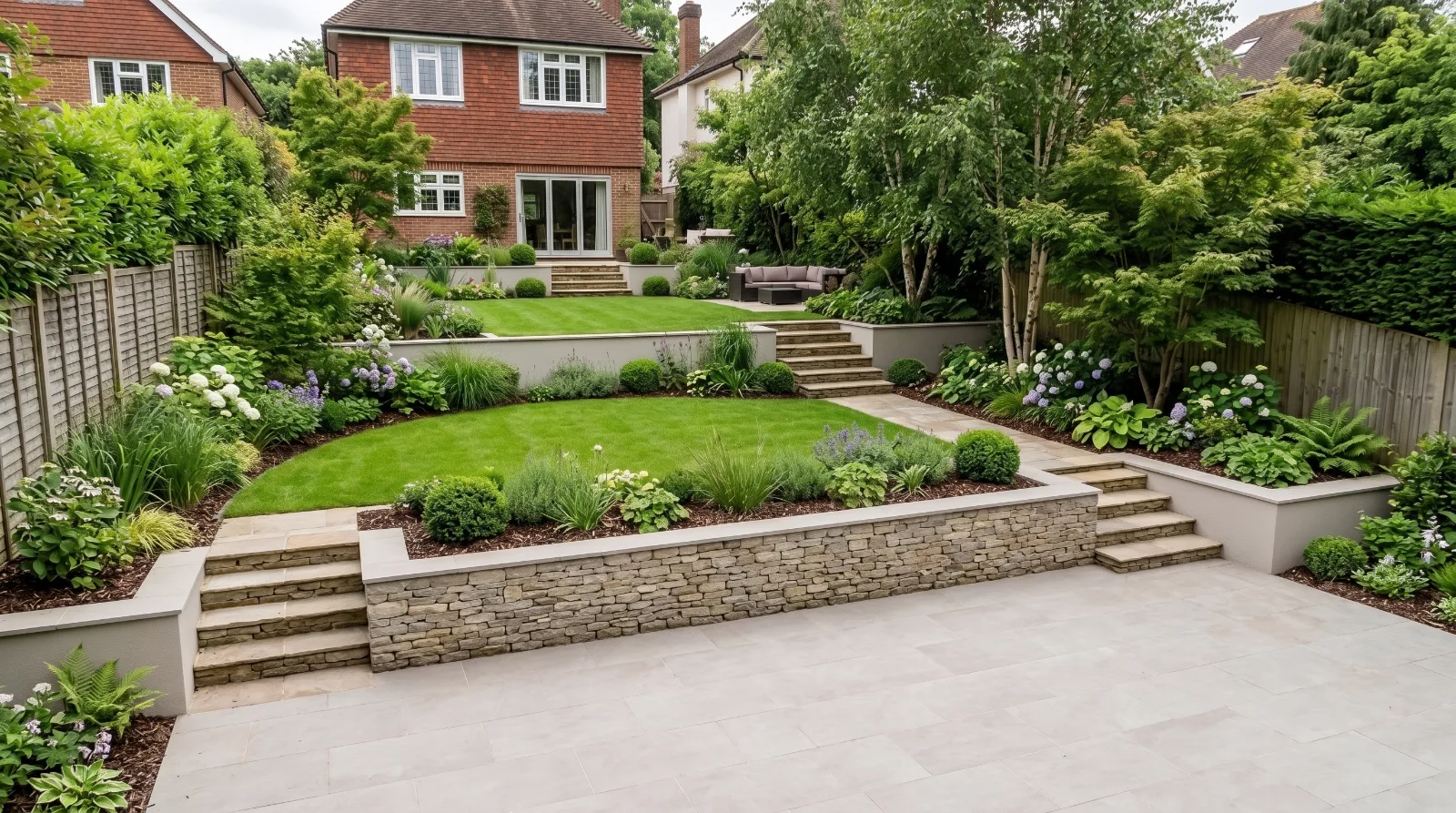
If water is collecting in a low spot, reshaping the levels can help direct surface water towards a suitable drainage or collection area.
This could involve creating gentle falls, raising planting areas or redesigning sections of the garden.
Changing levels can also improve the overall layout, creating more usable lawn, planting and seating areas at the same time.
Install Appropriate Drainage
For persistent waterlogging, a dedicated drainage system may be required.
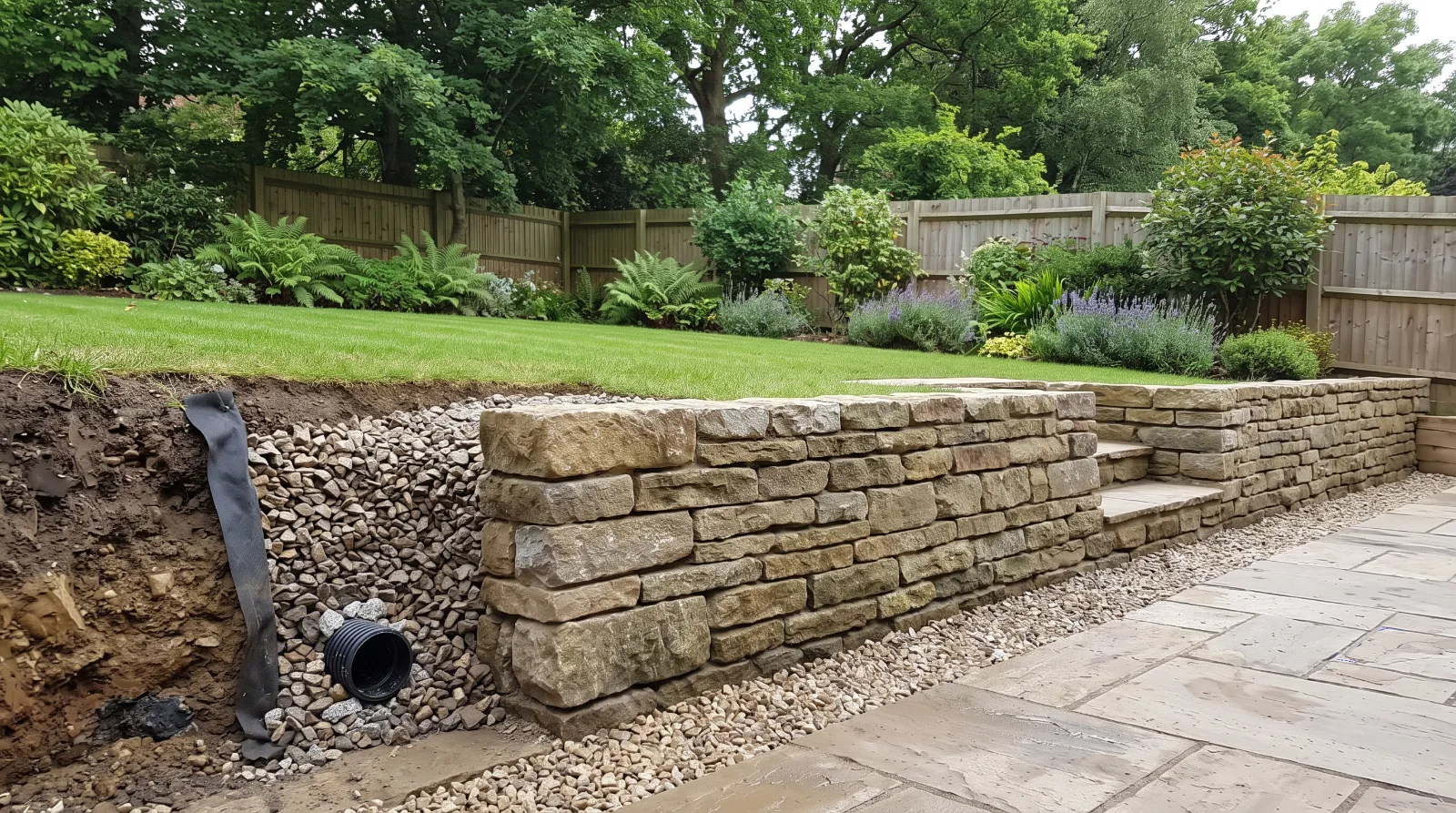
Depending on the site, this could include land drainage, drainage channels, pipes or another system designed to collect and move excess water.
The important point is that collected water needs somewhere suitable to go. Installing a drain without considering the final discharge point can simply move the problem elsewhere.
Consider a Soakaway
A soakaway can collect rainwater and allow it to infiltrate into the surrounding ground.
However, it is not automatically suitable for every garden. The soil needs to be capable of accepting the water, and the soakaway needs to be appropriately designed and positioned.
Government guidance notes that infiltration solutions depend on ground conditions and that clay soils may require a different approach where water cannot soak away quickly enough.
Use a Rain Garden
A rain garden is a shallow planted area designed to temporarily collect and manage rainwater.
It can be particularly useful where runoff from a patio, path or other hard surface needs somewhere to go without simply pooling on the lawn.
Surrey County Council has highlighted rain gardens as one example of sustainable drainage, explaining how planted areas can collect and gradually manage rainwater from hard surfaces.
A rain garden can also become an attractive part of the overall landscape rather than looking like a purely functional drainage feature.
Consider Permeable Surfaces
Where hard landscaping is contributing to runoff, permeable paving can allow water to pass through the surface and into the construction beneath.
There are several different systems available, and the appropriate option depends on the ground conditions and how water needs to be managed. Government guidance describes permeable paving, rain gardens and soakaways as different approaches to reducing and managing runoff.
This can be particularly useful when redesigning patios, paths or other paved areas as part of a wider garden project.
What Not to Do With a Waterlogged Garden
It can be tempting to look for a quick fix, but some approaches can make the situation worse.
Don't Keep Walking on Saturated Soil
Regular traffic can compact already-wet ground further, reducing the spaces through which water and air can move.
Where possible, avoid heavy use of seriously waterlogged lawn and borders until the ground has dried sufficiently to work on.
Don't Install a Soakaway Without Checking the Ground
A soakaway relies on the surrounding ground being able to absorb water. If the soil is unsuitable or the water table is too high, it may not solve the problem.
The drainage solution needs to be matched to the site rather than chosen simply because it is a common option.
When Should You Consider Professional Garden Drainage?
If your garden repeatedly becomes waterlogged despite normal lawn or garden maintenance, it is worth looking beyond surface-level fixes.
Professional assessment can help identify whether the main issue is:
Compacted or clay-heavy soil
Poor levels
Runoff from paving
Blocked or inadequate drainage
A high water table
A combination of several problems
This is particularly important before installing patios, garden rooms, retaining walls or other major landscaping features. Getting the drainage right at the beginning can prevent water problems from becoming part of a much larger project.
For larger landscaping projects, drainage should be considered as part of the overall garden design. Solutions such as permeable paving, rain gardens and suitable drainage systems can help manage rainfall more effectively rather than simply moving the water elsewhere.
Fixing a Waterlogged Garden in Surrey
A garden that stays wet after rain is not necessarily something you have to live with.
The most effective solution starts by understanding why the water is staying there. In one garden, improving levels may be enough. In another, the answer could involve land drainage, a rain garden, changes to hard landscaping or a combination of different measures.
Surrey's varied soils and landscapes mean that the right approach needs to be based on the individual garden rather than a one-size-fits-all solution.
If your Surrey garden is regularly waterlogged, we can assess the existing space and discuss practical ways to improve drainage as part of a wider landscaping project.
About the author