How to Stop Garden Paths & Patios Becoming Slippery in Winter
Wet leaves, algae and moss can make garden paths and patios slippery in winter. Learn how to clean paving safely, improve drainage and keep outdoor surfaces in better condition throughout the colder months.
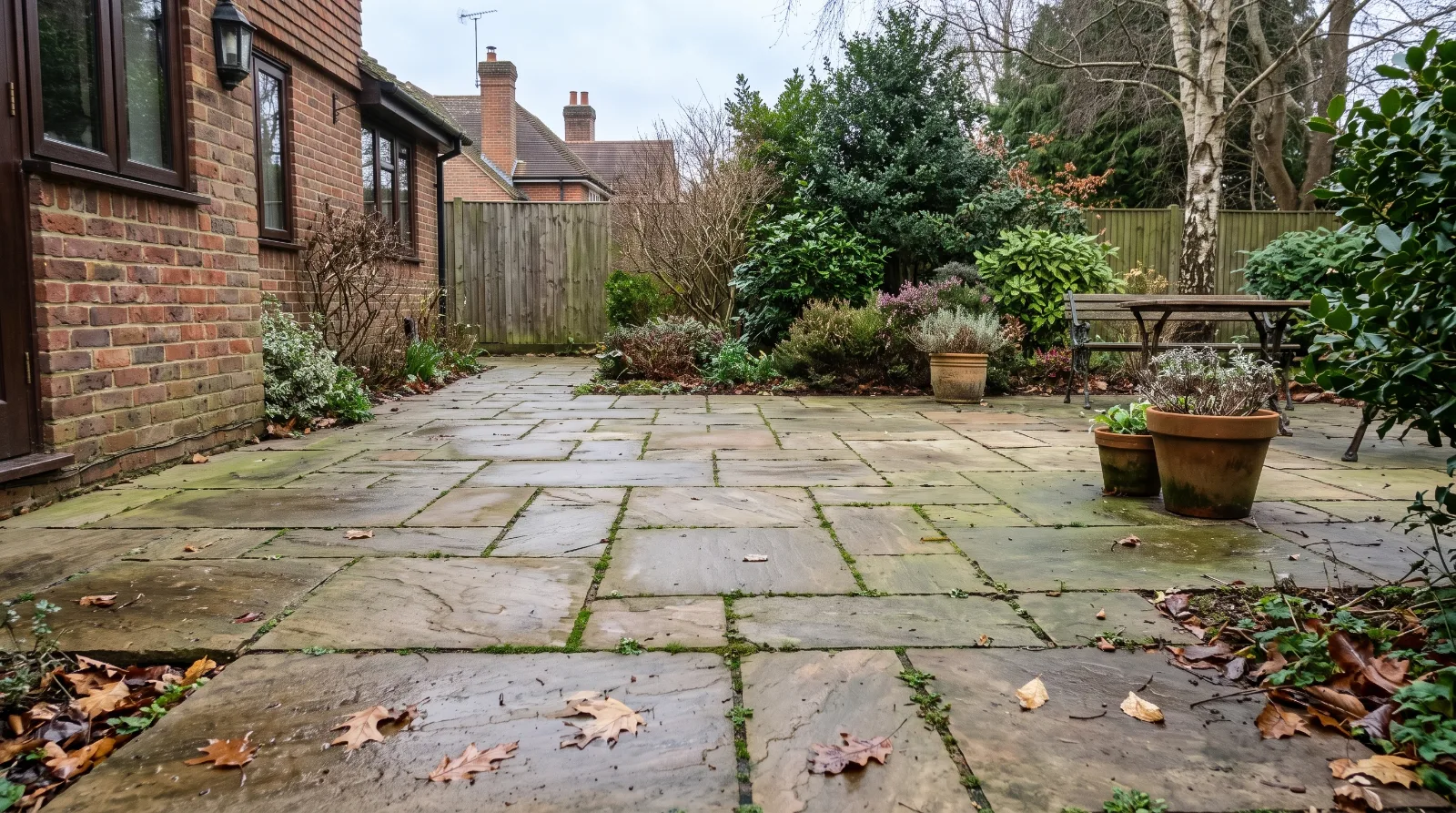
Garden paths and patios can become surprisingly slippery during the colder months. Persistent rain, fallen leaves, damp conditions and limited sunlight all contribute to the problem, particularly in shaded areas where paving takes longer to dry.
A patio that was perfectly usable during summer may develop green patches of algae or moss by winter. Steps, garden paths and paved entrances can be especially problematic because they are frequently used throughout the year.
The good news is that regular maintenance and a few practical improvements can help reduce the risk of slips while keeping your garden looking its best. For homeowners in Surrey, understanding why paving becomes slippery is the first step towards finding a lasting solution.
Why Do Garden Paths and Patios Become Slippery in Winter?
Several factors can contribute to slippery garden paving, and identifying the cause helps determine the best approach.
Algae and Moss Growth
Green algae often appears as a thin film across paving, while moss tends to form thicker patches or grow between slabs and along their edges. Both thrive in damp conditions, particularly where sunlight and airflow are limited.
North-facing gardens, shaded patios and paths beneath overhanging trees are often more susceptible. The surface may look relatively clean when dry but become slippery after rain.
Fallen Leaves and Garden Debris
Wet leaves can create a slick layer on patios, steps and paths. When left to accumulate, they also retain moisture against the surface and contribute to conditions that encourage organic growth.
Regularly clearing leaves, small branches and loose debris is a simple but effective way to maintain a safer walking surface throughout autumn and winter.
Poor Drainage and Standing Water
If water regularly collects on paving, the problem may be more than seasonal dirt. Uneven slabs, insufficient falls, blocked drainage channels or surrounding ground that drains poorly can leave areas persistently damp.
These conditions encourage algae growth and can cause further difficulties when temperatures fall below freezing. Addressing the underlying drainage issue is often more effective than repeatedly cleaning the same patch.
Frost and Ice
Algae and wet leaves are not the only causes of slippery paving. When temperatures drop, standing water can freeze and create a hazardous surface even if the patio has been thoroughly cleaned.
Cleaning helps control organic growth, but it does not prevent ice from forming. Winter maintenance should account for both problems separately.
1. Sweep Garden Paths and Patios Regularly
One of the simplest ways to reduce slippery paving is to keep it clear of leaves and debris.
During autumn and winter, sweep frequently used paths, patios and steps regularly, paying particular attention to shaded corners and areas beneath trees or hedges.
Remove leaves before they become compacted into a damp layer. Clear nearby drainage grates and channels at the same time, ensuring that rainwater can flow away rather than collecting on the surface.
Routine sweeping will not eliminate established algae or moss, but it helps prevent debris from accumulating and makes it easier to spot developing problems before they become more difficult to manage.
2. Remove Moss and Algae Safely
If paving has developed green patches or visible moss, cleaning the affected areas can help restore grip and improve the overall appearance.
Start with a Stiff Brush
For light to moderate growth, begin by sweeping away loose debris and using a suitable stiff-bristled brush to scrub the affected surface.
A narrow paving brush or joint scraper can help remove moss growing between slabs, although care is needed to avoid damaging the pointing or dislodging jointing material.
Work in manageable sections and follow the cleaning method appropriate for the particular paving material.
Use a Suitable Patio Cleaner When Needed
More established growth may require a proprietary patio or algae treatment. Choose a product suitable for the paving, follow its instructions and test it on a discreet area before treating the entire surface.
Avoid assuming that household bleach, vinegar or other improvised cleaning solutions are safe for every type of stone. Some products can damage natural stone, discolour paving, affect pointing or harm nearby plants.
Take Care with Pressure Washing
Pressure washing can be effective on suitable hard surfaces, but excessive pressure or holding the nozzle too close can damage paving and remove material from the joints.
This is particularly important with softer natural stone, older paving and surfaces with deteriorating pointing.
If using a pressure washer, start cautiously, test an inconspicuous area and follow the paving manufacturer's care guidance. For delicate or valuable surfaces, gentler cleaning methods may be more appropriate.
After cleaning, inspect the joints and allow the surface to dry so that any remaining problems are easier to identify.
3. Improve Drainage to Prevent Slippery Paving
Cleaning removes existing growth, but the same problem is likely to return if the surface remains persistently damp.
Start by observing how water behaves during rainfall. Does it collect in the middle of the patio? Does one section of the path stay wet long after the rest has dried? Are drainage channels blocked by leaves or soil?
These observations can help identify the source of the problem.
Depending on the cause, improvements might include clearing existing drainage channels, correcting localised low spots, repairing uneven paving or improving how water moves away from the surrounding area.
New paving should be designed with appropriate falls, a suitable foundation and a drainage arrangement that reflects the ground conditions. On established patios, the correct repair will depend on how the surface was originally constructed.
If water repeatedly pools despite regular maintenance, a more thorough assessment may be needed rather than relying on cleaning alone.
4. Reduce Shade and Improve Airflow
Shady gardens are often more susceptible to algae and moss because their surfaces stay damp for longer.
Where appropriate, carefully pruning overhanging shrubs and branches can allow more daylight and air to reach the paving. This may help surfaces dry more quickly after rain.
However, there is no need to remove established planting simply to keep a patio clean. Selective pruning and regular maintenance can often make a difference while preserving the character of the garden.
For paths bordered by dense planting, keep vegetation from spreading across the walking surface. This reduces the accumulation of leaves and helps make the edges of the route easier to maintain.
5. Choose Paving That Provides Suitable Grip
If you are planning a new patio or replacing an existing path, consider slip resistance as part of the material selection process.
Different paving materials and finishes perform differently when wet. Textured outdoor porcelain, appropriately finished natural stone and suitable concrete paving can all be considered, provided the product is designed for its intended use.
The choice should account for the location, exposure to rain, amount of shade and how frequently the surface will be used.
Paving option | What to consider |
|---|---|
Outdoor porcelain | Choose a product with a suitable slip-resistant finish for outdoor conditions |
Natural stone | Check the finish, texture and suitability for exposed, frequently wet areas |
Concrete paving | Consider surface texture, drainage and the quality of installation |
Block paving | Keep joints maintained and prevent moss and weeds from accumulating |
Existing steps | Check that treads provide suitable grip and that edges are clearly defined |
No paving material is completely maintenance-free. Even a suitable textured surface can become slippery if covered in algae, leaves or ice.
For existing installations, improving drainage and keeping the surface clean may be more practical than replacing the paving altogether.
6. Take Extra Care with Steps and Sloping Paths
Steps, ramps and sloping pathways deserve particular attention because a slip can have more serious consequences where there is a change in level.
Check these areas regularly, especially after heavy rain or before periods of freezing weather. Remove accumulated leaves, deal with established moss and look for loose slabs, damaged edges or areas where water collects.
Ensure that steps and level changes remain easy to distinguish after dark. Suitable garden lighting can help people see where the walking surface changes, although lighting alone will not prevent a slippery surface from causing a fall.
If a step is unstable or a path has settled unevenly, address the underlying problem rather than simply cleaning around it.
7. How to Deal with Frost and Ice on Garden Paths
Even a well-maintained patio can become icy during cold spells, so it is useful to have a separate approach for freezing conditions.
Where possible, clear fresh snow before it becomes compacted, taking particular care around steps and narrow paths. Avoid pouring water over icy paving, as it can refreeze and create an even more hazardous surface.
For temporary traction, suitable grit or sand may help, although these do not melt ice. If considering a de-icing product, check that it is appropriate for your particular paving and take care to prevent unnecessary contact with lawns and planted borders.
Natural stone, paving finishes and nearby planting can react differently to de-icing materials, so avoid applying them indiscriminately.
If a route remains icy, keep it out of use where possible until it can be made safe.
A Simple Winter Maintenance Checklist
Keeping garden paving in good condition does not have to involve a major cleaning project every few weeks. A consistent routine can help prevent small problems from becoming more serious.
Task | When to do it |
|---|---|
Sweep leaves and debris | Regularly throughout autumn and winter |
Inspect shaded areas for algae and moss | During routine garden maintenance |
Brush away established moss | As soon as it becomes noticeable on walking surfaces |
Clear drainage channels and gullies | Regularly, particularly after leaf fall |
Check paving joints and loose slabs | During periodic inspections and after cleaning |
Review steps and changes in level | Before freezing weather and whenever damage appears |
Check for standing water | During or immediately after rainfall |
Arrange repairs where needed | When drainage, movement or damaged paving requires more than routine cleaning |
A little preventative care can make paths and patios easier to maintain and more practical to use throughout the colder months.
Keep Your Garden Paths and Patios Safer This Winter
Slippery paving is a common winter problem, but it can often be managed through regular cleaning, better drainage and attention to shaded areas. Removing moss and algae helps restore the surface, while addressing standing water can reduce the conditions that allow the problem to return.
Where paving has become uneven, drainage is inadequate or steps need attention, the most effective solution may involve repairing or improving the existing landscaping rather than repeatedly cleaning the same areas.
At Surrey Oak Landscapes, we consider paths and patios as part of the wider garden, taking account of paving materials, levels, drainage and surrounding planting to create outdoor spaces that are both practical and attractive.
Whether you need to improve an existing patio or are considering a new garden path, our team can help you explore suitable options for your property.
About the author