How to Maintain a Newly Landscaped Garden
Just had your garden landscaped? Learn how to care for new turf, planting, paving and other features so your garden establishes and stays looking its best.
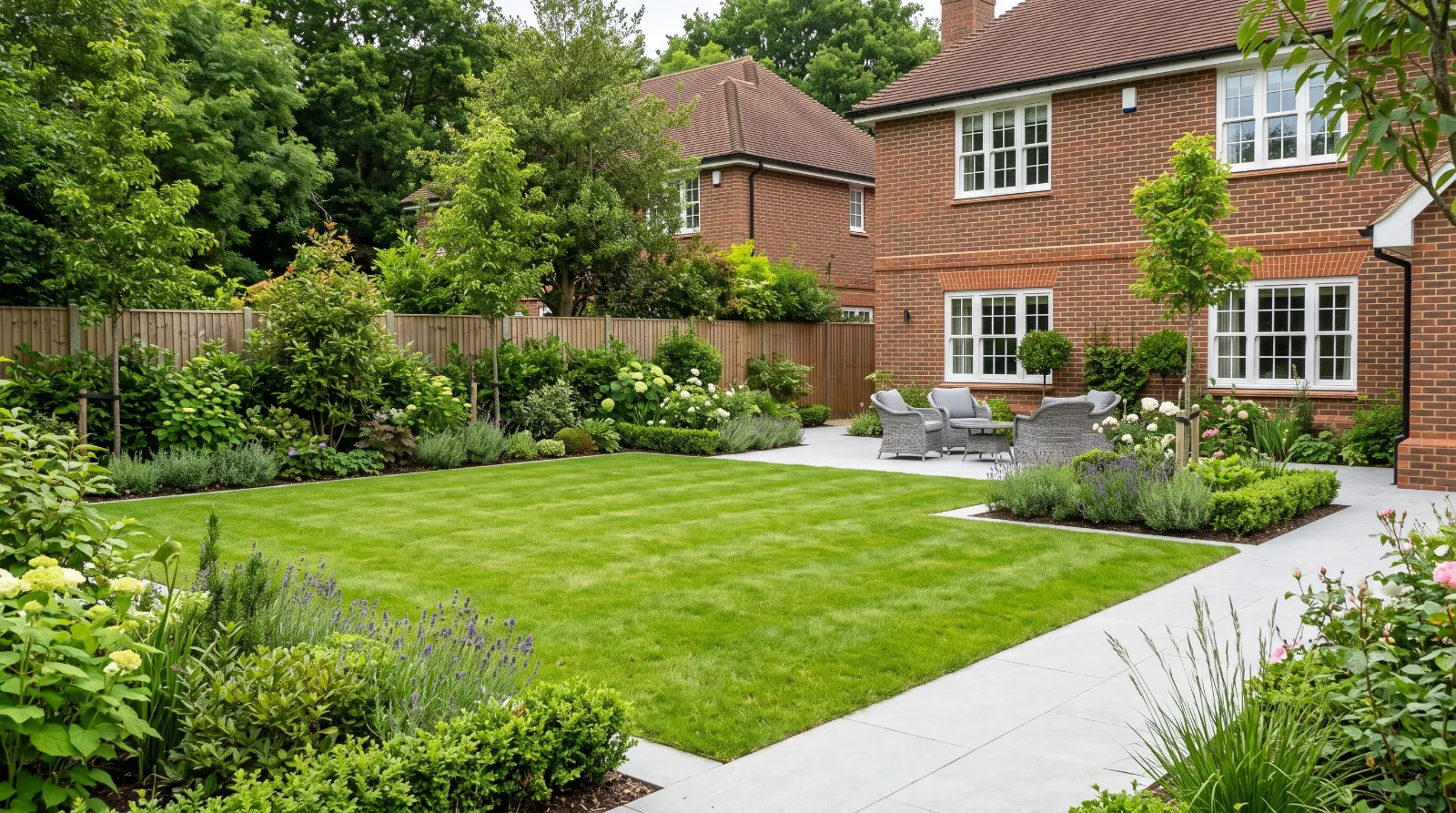
A newly landscaped garden can completely change the way you use your outdoor space. Fresh paving, new turf, planting, fencing and other features can make a garden feel finished almost overnight.
But the work does not stop when the landscaping team leaves.
The first few months are an important period for helping new turf and planting establish, keeping hard landscaping clean and making sure the garden develops as intended. A little regular care at this stage can prevent problems later and protect the investment you have made in the garden.
The maintenance required will depend on what has been installed, but there are a few areas that deserve particular attention.
Why Does a Newly Landscaped Garden Need Extra Care?
A newly landscaped garden contains materials and plants that have not yet fully settled into their surroundings.
New turf has developing roots, recently planted trees and shrubs are establishing themselves in the soil, and freshly installed beds can be more vulnerable to weeds and drying out.
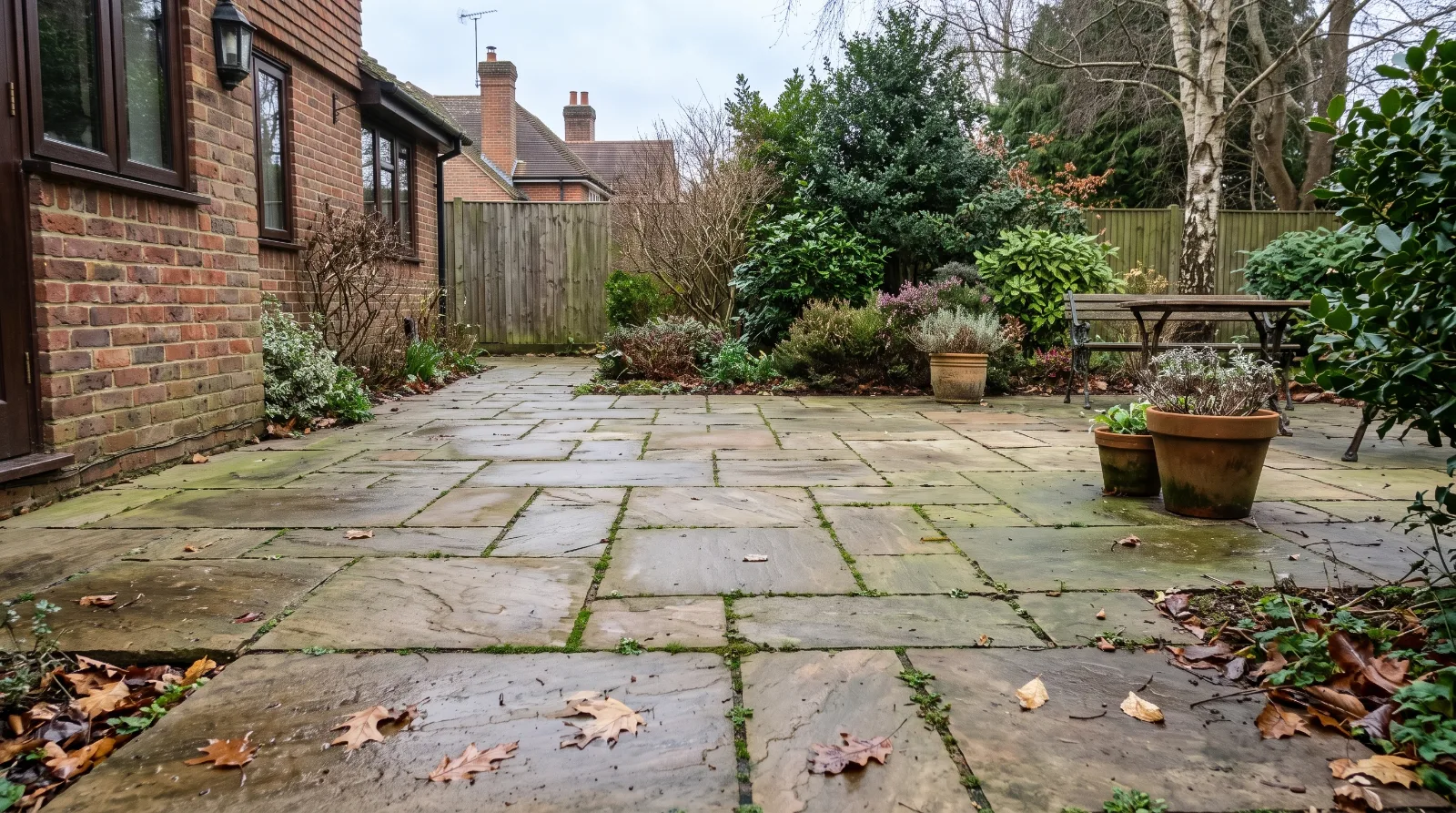
Even hard landscaping benefits from early care. Leaves, soil and other debris can quickly collect on new paving, while joints and drainage areas should be kept clear.
The first year is therefore less about constantly changing the garden and more about helping everything establish properly.
Start With the Aftercare Instructions
The first thing to do is understand exactly what has been installed.
Different plants, turf varieties, paving materials and garden structures have different maintenance requirements.
If your landscaper or supplier has provided product or plant-specific aftercare instructions, keep them somewhere accessible.
It is particularly useful to know:
Which plants need regular watering
When the lawn can first be mowed
Whether new paving needs any specific cleaning
Which finishes or treatments have been applied
Whether newly installed structures need ongoing care
What maintenance was included in the original project
This avoids treating every part of the garden in exactly the same way.
Water New Planting Regularly
Watering is one of the most important jobs after landscaping.
Newly planted trees, shrubs and perennials have not yet developed the extensive root systems of established plants. They can therefore become stressed more quickly during dry periods.
Water slowly and thoroughly so moisture reaches the root zone rather than simply wetting the surface.
New trees and shrubs can need regular watering through their first growing season and during dry periods afterwards while they establish. Larger trees can take considerably longer to become fully established.
The exact amount depends on the plant, soil, weather and size of the rootball.
Don't Overwater
More water is not always better.
Waterlogged soil can cause its own problems, particularly where drainage is poor.
Instead of watering automatically every day, check the soil around the plant first. If it is still damp at root level, additional watering may not be necessary.
This is especially important when using automatic irrigation systems.
Give New Turf Time to Establish
A newly laid lawn needs careful treatment until its roots have established in the soil.
Keep new turf sufficiently moist during dry weather, particularly during the early stages.
Rather than giving the surface a very light sprinkling, water deeply enough for moisture to reach through the turf and into the soil beneath.
Avoid walking across the lawn unnecessarily while it is establishing.
Once the turf has rooted properly, it can gradually be treated more like an established lawn.
A simple way to check is to gently lift or tug a section. If the turf lifts easily, it has not yet rooted sufficiently.
When Should You First Mow New Turf?
Do not rush the first cut.
New turf is usually ready to mow once it has rooted firmly enough and the grass has established. This can often be around two to three weeks, although weather, soil and the condition of the turf can change the timing.
When you first mow, use a high cutting setting and avoid removing too much of the grass in one go.
As the lawn becomes established, the mowing height can be adjusted according to the type of lawn and how you want it to look.
Keep New Planting Beds Weed-Free
New planting beds can quickly develop weeds, especially while the plants themselves are still small.
Regularly removing weeds while they are young is considerably easier than allowing them to become established and spread.
A good maintenance routine is to check borders regularly rather than waiting until they become visibly overgrown.
Mulching can also help.
A suitable mulch can reduce moisture loss, suppress weeds and give planting beds a more finished appearance.
Leave some space around the base of stems and trunks rather than piling mulch directly against them.
Check Newly Planted Trees and Shrubs
Take a few minutes during maintenance visits to look closely at new planting.
Warning signs can include:
Wilting leaves
Yellowing or browning foliage
Premature leaf drop
New growth failing to develop
Loose or exposed rootballs
Plants leaning after strong winds
A plant can show signs of stress before the problem becomes obvious from a distance.
Trees and shrubs can also be affected by competition from grass and weeds around their base, particularly during establishment.
Keeping the immediate area around new plants clear can make watering and establishment easier.
Don't Feed Everything Immediately
It is easy to assume that newly installed plants need plenty of fertiliser to encourage growth.
In many cases, that is unnecessary.
Plants have different nutrient requirements, and excessive feeding can encourage soft, rapid growth rather than solving an underlying problem.
The quality of the soil, the planting conditions and whether compost or soil improvements were already incorporated during the landscaping project all matter.
Unless a plant has a specific nutritional requirement, focus first on watering, establishment and weed control.
Keep an Eye on Mulch
If your newly landscaped garden includes mulched planting beds, check the mulch periodically.
Mulch can help:
Reduce water loss
Suppress weeds
Protect the soil surface
Improve the appearance of planting areas
Add organic matter where an appropriate organic mulch is used
Organic mulch will gradually break down, so it may need topping up over time.
Keep the mulch away from direct contact with the stems of plants and the trunks of trees.
Look After New Paving
Fresh paving generally needs less day-to-day attention than new plants, but it should still be looked after.
Keep leaves, soil and other organic material from accumulating on the surface, particularly during autumn and winter.
Organic debris can hold moisture against paving and may contribute to algae or staining in shaded areas.
Sweep the patio regularly and deal with spills rather than allowing them to sit on the surface.
Be Careful With Pressure Washing
Pressure washing can be useful for some paving, but it should not automatically be the first choice for newly installed surfaces.
High pressure can disturb joints, damage certain finishes or force water into areas where it is not wanted.
The appropriate cleaning method depends on the paving material.
Porcelain, natural stone, concrete and block paving all have different characteristics, so always use a method appropriate to the specific surface.
For a recently installed patio, gentler cleaning is often a sensible starting point.
Keep Patio Joints in Good Condition
The joints between paving slabs are an important part of the finished patio.
Over time, joints can lose material through weather, cleaning or general wear.
Check them occasionally for:
Missing jointing
Cracks
Weeds
Loose material
Areas where water is collecting
If a joint has failed because the slab beneath it is moving, simply replacing the joint material will not solve the underlying problem.
It is better to deal with the cause than repeatedly repair the same symptom.
Check Drainage After Landscaping
A newly landscaped garden can behave differently from the original garden because the work may have changed levels, paving areas or planting.
After periods of heavy rain, take a quick look around.
Check whether:
Water is collecting on patios
Puddles are forming on the lawn
Drains or channels are blocked
Water is flowing towards the house
Soil is becoming unusually saturated
Occasional surface water after heavy rainfall does not automatically indicate a problem, but persistent or localised standing water deserves attention.
Early checks can identify issues before they begin affecting plants, lawns or hard landscaping.
Keep Paths and Edges Clear
Paths can quickly lose their clean appearance when grass, weeds and planting start spreading across the edges.
Regular edging and weeding can make a surprisingly large difference to the overall appearance of a newly landscaped garden.
This is particularly important during the first growing season when new planting and lawns are developing quickly.
Clean edges also help maintain the definition between different parts of the garden.
Look After New Fencing
New fencing does not usually require intensive maintenance straight away, but it is worth checking it occasionally.
Look for:
Loose boards
Damaged fixings
Leaning posts
Water collecting around the base
Damage caused by storms
Timber fencing may also need ongoing maintenance depending on the type of timber and finish used.
Composite fencing generally requires less routine treatment but can still benefit from occasional cleaning.
Keeping vegetation from becoming heavily overgrown against a fence can also improve airflow and make future maintenance easier.
Don't Let Plants Outgrow the Design
One of the advantages of a newly landscaped garden is that planting is usually chosen and positioned with its eventual growth in mind.
That design can quickly become less effective if plants are allowed to outgrow their intended spaces.
Keep an eye on:
Shrubs spreading over paths
Plants blocking windows
Hedges becoming too wide
Trees interfering with structures
Climbers spreading beyond their supports
Planting becoming too dense
Pruning should be based on the requirements of each plant rather than simply cutting everything back at the same time.
Maintain Newly Planted Trees Carefully
Trees deserve particular attention because replacing a failed mature specimen can be expensive.
During the early establishment period, check that trees remain stable after strong winds and that their supporting arrangements are still doing their job.
Water thoroughly during dry periods and keep competing vegetation away from the immediate base.
A newly planted tree can look healthy above ground while still struggling to establish below ground, so consistent early care is important.
Be Careful Around New Lawns and Planting
Newly landscaped gardens can be surprisingly vulnerable to unnecessary foot traffic.
Try to avoid repeatedly walking across freshly planted beds or newly laid turf simply to reach another area of the garden.
If the garden contains children or pets, consider how they will use the space during the establishment period.
A lawn that is allowed to root before experiencing heavy use has a much better chance of developing a strong, even surface.
Keep Garden Furniture in the Right Place
Outdoor furniture can cause problems when it is repeatedly dragged across new paving or placed directly against young planting.
Use sensible positions for tables, chairs and other furniture, and avoid moving heavy items across delicate surfaces unnecessarily.
Furniture can also create areas of persistent shade beneath it, which may affect grass or planting.
The garden does not need to be treated like a museum, but a little care during the early stages can prevent avoidable damage.
What Should Your Maintenance Schedule Look Like?
There is no single schedule that suits every newly landscaped garden.
A useful starting point might look like this:
Task | Typical attention |
|---|---|
Check new planting | Weekly during establishment |
Water new plants | As needed during dry periods |
Check new turf | Frequently until rooted |
Mow established turf | Regularly during active growth |
Weed borders | Little and often |
Check paving | Regularly, especially after wet weather |
Sweep paths and patios | As needed |
Check drainage | After heavy rainfall |
Inspect fencing | Periodically and after storms |
Prune plants | According to species and growth |
Top up mulch | When it has noticeably reduced |
These are general guidelines rather than a fixed programme.
Weather and the needs of the individual garden should always take priority over the calendar.
How Maintenance Changes Through the Year
A newly landscaped garden will require different attention as the seasons change.
Spring
Growth begins to accelerate.
Focus on:
Weeding
Lawn maintenance
New planting
Checking irrigation
Mulch
Pruning where appropriate
Summer
Watering becomes particularly important during dry periods.
Pay attention to:
New trees and shrubs
Turf
Containers
Hanging plants
Recently planted borders
Autumn
Fallen leaves become a major maintenance job.
Regular clearing helps prevent leaves from building up on lawns, patios and paths.
This is also a good time to inspect drainage and check boundaries before winter.
Winter
Growth slows, but maintenance does not stop completely.
Clear fallen branches and debris, monitor drainage and check fencing and structures after strong weather.
This seasonal approach means you are responding to what the garden actually needs instead of carrying out identical tasks throughout the year.
When Can a Newly Landscaped Garden Be Considered Established?
There is no single point at which a garden suddenly becomes “established”.
Lawns can settle relatively quickly, while shrubs and perennials may take a full growing season or longer to develop properly. Trees can take considerably longer.
The important sign is that the plants are developing strong growth, the lawn has rooted well and the garden is requiring less intensive aftercare.
Even then, regular maintenance remains important.
A landscaped garden is designed to change over time, so pruning, mowing, weeding and seasonal care will always be part of keeping it looking its best.
What If Something Is Not Establishing Properly?
Do not automatically assume that every struggling plant simply needs more water.
Poor establishment can have several causes, including:
Insufficient water
Excessive water
Compacted soil
Poor drainage
Root damage
Planting too deeply
Competition from weeds
Unsuitable planting conditions
Look at the wider situation before changing your maintenance routine.
If one plant is struggling while everything surrounding it is healthy, the issue may be specific to that plant or its position.
Common Mistakes After a Garden Transformation
A few mistakes come up repeatedly after landscaping projects.
Overwatering
Keeping soil permanently saturated can be just as damaging as allowing it to dry out.
Mowing new turf too soon
The lawn needs time to root before heavy mowing.
Allowing weeds to establish
Small weeds are much easier to remove than established growth.
Neglecting new trees
Large new trees can require significant watering while their root systems establish.
Ignoring drainage
Problems are much easier to address when they are spotted early.
Treating every plant the same
Different species have different requirements.
Over-pruning
New planting often needs time to establish before significant shaping is required.
Forgetting the hard landscaping
Paving, paths, fencing and other features also benefit from routine checks.
What About Garden Maintenance Services?
Some homeowners prefer to handle basic maintenance themselves and arrange professional help for more demanding jobs.
Others prefer regular maintenance visits, particularly where the garden contains extensive planting, large lawns, long hedges or mature trees.
A maintenance schedule can also change over time.
A newly landscaped garden may need more attention during establishment, while a well-established low-maintenance garden may require less frequent visits.
There is no reason to use the same maintenance programme forever.
Protecting Your Landscaping Investment
A newly landscaped garden represents a significant investment, but keeping it looking good does not necessarily require constant work.
The most important thing is consistency.
Water new plants appropriately, give fresh turf time to root, keep planting beds under control, check drainage and clean hard landscaping before dirt and debris become difficult to remove.
Small jobs carried out regularly are generally much easier than trying to restore the garden after months of neglect.
How to Maintain a Newly Landscaped Garden
The first year after landscaping is about establishment and adjustment.
The garden will change as plants grow, turf roots into the soil, materials weather and you discover how the space actually works in everyday use.
Pay particular attention to anything that is new: trees, shrubs, turf, planting beds, paving joints and drainage.
At the same time, avoid over-managing the garden. Not every plant needs constant pruning, not every lawn needs watering every day and not every change in appearance means something is wrong.
A good maintenance routine gives the garden time to establish while keeping everything healthy, tidy and functional.
Keep Your Newly Landscaped Garden Looking Its Best
A successful landscaping project should not require you to start again every few years.
With sensible aftercare, the garden can mature naturally and become easier to manage as plants establish and the different areas begin to work together.
The key is to understand what needs attention now and what simply needs time.
Water new planting, care for fresh turf, keep weeds under control, monitor drainage and look after the hard landscaping.
Those simple habits can make a significant difference to how your newly landscaped garden looks months and years after the original work is complete.
Need Garden Maintenance in Surrey?
Surrey Oak Landscapes can help look after newly landscaped gardens as well as established outdoor spaces.
From lawn care, pruning and hedge maintenance to planting, garden tidy-ups and ongoing upkeep, regular maintenance can help protect the work that has gone into your garden and keep the space looking its best.
Need help maintaining your newly landscaped garden in Surrey? Get in touch with Surrey Oak Landscapes for a free, no-obligation quote.
About the author