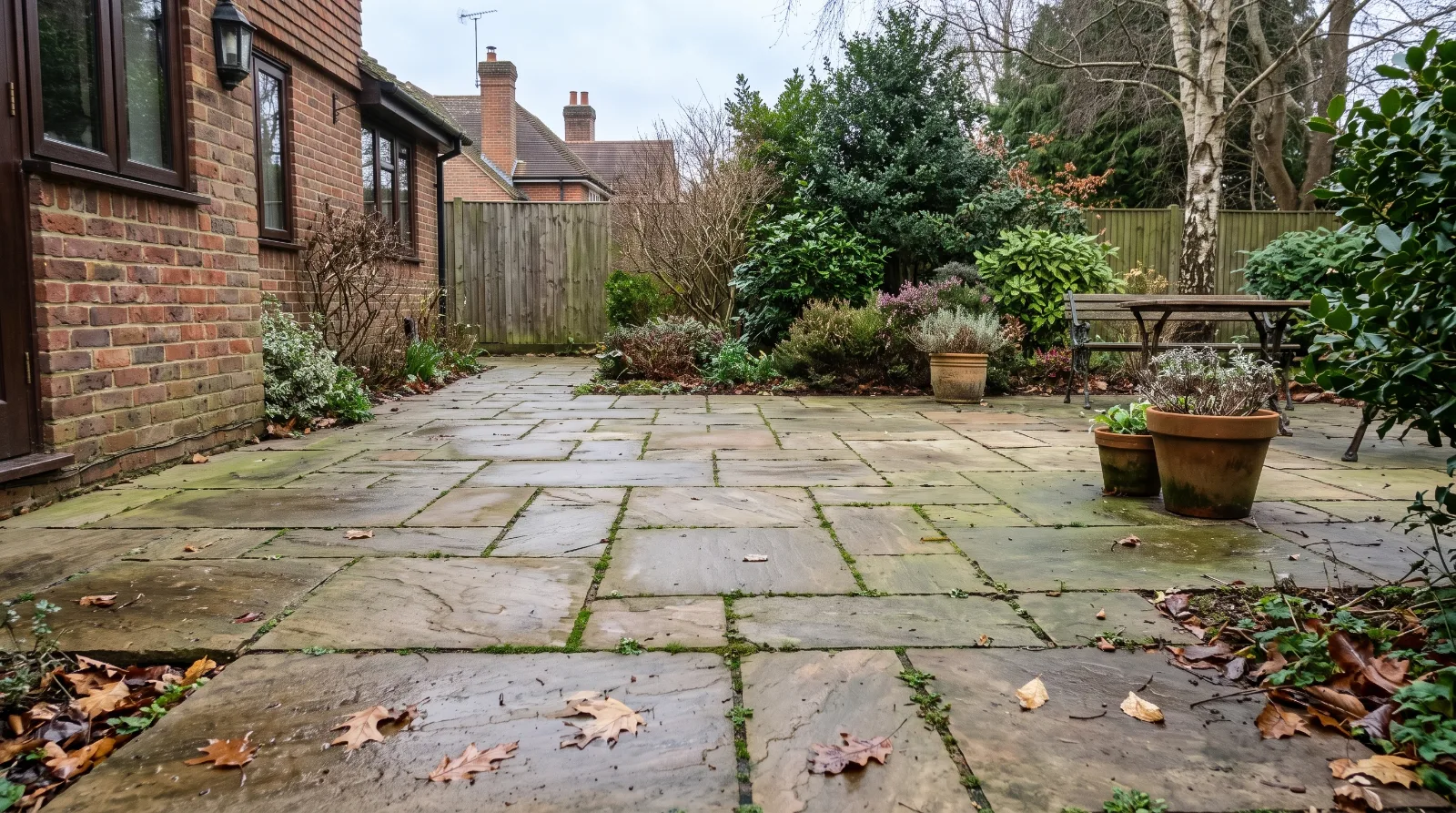
How to Prepare Your Garden for Winter in Surrey
Prepare your Surrey garden for winter with practical advice on lawns, planting, trees, drainage, irrigation, patios, fencing and outdoor structures.

Winter can put every part of a garden to the test. Shorter days, heavy rain, cold winds and occasional frost can leave lawns waterlogged, planting exposed and outdoor features looking tired.
The best time to prepare is before the coldest weather arrives.
A little work in autumn can help protect plants, reduce winter damage and make the garden much easier to bring back to life when spring arrives. For Surrey homeowners, it is also a useful opportunity to deal with drainage, tidy overgrown areas and complete landscaping jobs while the garden is quieter.
Here is what to focus on before winter sets in.
Your Surrey Garden Winter Checklist
Area | What to Do Before Winter |
|---|---|
Lawn | Clear leaves, improve drainage, avoid mowing wet or frosty grass |
Borders | Remove damaged growth, weed and mulch where appropriate |
Trees & hedges | Inspect for damaged branches and prune only where appropriate |
New planting | Check stakes, protect vulnerable plants and maintain good soil conditions |
Drainage | Clear channels, gullies and problem areas before heavy rain |
Irrigation | Drain vulnerable pipework and prepare outdoor taps |
Patios & paths | Remove leaves, moss and algae before surfaces become slippery |
Fences & structures | Check for loose panels, damaged timber and weak fixings |
Furniture | Clean, protect or store according to the material |
Lighting | Check fittings, cables and controls before darker evenings |
You do not need to complete everything in one weekend. Working through the garden gradually during autumn is usually much more manageable.
Start With the Lawn
Your lawn can take a lot of punishment during a wet winter, especially if the soil becomes compacted.
Remove Leaves Regularly
Fallen leaves can block light and air from reaching the grass if they are left in thick layers for long periods.
Clear them regularly rather than allowing them to build up across the lawn.
Leaves can be moved into composting areas or used appropriately elsewhere in the garden, while keeping paved areas and drains clear.
Avoid Mowing in Poor Conditions
Grass can continue growing during mild periods of winter, but mowing should never become a routine job when the ground is very wet or frozen.
Driving a mower repeatedly over saturated ground can compact the soil and leave muddy tracks. Wet or frosty grass can also be damaged by cutting.
When the lawn does need mowing during a mild spell, keep the cut relatively high and wait until the grass and soil have dried or thawed. (rhs.org.uk)
Deal With Compaction
If water tends to sit on your lawn after rain, compaction may be part of the problem.
Autumn is a useful time to improve aeration, particularly in areas that receive regular foot traffic.
For heavier or clay-rich soils, hollow-tine aeration can be particularly useful because it removes plugs of soil and creates larger channels through which air and water can move. (rhs.org.uk)
If the same sections of lawn remain flooded year after year, however, simple aeration may not be enough. Persistent waterlogging can indicate a wider drainage issue.
Look After Your Planting Borders
Winter preparation is not about cutting everything back.
Different plants need different treatment, and some provide valuable structure and interest during the colder months.
Remove What Needs Removing
Clear dead, diseased or badly damaged plant material where appropriate.
At the same time, do not feel that every faded perennial needs to be cut down immediately. Some stems and seedheads can provide useful winter structure and can also offer food and shelter for wildlife.
The aim should be to tidy the garden without stripping it bare.
Add Mulch to Protect the Soil
A layer of mulch can help protect soil, suppress weeds and reduce moisture loss.
Late autumn through winter is a suitable period for applying mulch, with around 5cm commonly used as a useful depth. Keep mulch away from direct contact with plant stems and trunks. (rhs.org.uk)
Suitable materials can include well-rotted garden compost, composted bark and other appropriate organic mulches.
Mulching is particularly useful around newly established planting, shrubs and trees.
Watch for Waterlogged Borders
Winter rainfall can expose drainage problems that are less obvious during summer.
If a border regularly sits under water after heavy rain, do not simply add more plants and hope the problem disappears.
Look at the underlying cause.
Compacted soil, poor falls and naturally heavy ground can all contribute to waterlogging. Where a drainage system is needed, it should be designed around where the excess water can actually go rather than simply moving the problem elsewhere. (rhs.org.uk)
Give Newly Planted Trees and Shrubs Extra Attention
New planting is generally more vulnerable than established plants because the root system has not fully settled into the surrounding soil.
Check newly planted trees and shrubs before winter for movement, leaning or loose supports.
Cold winds can loosen young plants, while wet soil can make shallow-rooted trees more vulnerable to movement.
A properly positioned mulch layer can help protect the root zone, while stakes and ties should be checked to make sure they are supporting the plant without restricting natural movement.
Autumn and winter are also generally suitable planting periods for many trees and shrubs, provided the ground is not waterlogged or frozen. (rhs.org.uk)
That makes autumn a useful time to add new planting before spring growth begins.
Check Trees and Hedges Before Stormy Weather
Autumn is a good time to inspect trees and hedges, particularly if your garden contains mature specimens.
Look for:
Dead or broken branches
Hanging branches
Crossing or damaged growth
Weak-looking limbs
Unstable or damaged stakes
Hedges that need attention
However, winter is not automatically the right time to prune every tree or shrub.
Many deciduous trees can be pruned during dormancy, but timing varies between species, and some plants are better pruned at other times of year. For example, some evergreens and certain Prunus species can be more vulnerable when pruned during colder months. (rhs.org.uk)
For larger trees, substantial reductions or work close to buildings, professional assessment is the safer approach.
Prepare Your Garden Drainage
One of the most useful things you can do before winter is make sure rainwater has somewhere sensible to go.
Check:
Drainage channels
Gullies
Grates
Downpipe outlets
Soakaway areas
Low points in the garden
Remove leaves, mud and other debris that could restrict the flow of water.
Pay Attention to Problem Areas
Walk around the garden after heavy rain and look for standing water.
If water repeatedly collects in the same location, note where it is coming from and where it eventually goes.
This can help identify whether the problem is caused by:
Compacted ground
Poor surface falls
Blocked drainage
Runoff from paving
Naturally heavy soil
A damaged or poorly positioned outlet
A garden that is repeatedly waterlogged during winter may need a more considered drainage solution rather than simply more frequent cleaning.
Prepare Irrigation and Outdoor Watering
If your garden has automated irrigation, autumn is the right time to prepare it for colder weather.
Any vulnerable irrigation lines or exposed pipework should be dealt with before freezing conditions arrive. Outdoor taps may also need protection against frost. (rhs.org.uk)
The exact process depends on the irrigation system.
A professionally installed system may have designated shut-off points and drainage arrangements, while simpler systems may need to be disconnected manually.
Do not leave water trapped in vulnerable pipework if freezing conditions are expected.
Clean Patios and Garden Paths
Wet leaves and organic debris can make hard surfaces dirty and slippery during winter.
Clear leaves regularly from:
Patios
Paving
Steps
Garden paths
Driveways
Decking
If moss or algae has started developing, deal with it before the problem becomes more established.
Pay particular attention to shaded areas, which often remain damp for longer.
This is also a good opportunity to check for loose paving, damaged joints, cracked surfaces or trip hazards before bad weather makes repairs more difficult.
Check Fences, Gates and Garden Structures
Strong winds can expose weaknesses in fencing, gates and timber structures.
Walk the boundaries of the garden and check for:
Loose fence panels
Damaged posts
Weak fixings
Sagging gates
Rotting timber
Loose pergola components
Damaged trellis
Small repairs are much easier to deal with before winter storms rather than after a fence panel has been blown down.
Timber structures can also benefit from maintenance when the weather is dry and suitable for the particular treatment being used. (rhs.org.uk)
Prepare Your Outdoor Furniture
Not all garden furniture needs to be stored indoors, but most will benefit from some protection during winter.
The right approach depends on the material.
Furniture Type | Winter Care |
|---|---|
Hardwood | Clean thoroughly and keep elevated from persistently wet ground |
Softwood | Check finish and treat when conditions are suitable |
Metal | Clean and inspect for rust or damaged coatings |
Plastic | Clean and store where practical |
Cushions | Clean, dry completely and store somewhere dry |
A waterproof cover can help, but furniture should not be left sitting in standing water.
Keeping furniture raised slightly from a consistently wet surface can also help reduce deterioration. (rhs.org.uk)
Check Your Garden Lighting
With shorter days, garden lighting becomes much more important.
Walk through the garden after dark and check that pathways, steps and key areas are adequately illuminated.
Inspect visible fittings and make sure anything that has become loose or damaged is dealt with.
This is also a good time to think about whether the lighting still works with the way the garden is being used.
Feature lighting around trees, planting and seating areas can make a winter garden feel much more inviting, even when the garden is not being used as frequently.
Winterise the Garden Without Stripping It Bare
A common mistake is thinking winter preparation means making the garden look completely empty.
It does not.
Evergreen shrubs, hedges, ornamental grasses, structural trees and carefully chosen winter-interest plants can give a garden shape when many deciduous plants have lost their leaves.
Instead of cutting everything back, focus on removing what is genuinely damaged or untidy while preserving the plants and features that give the garden structure.
This is particularly important in larger Surrey gardens, where thoughtful planting can keep the landscape looking attractive even during the quieter months.
Winter Preparation by Month
While weather varies from year to year, this is a useful general guide.
Period | Main Jobs |
|---|---|
September | Start clearing leaves, inspect trees and structures, assess drainage |
October | Aerate problem lawns, check new planting, repair fencing and tidy borders |
November | Mulch borders, clear drains, prepare irrigation and protect vulnerable plants |
December | Monitor drainage, clear leaves and check outdoor structures after storms |
January | Keep paths clear, monitor the lawn and inspect fencing after severe weather |
February | Begin planning spring work and identify repairs or planting changes |
The exact timing should always follow actual weather and ground conditions rather than the calendar alone.
What Not to Do Before Winter
Winter preparation is also about knowing when to leave the garden alone.
Don't work heavily on waterlogged soil
Walking machinery or repeatedly working wet ground can cause further compaction.
Don't prune everything at once
Different trees, shrubs and hedges have different pruning requirements.
Don't ignore standing water
Repeated puddling is worth investigating rather than simply accepting as a normal part of winter.
Don't overwater newly planted areas
New planting still needs attention during dry spells, but winter soil can remain wet for long periods. Check conditions before adding more water.
Don't leave damaged structures until spring
A loose fence post or weak pergola fitting may become a much bigger problem during strong winter winds.
A Final Pre-Winter Garden Check
Before the coldest part of the year arrives, walk through the whole garden and check:
Lawn: Leaves cleared, compacted areas addressed and mowing reduced when conditions become unsuitable.
Planting: Borders weeded, damaged growth removed and mulch added where appropriate.
Trees: Damaged growth identified and any necessary professional work arranged.
Hedges: Checked for damage and excessive growth.
Drainage: Channels, gullies and outlets clear.
Irrigation: Vulnerable pipework prepared for freezing conditions.
Patios and paths: Leaves, moss and algae removed.
Fencing: Panels, posts and gates secure.
Furniture: Cleaned, protected or stored.
Lighting: Fittings and controls checked.
Structures: Pergolas, screens and other timber features inspected.
Winter Can Be a Good Time to Improve Your Garden
Once the garden has been properly prepared, winter does not have to mean leaving everything untouched.
The quieter months can be an excellent opportunity to assess what is working and what is not.
Perhaps the lawn repeatedly becomes waterlogged. Maybe the patio no longer connects naturally with the garden. You might need better screening, a new seating area, improved planting or a completely different layout.
Winter can give you a clearer view of the garden's underlying structure, particularly while deciduous planting is dormant.
It is also a practical time to plan landscaping work so that the garden is ready for spring.
Preparing Your Surrey Garden for Winter
A well-prepared garden is not necessarily one that has been cut back and tidied until nothing is left.
It is one where the important elements have been protected, drainage has been considered, vulnerable areas have been addressed and the garden is ready to handle the colder months.
For Surrey homeowners, this can also be the perfect opportunity to look beyond seasonal maintenance and consider whether the garden itself could work better.
At Surrey Oak Landscapes, we can help with everything from planting and lawn areas to patios, drainage, fencing, irrigation, lighting and complete garden transformations.
Whether your garden needs a few improvements or a complete redesign, careful planning now can give you an outdoor space that is ready to enjoy when spring returns.
Ready to improve your garden?
About the author