Low-Maintenance Garden Design for Surrey Homes
Create a beautiful garden that's easier to maintain with practical design, considered planting, hard landscaping, irrigation and thoughtful finishing details.
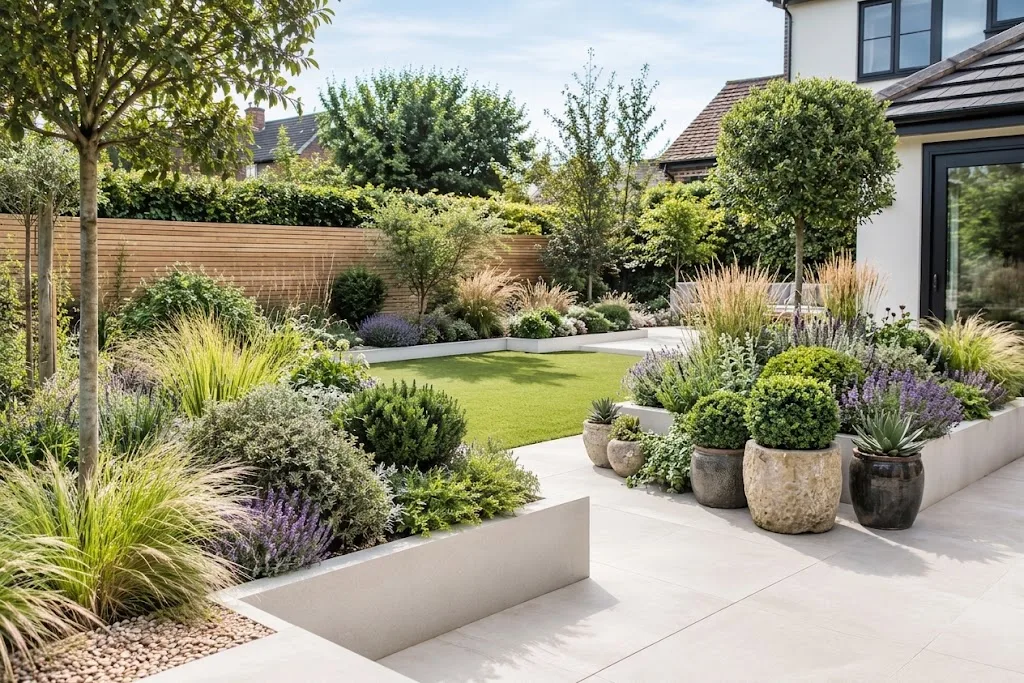
A beautiful garden does not have to demand your time every weekend. With the right layout, planting choices and landscaping materials, it is possible to create an outdoor space that feels considered, inviting and easy to manage.
For many homeowners, the goal of low-maintenance garden design is not to remove planting altogether. It is about designing a garden that works with the available conditions and reduces unnecessary work over time. That means considering everything from the amount of lawn and paving to plant selection, irrigation, access and how the garden will actually be used.
For Surrey homes, where gardens range from compact town plots to larger suburban and rural properties, the best approach will always depend on the individual space.
What Does a Low-Maintenance Garden Actually Mean?
A low-maintenance garden is not a garden that requires no work.
Every garden needs some attention, particularly while new planting is becoming established. The aim is to reduce the amount of ongoing mowing, watering, weeding, pruning and replacement required once the garden is established.
Good design can remove or reduce some of those tasks before they become a problem.
For example, a garden with a smaller, simpler lawn, well-planned planting and clearly defined paved areas can be considerably easier to manage than one with awkward edges, large areas of grass and plants that need constant attention.
The key is to think about maintenance while the garden is being designed, rather than trying to make an existing design easier to maintain afterwards.
Start With the Layout
The layout of a garden has a major influence on how much work it requires.
Before choosing plants or materials, think about how the space will be used. Where will people sit? Where will children play? Where does the garden need access for maintenance? Which areas should be planted, paved or left open?
A simple layout with clearly defined zones can make a garden easier to look after and easier to use.
It can also help to place features that need regular attention closer to the house or main access points. This reduces unnecessary movement around the garden when watering, pruning or carrying materials.
A well-designed garden should feel natural to move through rather than creating lots of awkward corners and inaccessible planting areas.
Choose Plants That Suit the Garden
Plant selection is one of the most important parts of low-maintenance garden design.
A plant can look perfect in a garden centre but still be a poor choice for a particular garden if the conditions are unsuitable. Light levels, soil, moisture, exposure and available space all affect how well a plant will establish.
Choosing plants that naturally suit their location can reduce the need for constant intervention later.
This is particularly important in larger planting schemes. Replacing plants that struggle after a year or two is not only disruptive, but can also change the balance of the original design.
A considered planting scheme should therefore look beyond colour and flowers and consider mature size, structure, texture and seasonal interest.
Reduce Lawn Where It Makes Sense
Lawns can be a useful part of a garden, particularly where the space is used for recreation, entertaining or children.
However, large areas of lawn can also create a significant maintenance commitment.
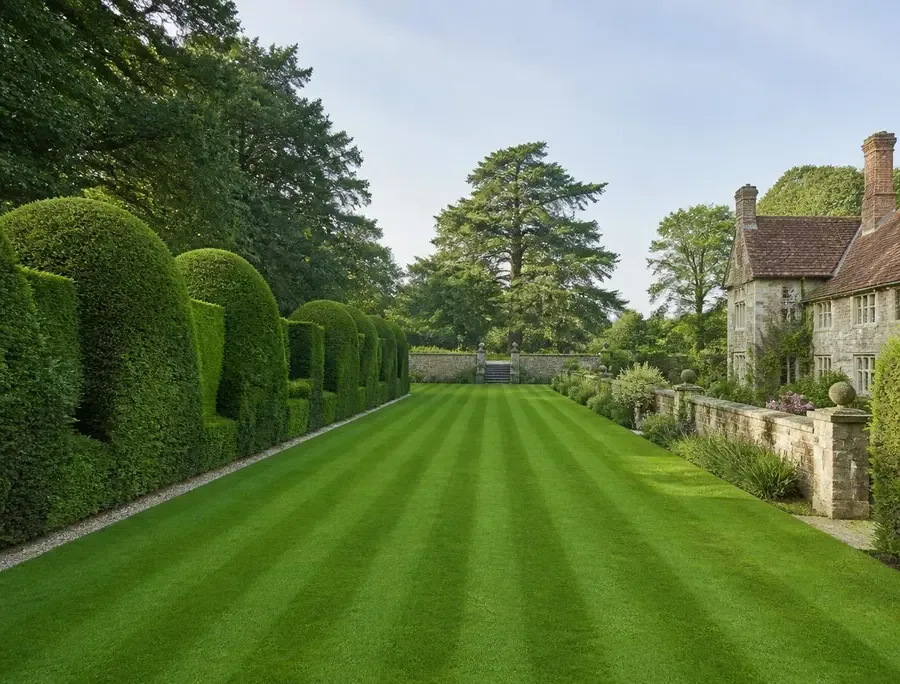
Reducing lawn does not necessarily mean replacing the whole garden with paving. Planting borders, gravel areas, terraces and other landscape features can create a more varied garden while reducing the amount of grass that needs regular mowing.
For smaller gardens, the decision can be especially important. A compact lawn with awkward edges can sometimes take more effort to maintain than a well-designed combination of planting and hard landscaping.
The right balance depends on how you use the garden.
Create Planting With Structure
Low-maintenance planting should still have character.
One of the best ways to achieve this is to build a planting scheme around reliable structural plants, then introduce seasonal interest around them.
Evergreen shrubs can help maintain structure through winter, while grasses, perennials and flowering plants can provide movement, colour and changing interest throughout the year.
Repeating plants within a scheme can also make the garden feel more cohesive. Rather than filling every border with different varieties, a smaller, carefully selected palette can create a stronger overall design.
This approach can also make future maintenance more straightforward because there are fewer individual plant types to manage.
Avoid Leaving Large Areas of Bare Soil
Bare soil can quickly become an invitation for weeds.
A planting scheme with good coverage can help reduce the amount of exposed ground and create a fuller appearance as plants mature. Groundcover plants, shrubs and closely considered perennial planting can all contribute to this.
Mulching can also be useful around plants. A suitable mulch can help suppress weeds and reduce moisture loss from the soil, while also giving borders a cleaner finished appearance.
The important point is that planting density should be considered at the design stage rather than relying on plants to fill empty spaces years later.
Choose Hard Landscaping Carefully
Hard landscaping can play an important role in reducing maintenance, but the material itself is only part of the decision.
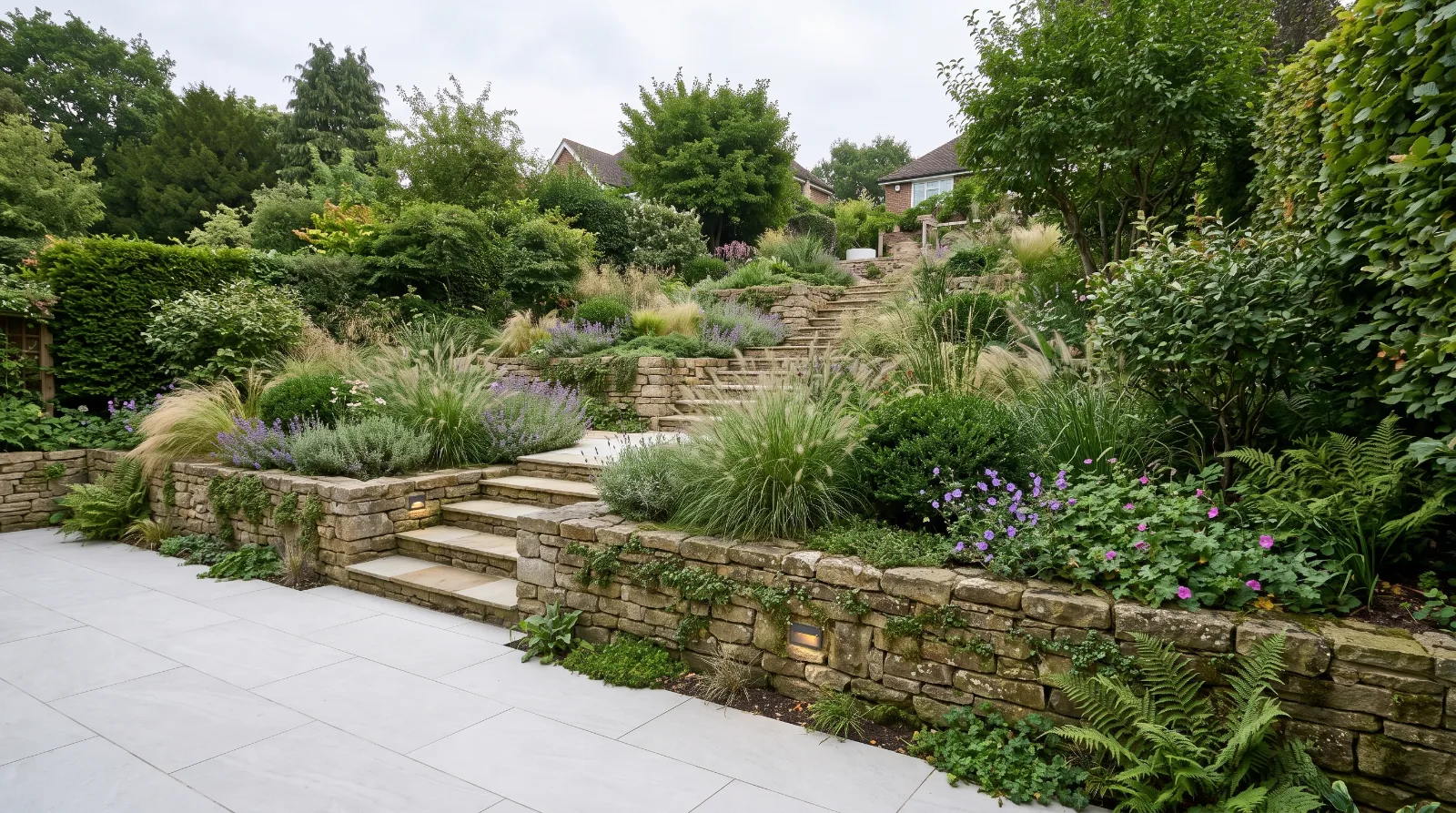
The detailing around paving, steps, walls and borders matters just as much.
Straightforward edges and accessible surfaces are generally easier to keep tidy than complicated layouts with lots of small sections and difficult-to-reach gaps.
Materials should also suit the style of the property and the way the garden will be used. A family garden may need durable, practical surfaces, while a more formal garden might place greater emphasis on clean lines and detailing.
The objective is not simply to install more hard landscaping. It is to create a garden where the hard and soft elements work together.
Plan Irrigation From the Beginning
Watering is one of the jobs that can become surprisingly time-consuming, especially during dry periods and while newly planted gardens are becoming established.
An irrigation system can help make watering more consistent and reduce the amount of manual watering required.
This is particularly useful for larger planting schemes, containers, raised beds and areas where access with a hose is awkward.
Irrigation should be considered as part of the overall garden design rather than treated as an afterthought. Planning pipework and water points before construction can make installation much easier.
New planting will still need attention while it establishes, but good irrigation planning can make long-term maintenance more manageable.
Think About Drainage
Drainage should also be considered from the beginning.
A garden needs to cope with rainfall without creating persistent waterlogged areas, standing water or unwanted runoff. The relationship between paving, planting areas, levels and drainage should therefore be considered as part of the wider landscape design.
Where suitable, permeable surfaces can help water infiltrate through the paved area rather than simply running off the surface. Keeping a sensible balance between hard landscaping and planted areas can also help the garden manage rainfall more effectively.
This is especially important when redesigning front gardens where parking, paving and planting all need to work together.
Make the Front Garden Easy to Maintain
Front gardens often need to do several jobs at once.
They may need to provide parking, create privacy, welcome visitors and improve the appearance of the property.
A well-designed front garden can combine these requirements rather than treating them separately.
For example, planting can be used around the edges of a driveway, while trees, shrubs and hedges can add structure without taking up large amounts of usable space. Where there is limited soil, carefully positioned planting areas and containers can still introduce greenery.
The result should feel like a designed garden rather than simply a driveway with a few plants added around it.
Choose Boundaries That Work Long Term
Fences, walls and hedges all have different maintenance requirements.
A timber fence may require periodic treatment, while certain hedges need regular trimming to retain their shape. This does not mean one option is automatically better than another.
The right choice depends on the property, the desired appearance, privacy requirements and how much ongoing maintenance you are comfortable with.
In some gardens, a carefully chosen hedge can provide a softer, greener boundary. In others, a well-built fence may provide the clean lines and simplicity the design needs.
Use Lighting to Extend the Garden
Garden lighting is not normally the first thing people associate with low-maintenance design, but it can make the garden more useful without adding significant day-to-day work.
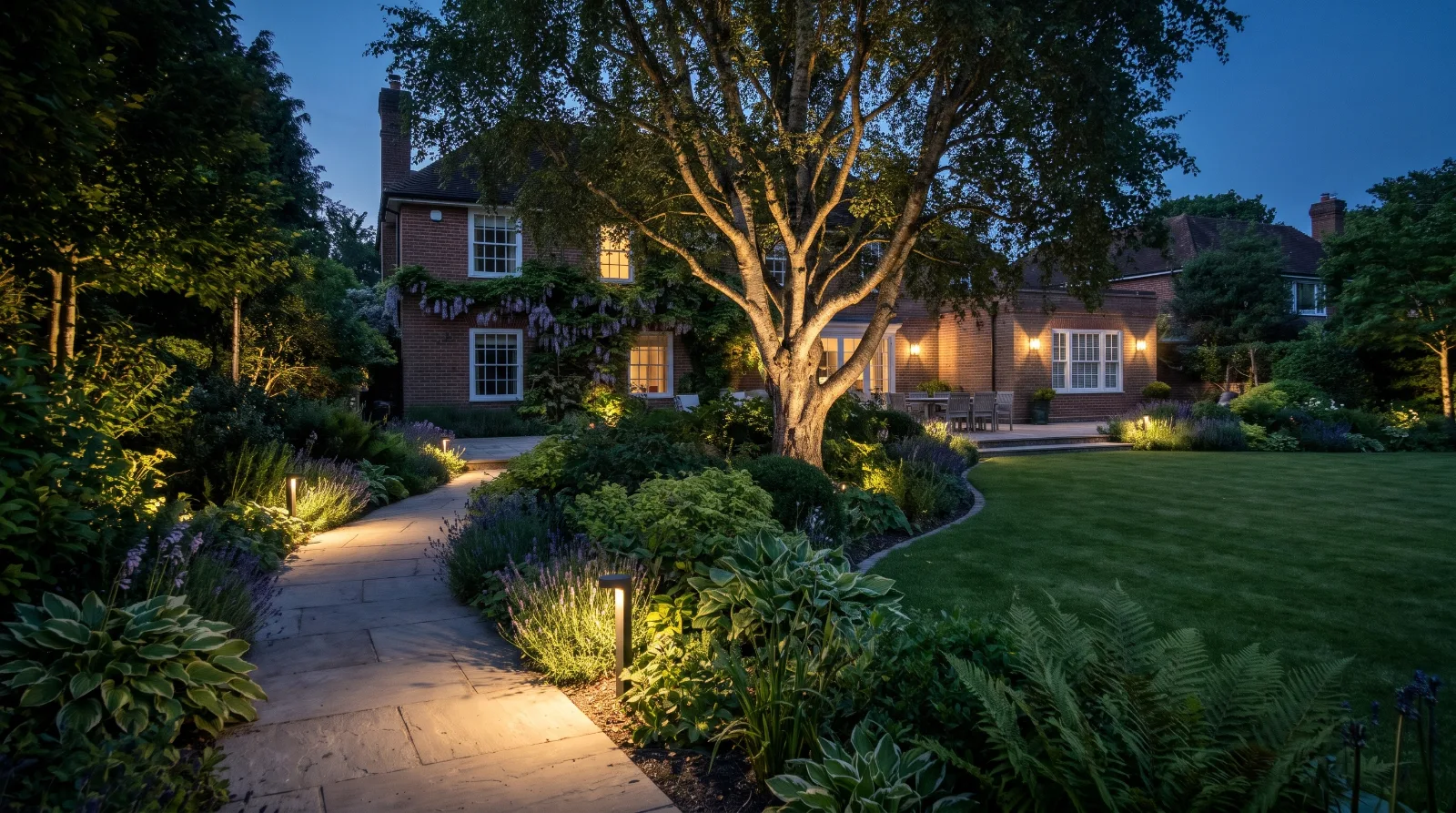
Well-planned lighting can highlight paths, planting, trees, walls and seating areas while allowing the garden to remain usable after dark.
Integrated lighting is particularly effective when it is considered during the original design and construction. This avoids trying to retrofit cables and fittings after the landscaping has already been completed.
The aim should be subtle, practical lighting rather than simply illuminating everything.
Think About How the Garden Will Mature
One of the biggest mistakes in garden design is judging the finished project only by how it looks immediately after installation.
Plants grow. Trees mature. Borders fill out. Some areas become more shaded while others remain exposed.
A good low-maintenance garden should therefore be designed with the future in mind.
Plant spacing, mature heights, tree positions and access for maintenance all need to be considered before installation. A garden that looks perfect on day one but becomes overcrowded after several years is unlikely to remain low maintenance.
Long-term thinking is just as important as the initial design.
Low-Maintenance Garden Design for Surrey Homes
Surrey properties can present very different conditions, so there is no single planting palette or garden layout that works everywhere.
The needs of a compact suburban garden can be very different from those of a large country property. Soil, exposure, shade, available space and the surrounding landscape all influence which plants and materials are appropriate.
That is why a genuinely low-maintenance garden should be designed around the property rather than built from a standard template.
At Surrey Oak Landscapes, we approach planting and landscaping as part of one complete design, considering how the garden will look, function and develop over time across Surrey and the South East.
Creating a Garden That Looks Good Without Constant Upkeep
A low-maintenance garden does not have to look sparse, overly paved or lacking in character.
With careful planning, it can still include mature planting, specimen trees, attractive paving, outdoor living areas, lighting and strong seasonal interest.
The difference is that each element has a purpose.
The layout reduces unnecessary work. Planting is selected for the conditions. Hard landscaping is practical and well detailed. Irrigation is considered early. Maintenance requirements are thought about before anything is installed.
That is what makes low-maintenance garden design work over the long term.
Planning a Low-Maintenance Garden?
Whether you are redesigning a tired garden, reducing the amount of lawn or planning a complete landscape transformation, Surrey Oak Landscapes can create a garden designed around the way you want to use it.
From planting and hard landscaping to irrigation, lighting and outdoor living, every element can be considered as part of one cohesive design.
Get in touch with our team today to discuss your garden and request a free, no-obligation quote.
About the author