Irrigation Systems for UK Gardens: A Complete Guide
From automated watering to discreet drip irrigation, discover how the right irrigation system can support healthy planting and make garden maintenance easier.
A beautiful garden needs the right care long after the landscaping is finished. New planting, lawns, hedges, trees and established borders all have different watering requirements, and keeping everything healthy with a hose or watering can can quickly become time-consuming.
A professionally designed irrigation system provides a more controlled way to deliver water around the garden. Systems can be automated, divided into watering zones and designed around the specific planting and layout of the space.
What Is a Garden Irrigation System?
A garden irrigation system is a network of pipes, valves and watering outlets designed to distribute water to specific areas of a garden.
Instead of manually watering each border, hedge or tree, an irrigation system can deliver water directly to where it is needed. Depending on the design, the system can also be controlled automatically using timers and other controls.
The most suitable system will depend on factors such as:
The size and layout of the garden
The planting scheme
Soil conditions
Water availability and pressure
Whether the garden is new or established
How much ongoing maintenance is required
A good irrigation system isn't simply about putting more water onto the garden. It is about delivering the right amount of water to the right areas.
Why Install Irrigation in Your Garden?
Protecting New Planting
Newly planted trees, shrubs, hedging and borders need regular attention while they establish.
This is particularly important after a major garden transformation, when a large investment has been made in new planting. An irrigation system can help provide consistent watering during this establishment period, reducing the need to rely entirely on manual watering.
Saving Time
Large planting schemes can take considerable time to water manually.
Automated irrigation can take care of routine watering according to a planned schedule, making it particularly useful for larger gardens or homeowners with limited time.
More Consistent Watering
Manual watering can be inconsistent. One area may receive plenty of water while another is missed.
An irrigation system can be divided into separate zones, allowing different parts of the garden to receive different watering schedules depending on their requirements.
Keeping Irrigation Discreet
Modern irrigation systems can be designed to sit discreetly within the landscape.
Much of the pipework can be concealed, while watering outlets can be positioned among planting beds and other areas so that the system doesn't dominate the finished garden.
This is particularly useful in high-quality landscaping projects where the irrigation infrastructure needs to work effectively without distracting from the overall design.
What Types of Irrigation Are Available?
Different areas of a garden call for different approaches. A professional irrigation design should consider the planting and layout rather than using the same watering method everywhere.
Drip Irrigation
Drip irrigation delivers water slowly through small emitters positioned along irrigation tubing.
This is particularly useful for:
Planting beds
Hedges
Shrubs
Containers
Vegetable gardens
Smaller planting areas
Because water is delivered close to the root zone, drip irrigation can provide targeted watering rather than wetting large surrounding areas.
Micro Irrigation
Micro irrigation uses small outlets to supply controlled amounts of water to individual plants or defined areas.
It can be useful where planting is varied and different sections of the garden require different levels of watering.
For example, a newly planted border may require more regular watering than an established planting area.
Sprinkler Systems
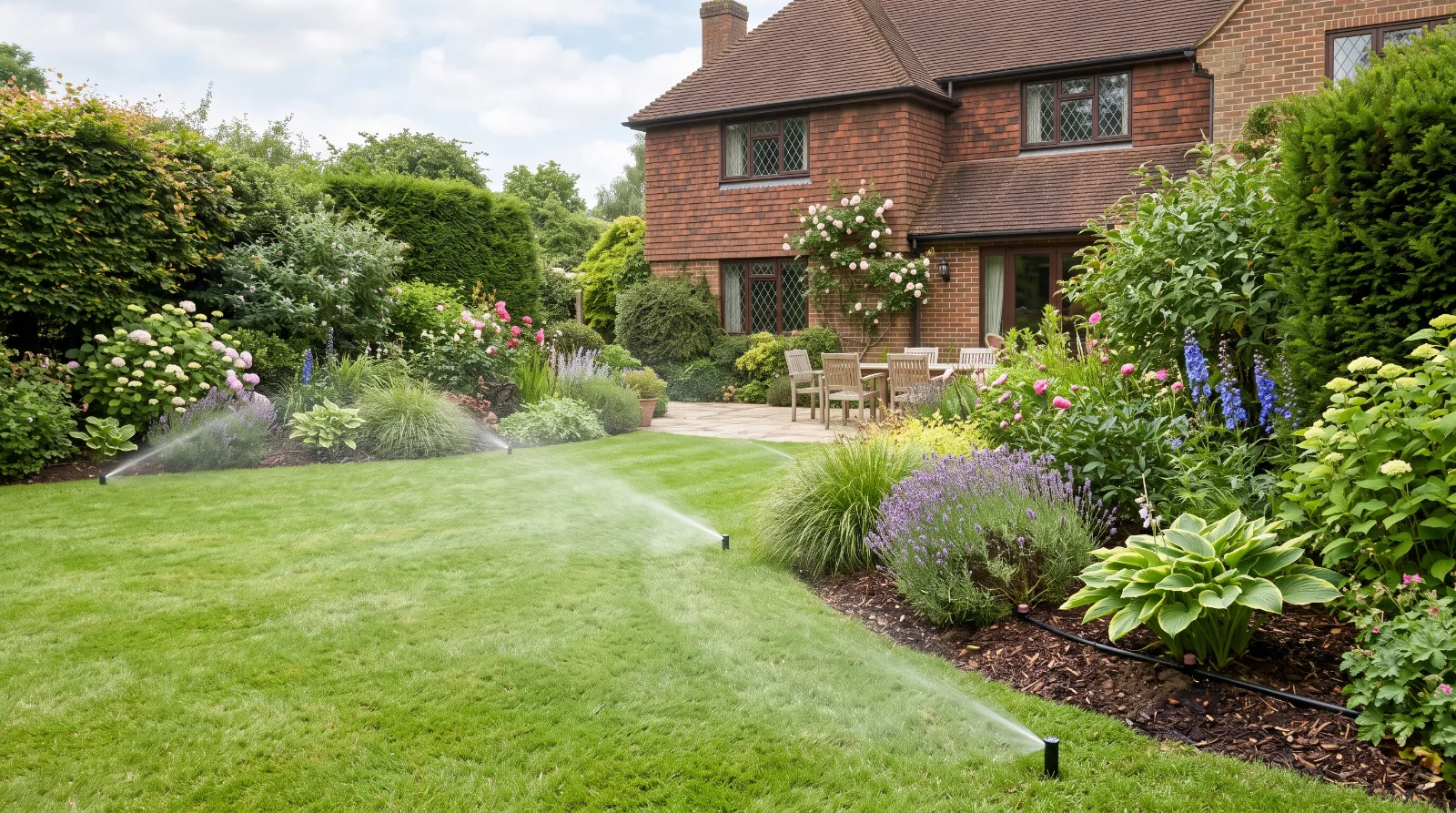
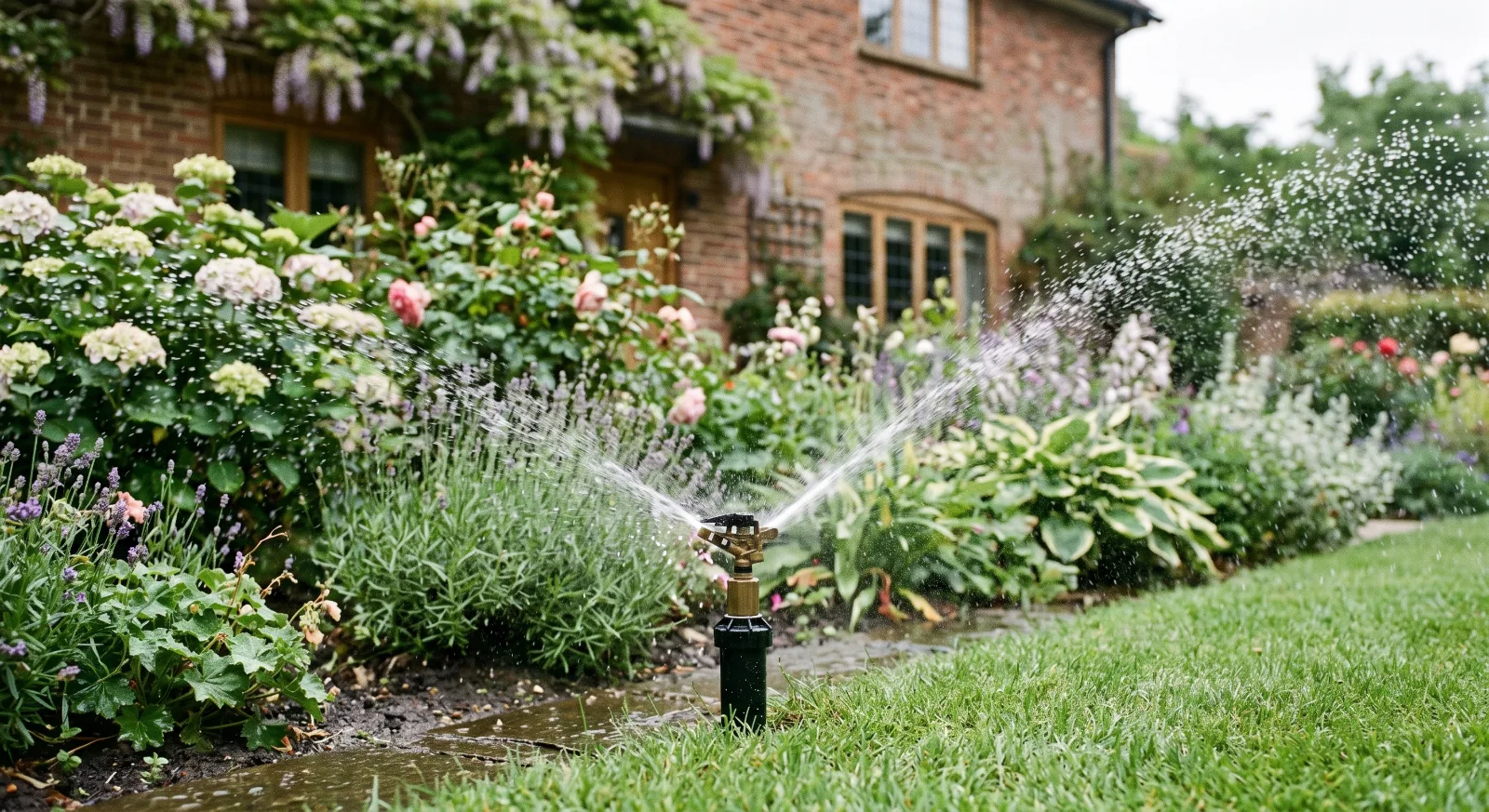
Sprinklers distribute water over a wider area and can be suitable for certain lawn or turf applications.
However, they are not necessarily the best option for every garden. Poorly positioned sprinklers can water hard surfaces or areas that don't need it, while water can also be lost through evaporation or runoff.
For this reason, the system should be designed around the specific area being watered rather than assuming sprinklers are suitable throughout the entire garden.
How Does Automated Irrigation Work?
An automated irrigation system typically uses a control unit, valves, pipework and individual watering outlets.
The garden can be divided into separate zones so that watering can be controlled independently.
For example:
Planting beds can have one watering schedule.
Hedging can have another.
Feature trees and specimen planting can be treated separately.
Lawn areas can use a different watering method where appropriate.
This zoning allows the system to be adjusted according to the needs of the garden rather than running every outlet for the same amount of time.
Some automated systems can also incorporate features such as rain sensors or smart controls, depending on the specification and installation.
Is Automated Irrigation Suitable for a New Garden?
Absolutely.
In fact, irrigation is often best considered during the garden design process rather than after all of the landscaping has been completed.
When planned from the outset, irrigation can be coordinated with:
Planting schemes
Trees and hedging
Lawns
Patios and paving
Garden structures
Drainage
Outdoor entertaining areas
Planning the system alongside the landscaping can make it easier to position pipework discreetly and reduce disruption to finished areas.
That doesn't mean existing gardens can't have irrigation installed. Retrofitting is also possible, although the installation method will depend on the existing layout, planting and access.
Does Garden Irrigation Use More Water?
An irrigation system isn't automatically more efficient simply because it is automated.
The result depends on the system design, watering method and how it is programmed.
Targeted systems such as drip irrigation can deliver water close to plant roots, while controls can help prevent unnecessary watering. However, an automated system can still overwater a garden if it is not adjusted appropriately.
Seasonal changes matter too. Newly planted areas may need more frequent watering while they establish, whereas established planting may require substantially less attention.
Good irrigation design therefore considers plant requirements, soil, weather, exposure and seasonal changes, rather than relying on one fixed watering schedule throughout the year.
Can Irrigation Be Used for Trees and Hedging?
Yes.
Trees and hedging can be incorporated into an irrigation design, particularly when they are newly planted.
This can be especially valuable for larger planting schemes where manually watering every plant becomes impractical.
Individual trees can have dedicated watering outlets, while hedging can be served with a continuous drip line or another suitable irrigation arrangement.
As plants mature and their root systems develop, watering requirements can change, so the irrigation system should be capable of being adjusted over time.
How Much Maintenance Does an Irrigation System Need?
One of the main advantages of irrigation is reduced day-to-day watering, but the system should still be checked periodically.
Regular checks can help identify:
Blocked outlets
Leaks
Damaged pipework
Changes in water pressure
Areas receiving too much or too little water
Seasonal changes in watering requirements
It's also important to adjust the system as the garden develops. New planting may initially need more frequent watering, while established plants can often require less intervention.
Can Irrigation Be Added to an Existing Garden?
Yes.
Existing gardens can often be fitted with discreet irrigation systems without completely redesigning the space.
The installation needs to take the existing paving, planting, lawn and access into consideration. The system can then be designed around the garden that is already there.
However, if you're planning a complete garden renovation, installing irrigation as part of the wider landscaping project can provide more flexibility and help minimize disruption.
Choosing the Right Irrigation System
A well-designed irrigation system can make garden maintenance easier, support new planting and provide a more consistent way to water different areas of the landscape.
The right solution will depend on the garden’s layout, planting, soil, water supply and how the space is used throughout the year.
Whether you're creating a new garden or improving an established one, properly planned irrigation can provide a discreet and practical watering solution that works quietly in the background.
Planning an irrigation system for your garden?
About the author