How to Fix a Sloping Garden
Have an awkward or uneven garden? Discover how terracing, retaining walls, steps, planting and drainage can turn a sloping Surrey garden into a more usable outdoor space.
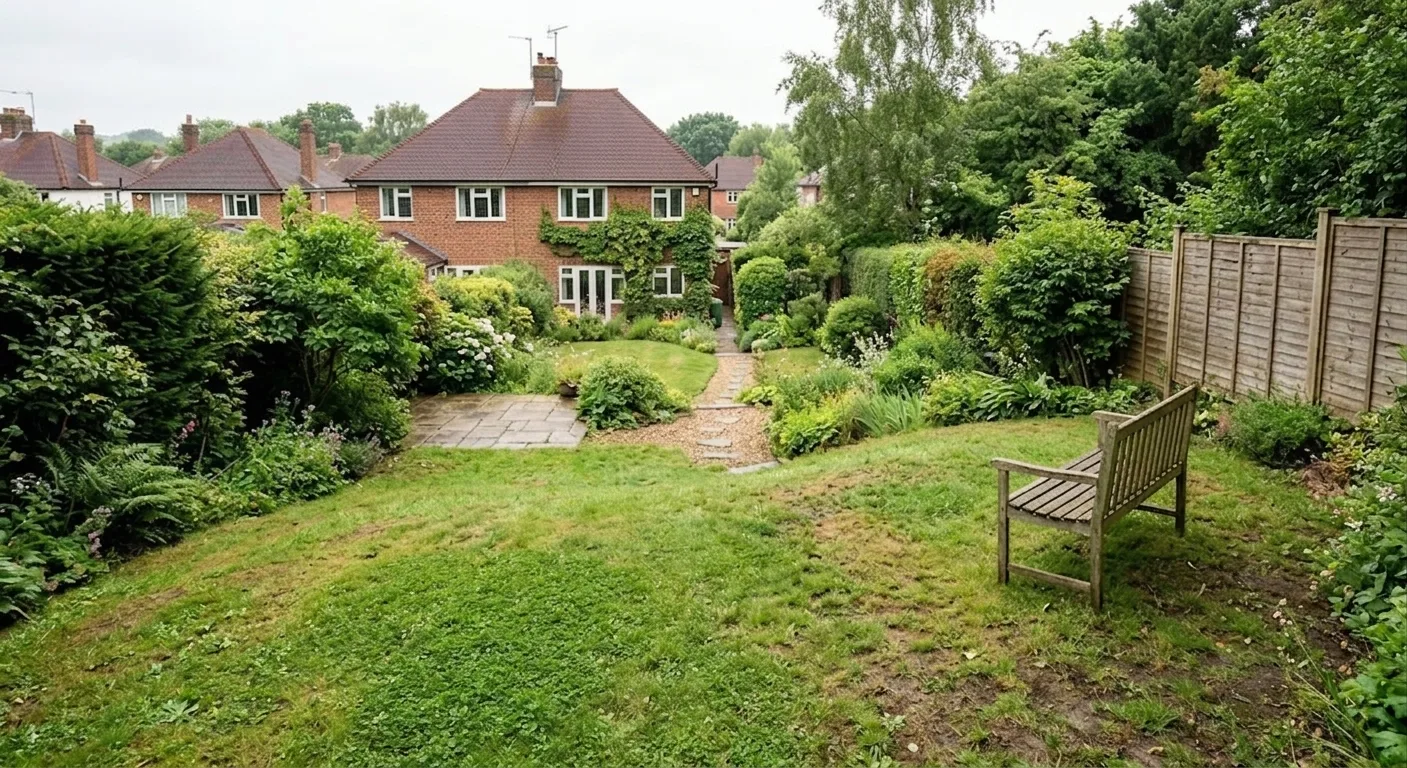
A sloping garden can make it difficult to create a usable lawn, comfortable seating area or straightforward route through the space. It can also make mowing, drainage and general maintenance more challenging.
But a slope does not necessarily need to be removed. With the right design, changes in level can become one of the most interesting features of a garden.
For homeowners in Surrey, sloping gardens are fairly common, particularly around areas with naturally undulating ground. The right approach will depend on the steepness of the garden, existing levels, drainage, access and how you want to use the space.
Why Is a Sloping Garden Difficult to Use?
The steeper the garden, the more difficult it can be to use in the same way as a flat lawn.
A slope can make it harder to:
Create a level seating or dining area
Mow the lawn comfortably
Move between different parts of the garden
Manage surface water
Prevent soil from washing downhill
Create practical planting areas
Make the garden easy to use every day
Trying to simply cover a steep slope with lawn is not always the most practical solution. In many cases, working with the existing levels can create a much more useful garden.
1. Create Terraced Levels
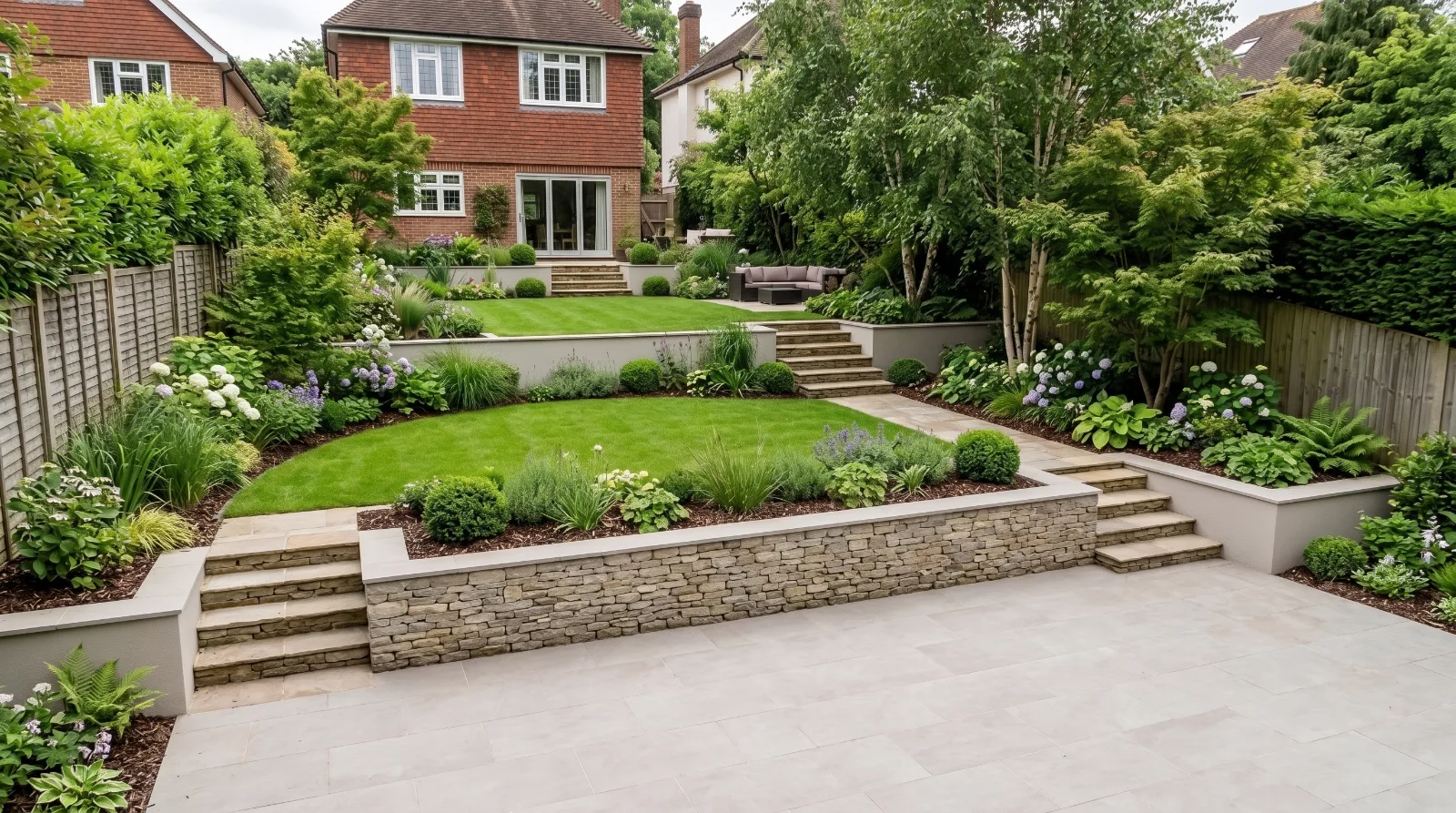
One of the most effective ways to deal with a sloping garden is to divide it into a series of more manageable levels.
Instead of having one continuous slope, the garden can be broken into terraces that provide flatter areas for different purposes.
For example, you could have:
A dining terrace close to the house
A lawn on the next level
A lower seating area
Planted borders between levels
Terracing does not necessarily mean creating perfectly flat sections throughout the entire garden. The number and size of the levels should be based on the gradient, available space and how you want to use the garden.
2. Use Retaining Walls to Hold the Levels
Once a garden is divided into different levels, those levels need to be supported.
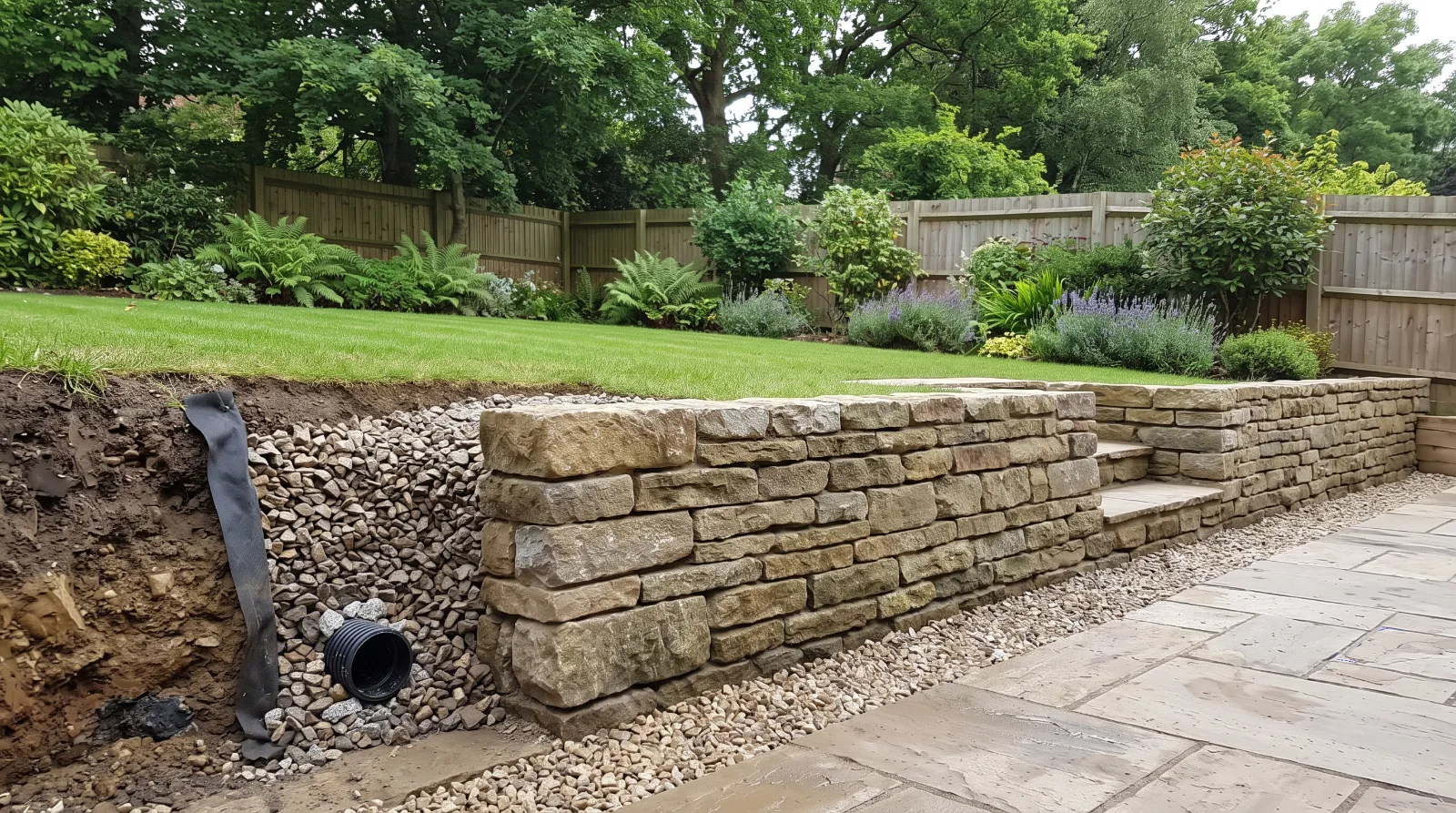
Retaining walls can hold back the soil and create the structure needed for terraces, raised planting areas and patios.
Depending on the property and overall design, retaining walls can be built or finished using materials such as:
Natural stone
Brick
Render
Timber sleepers
Modern masonry systems
A retaining wall should not be treated as purely decorative. Its construction, foundations and drainage need to suit the height of the wall and the ground it is retaining.
3. Add Steps Between Levels
Once you introduce different levels, you also need a comfortable way to move between them.
Garden steps can be positioned to create a natural route through the space while connecting patios, lawns and planting areas.
On a larger garden, a long flight of steps does not have to be completely straight. A change in direction, a small landing or a wider section can create a more interesting journey through the garden.
It is important that steps are designed consistently and with outdoor conditions in mind. Uneven risers, awkward transitions and slippery surfaces can quickly make a garden harder to navigate.
4. Consider a Sloping Lawn Carefully
A lawn can still work on a sloping garden, particularly where the gradient is relatively gentle.
The question is whether the lawn will actually be practical to use and maintain.
A slight slope can add character and make the garden feel more open, while a steep lawn can become awkward to mow and difficult to use for seating or everyday activities.
In some gardens, it makes more sense to keep a small area of lawn on one level and use planting or hard landscaping to deal with the remaining slope.
The goal should not always be to make every part of the garden flat. It is about deciding which parts need to be flat.
5. Get the Drainage Right
Drainage becomes especially important when dealing with changes in level.
Rainwater naturally travels downhill, which can leave the bottom of a garden wetter than the areas above it. Water can also put additional pressure on retaining structures if drainage behind them has not been properly considered.
Depending on the site, a sloping garden may require a combination of drainage channels, land drainage, permeable surfaces or other methods of managing surface water.
This is particularly important on gardens with clay-heavy soil, where water can move more slowly through the ground.
Drainage should therefore be planned at the same time as the levels and retaining walls rather than added once the rest of the garden has been completed.
6. Use Planting to Work With the Slope
Not every part of a sloping garden needs to become a terrace.
Planting can be a great way to use areas that would be awkward for paving or lawn. Ground-cover plants, shrubs, grasses and trees can soften the change in level while adding colour, structure and texture.
Planting can also help break up large retaining walls, making them feel more integrated with the garden.
Instead of trying to hide the slope completely, a planted bank can become one of the garden's defining features.
7. Create Different Areas for Different Uses
A sloping garden can actually make zoning easier.
Because the levels naturally separate different parts of the space, you can give each area its own purpose.
For example, the area closest to the house could become an outdoor dining space, while a lower terrace could provide somewhere quieter to sit. A middle level might work well as a lawn, with planting connecting everything together.
The key is to make sure the different areas still feel like part of one garden rather than a collection of separate spaces.
8. Think About Access Before Starting Work
A sloping garden can be difficult to build in, particularly when access is restricted.
Materials, paving, soil and spoil may need to be moved through narrow side passages or other limited-access areas. That can influence what machinery can be used and how efficiently the work can be carried out.
It is therefore worth considering access at the design stage rather than once construction has started.
This is one reason sloping gardens benefit from being planned as a complete project, with levels, retaining walls, drainage, steps, planting and access considered together.
How Do You Make a Sloping Garden Look More Natural?
A good sloping garden should not feel like a series of disconnected structures.
The different levels need to relate to one another through materials, planting and movement.
Repeating the same paving material across terraces, using similar planting throughout the garden or continuing a particular boundary material between levels can help everything feel connected.
The aim is for the retaining walls, steps and terraces to feel like part of the garden's design rather than obstacles that have simply been built to deal with the slope.
Can a Sloping Garden Add More Usable Space?
Absolutely.
In many cases, the biggest improvement comes from creating fewer but better spaces rather than trying to use every square metre in the same way.
A previously awkward slope could become:
A dining terrace → steps → a lawn → planted borders → a quieter seating area
Instead of one difficult-to-use gradient, you have several spaces with a clear purpose.
That is why a sloping garden can be an opportunity rather than simply a problem.
Planning a Sloping Garden in Surrey
There is no single solution for every sloping garden.
A gentle slope may only need careful planting and a few changes in level, while a steeper garden may require terraces, retaining walls, steps and dedicated drainage.
The best approach is to start with how you want to use the garden and then design the levels around those needs. This creates a more practical space while allowing the slope itself to become part of the character of the garden.
If your Surrey garden is difficult to use because of its levels, Surrey Oak Landscapes can help you plan a complete solution, from patios and retaining walls to steps, planting and drainage.
Get in touch with Surrey Oak Landscapes for a free, no-obligation quote and discuss how you could make better use of your garden.
About the author