How to Fix a Driveway That Holds Water
Is your driveway holding water after rain? Learn what causes standing water and how to improve driveway drainage for a drier, longer-lasting driveway.
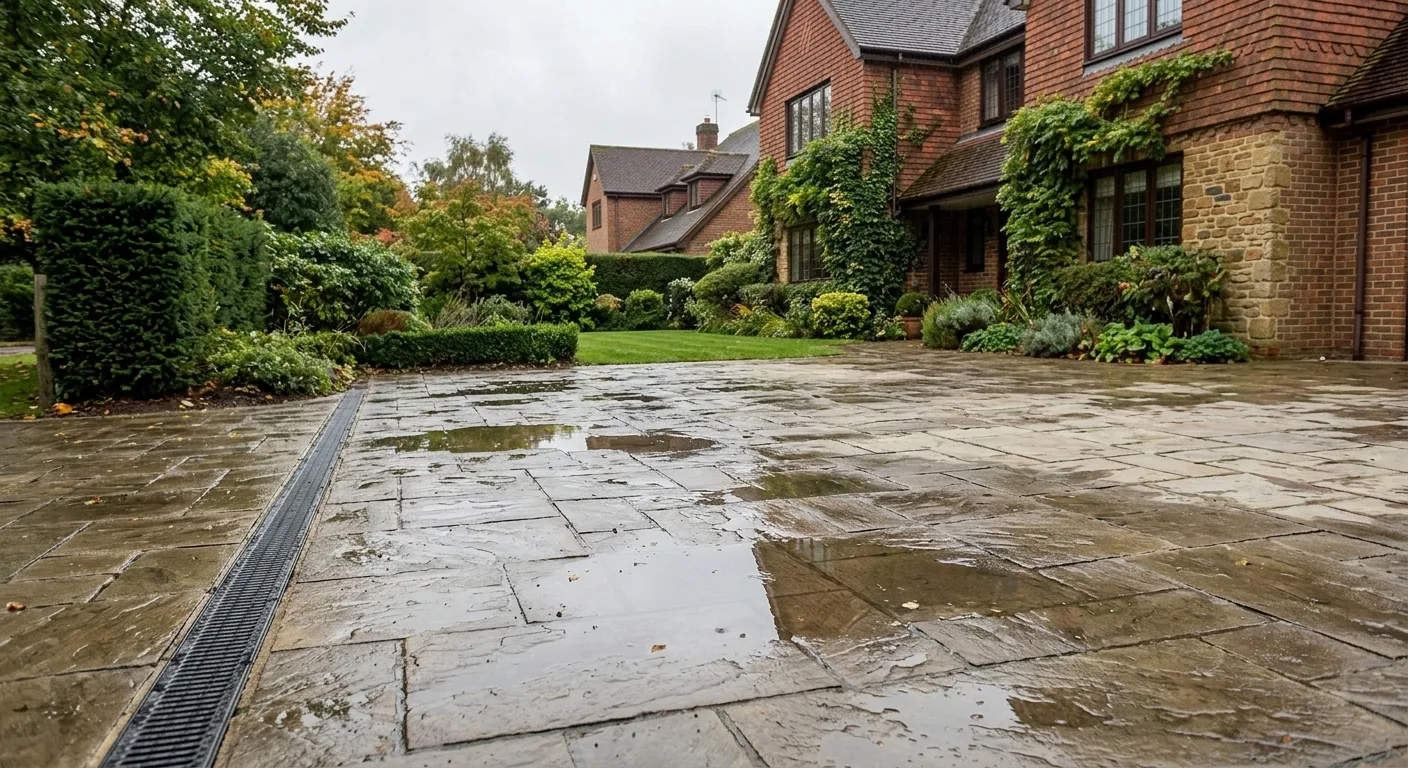
A driveway that holds water after rain is more than just an inconvenience. Puddles can leave paving looking dirty, encourage moss and algae, and over time may contribute to damage to the driveway surface and its underlying base.
If you regularly notice standing water on your driveway, the problem is usually related to the way water is draining away. The surface may have insufficient fall, the drainage may be blocked, or the driveway may simply have nowhere for excess water to go.
Fortunately, there are several ways to improve driveway drainage depending on the type of driveway, the amount of water involved and the layout of your property.
Why Does Water Pool on a Driveway?
Water naturally collects at the lowest point of a surface. If a driveway has not been constructed with enough fall, rainwater can remain in low spots instead of flowing towards a suitable drainage point.
Common causes include:
Poor or uneven falls across the driveway
Settlement of paving or the sub-base
Blocked gullies or drainage channels
Water running down from higher ground
A driveway sloping towards the house or garage
Impermeable surfaces with no suitable drainage route
Poor ground conditions that prevent water from soaking away
Puddles in one or two specific areas can sometimes indicate that sections of the driveway have settled. If water collects across a large part of the surface, the overall drainage design may need to be addressed.
Check Where the Water Is Coming From
Before deciding on a solution, it is important to establish where the water is coming from and where it currently goes.
Watch the driveway during heavy rain and look for the direction the water naturally takes. Check whether it is coming from the driveway itself, a neighbouring garden, a slope, downpipes or another part of the property.
Also check existing drains and gullies for leaves, mud and other debris. A blocked outlet can cause water to back up even when the driveway itself has been laid correctly.
If the driveway slopes towards your house or garage, drainage becomes particularly important. Standing or flowing water near door thresholds can eventually create problems if it is not intercepted and directed elsewhere.
Improve the Fall of the Driveway
One of the most effective ways to prevent standing water is to make sure the driveway has an appropriate fall.
A fall is simply a slight slope that allows rainwater to move towards a drainage point instead of remaining on the surface. Hard surfaces need a planned route for water to escape, and inadequate gradients can result in ponding.
If a driveway has low spots caused by settlement, simply adding a drain may not solve the problem. Water still needs to reach the drain in the first place.
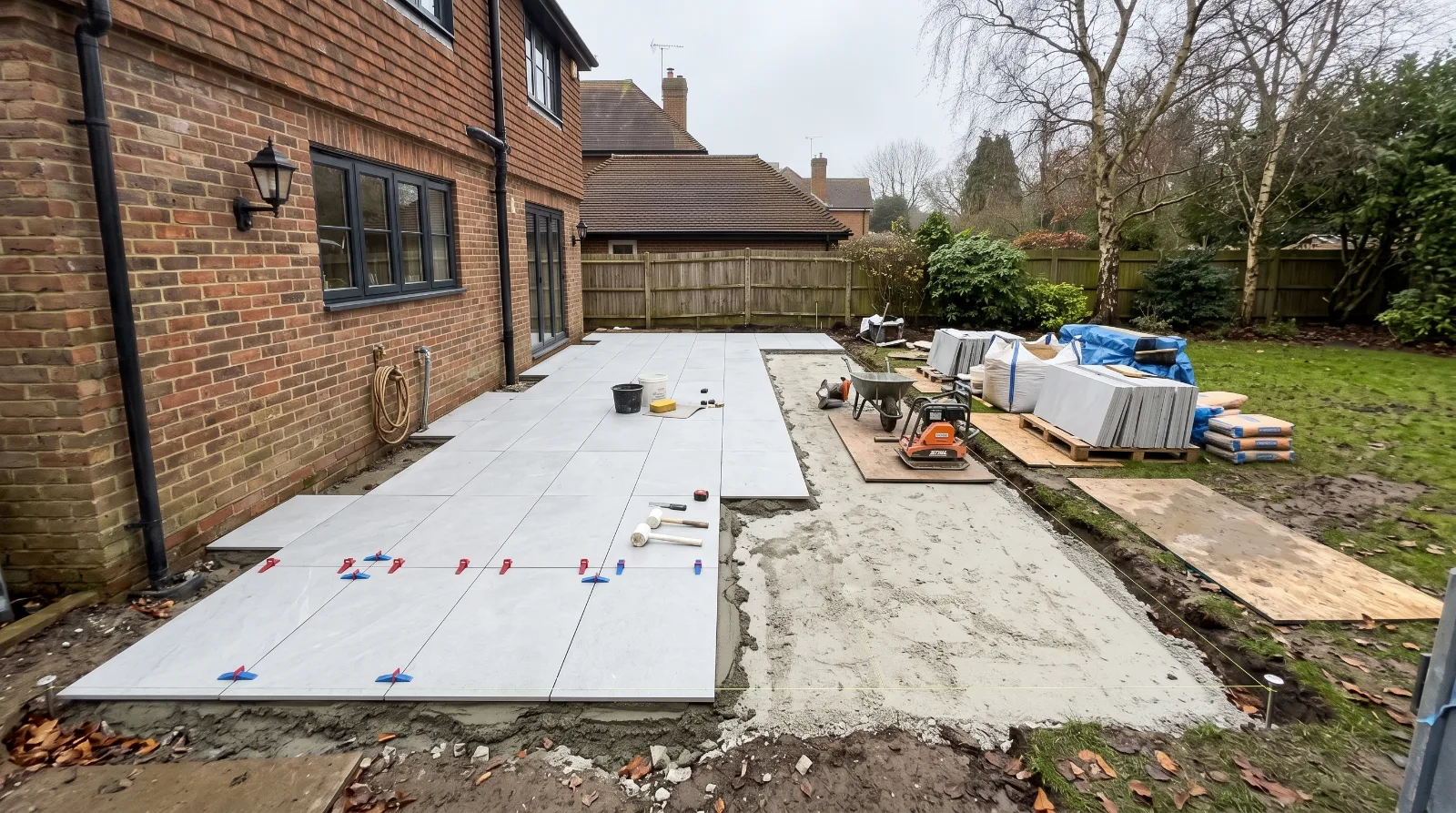
Depending on the condition of the driveway, correcting the fall could involve lifting and relaying sections of paving, rebuilding part of the sub-base or replacing the surface altogether.
Install a Channel Drain
A channel drain can be an effective solution when water needs to be collected from a particular area.
These long, narrow drainage channels are commonly installed:
Across the bottom of a sloping driveway
In front of a garage
Near a doorway or threshold
Where a driveway meets a building
Along the edge of a driveway where water needs to be intercepted
The channel collects surface water and directs it towards a suitable outlet rather than allowing it to continue towards the house or form a puddle.
However, a channel drain is only part of the solution. The collected water still needs somewhere suitable to go, such as an appropriate drainage system, soakaway or designed permeable area.
Consider a Soakaway
Where ground conditions are suitable, a soakaway can provide a way for collected rainwater to disperse into the surrounding ground.
A soakaway is an underground structure that temporarily stores water before allowing it to infiltrate into the surrounding soil.
It can be particularly useful where there is enough space around the driveway and the soil is capable of accepting the water. However, not every property is suitable. Heavy clay soils, high groundwater levels or other site conditions can affect how effectively a soakaway works.
This is why the ground and drainage conditions should be assessed before installing one.
Consider Permeable Driveway Materials
If the existing driveway needs replacing, changing the surface may be part of the solution.
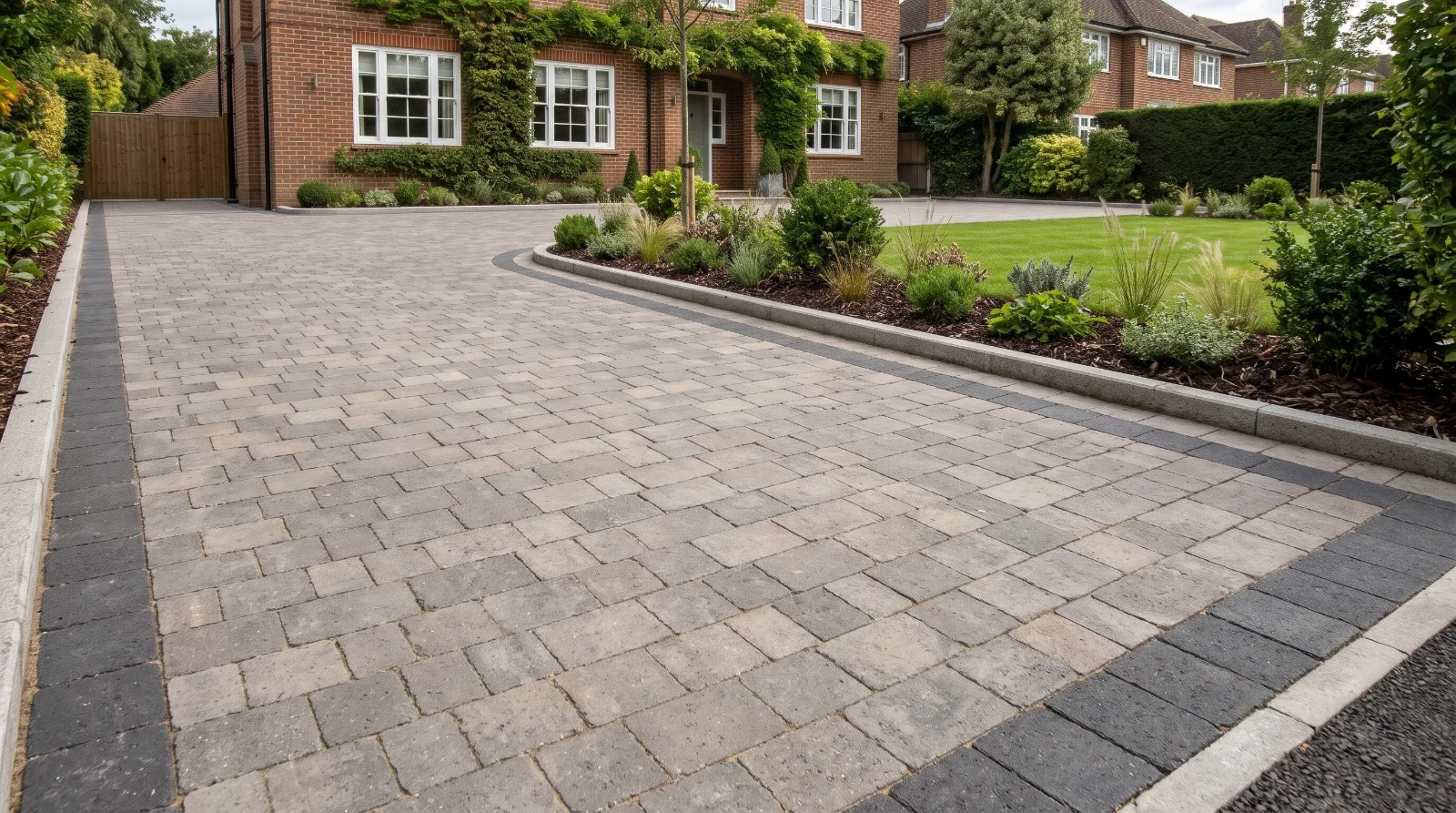
Permeable driveway systems allow rainfall to pass through the surface rather than relying entirely on water running across the top. Options can include permeable block paving, suitable porous surfaces and gravel systems.
Permeability, however, is not simply about choosing a particular surface. The layers underneath the driveway also need to be designed to store and move water effectively.
A properly constructed permeable driveway can therefore be a useful option where surface water is a recurring problem.
What If the Driveway Is Already Block Paved?
Block paving can sometimes be repaired without replacing the entire driveway.
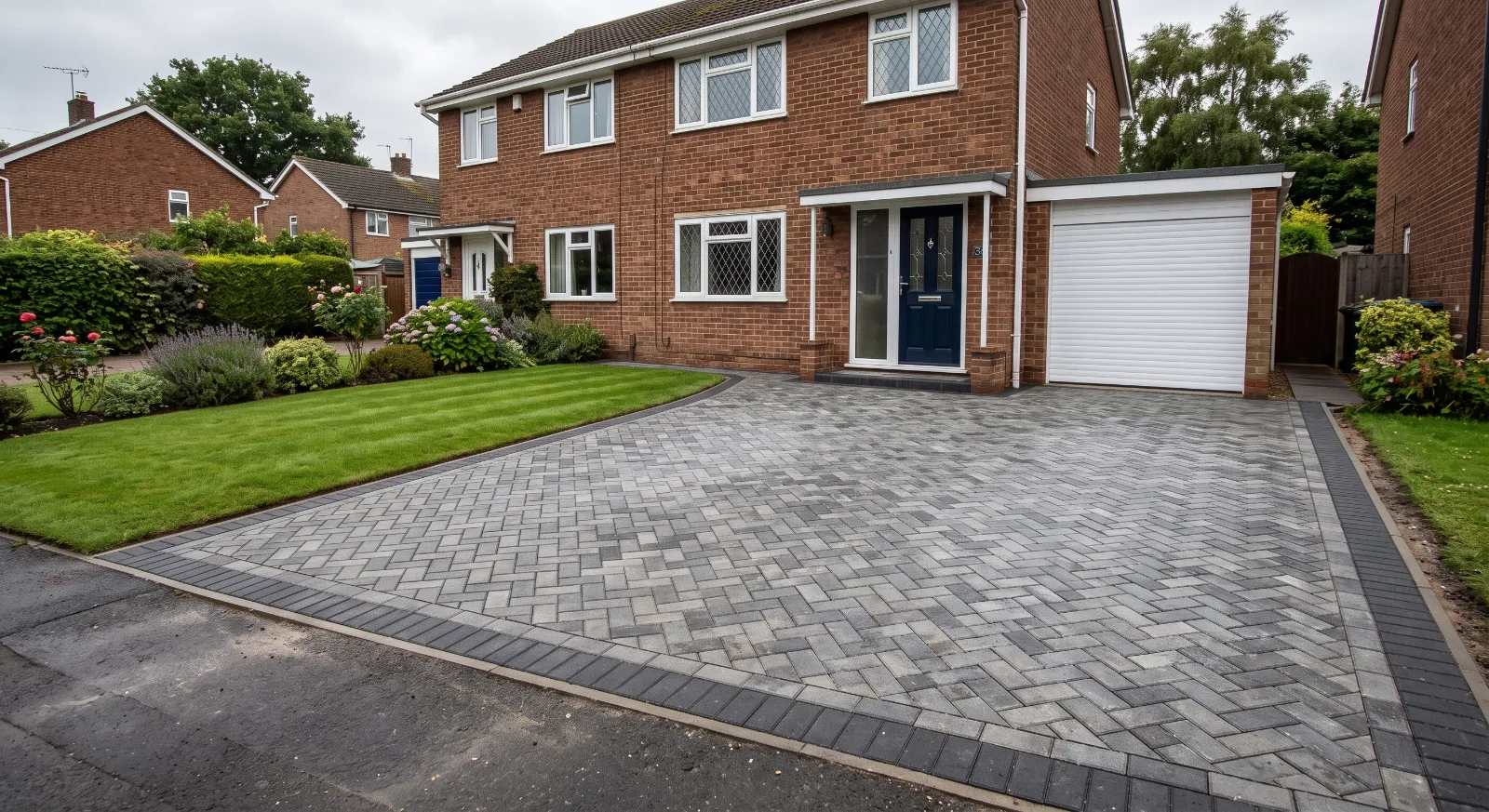
If individual areas have sunk, the affected blocks can be lifted and the underlying material corrected before the blocks are relaid. This can restore the fall and help water move away from the affected area.
Joints and drainage points should also be checked for debris, weeds and sediment.
If the entire driveway has settled or has widespread drainage problems, however, patch repairs may only provide a temporary solution. In these cases, lifting and rebuilding larger sections may provide a more reliable result.
Can You Fix a Driveway That Slopes Towards the House?
Yes, but it requires careful drainage planning.
If the natural fall of the driveway directs water towards the property, a channel drain can be positioned before the water reaches the building. The channel then needs to discharge into an appropriate drainage solution.
Simply installing a drain directly beside the house without considering where the collected water will go will not solve the underlying problem.
Where significant levels need to be changed, the driveway may also need to be redesigned so that water is directed away from the building from the outset.
How to Prevent Water Pooling in the Future
Good drainage should be considered when a driveway is designed or replaced, rather than added as an afterthought.
A well-planned driveway should:
Have suitable falls
Direct water away from buildings
Avoid creating low spots
Have appropriate drainage where required
Use a suitable sub-base
Provide a suitable route for collected water
Be constructed to suit the ground conditions
Regular maintenance also helps. Keep gullies, channels and drainage points clear of leaves, mud and other debris so water can continue to flow freely.
When Should You Replace the Driveway?
Minor puddling does not necessarily mean the entire driveway needs replacing.
If the problem is limited to a small settled section, lifting and relaying the affected area may be enough. A blocked drain may simply need cleaning or repair.
However, replacement or substantial reconstruction may be worth considering when:
Large areas of the driveway hold water
The surface has widespread settlement
The sub-base has failed
Water repeatedly reaches the house or garage
Existing drainage cannot cope with rainfall
The driveway has been poorly designed from the beginning
In these situations, rebuilding the driveway provides an opportunity to correct the falls and drainage properly rather than repeatedly repairing individual problem areas.
Get Your Driveway Drainage Right
Persistent standing water is usually a sign that water does not have a suitable route away from the driveway.
Whether the answer is correcting the fall, repairing settled paving, installing channel drainage, adding a suitable soakaway or redesigning the driveway with a permeable surface, the right solution depends on the individual property.
For homeowners in Surrey, a proper assessment of the driveway, surrounding levels and existing drainage can help identify the cause before work begins.
If your driveway regularly holds water after rain, Surrey Oak Landscapes can assess the problem and recommend a practical solution for your property.
About the author