Does Your Garden Need a Retaining Wall?
Wondering whether your garden needs a retaining wall? Learn how retaining walls can manage slopes, create usable levels and improve Surrey gardens.
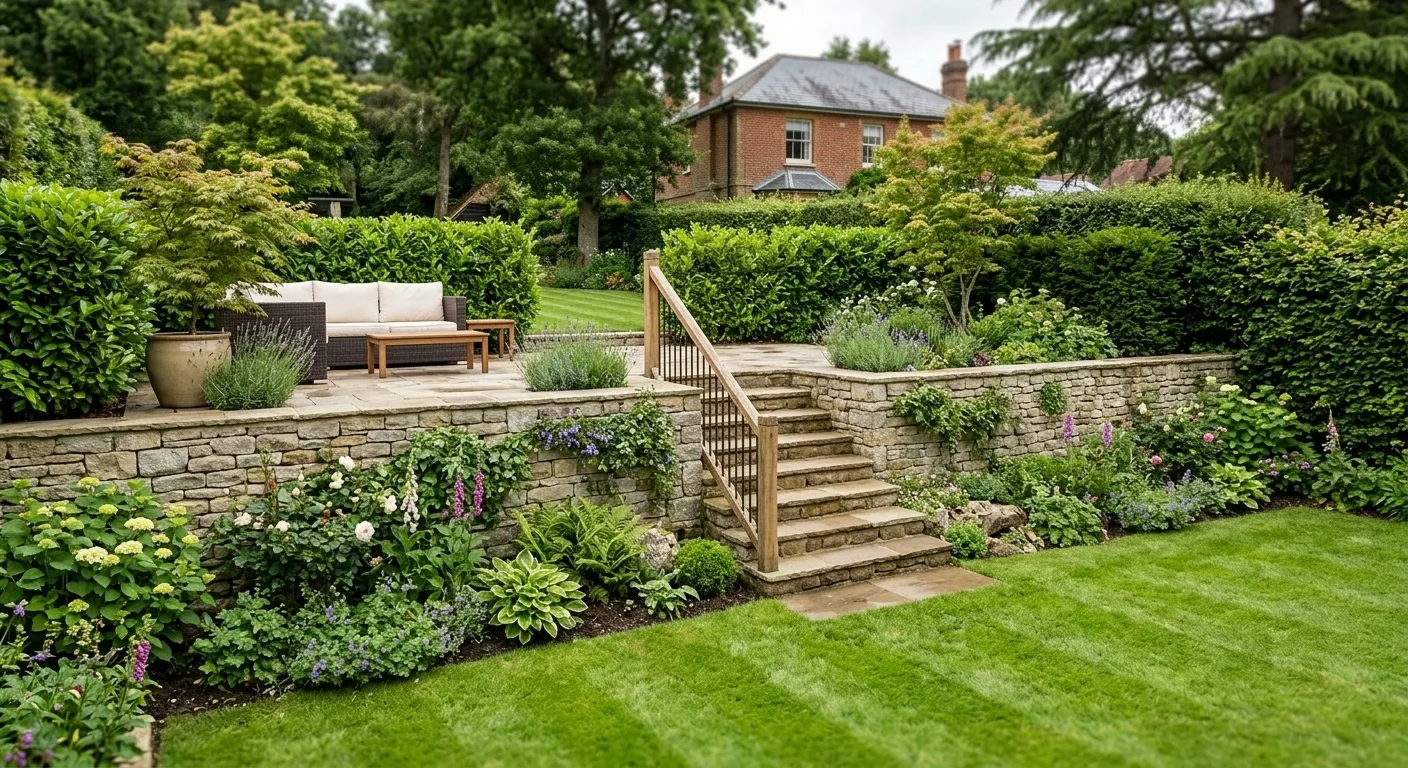
A retaining wall can do much more than separate two areas of a garden. It can hold back soil, create different levels, make a sloping garden easier to use and provide structure for patios, lawns and planting.
But not every change in level needs a retaining wall.
The right solution depends on the height of the slope, the ground conditions, drainage and how you want to use the garden. For Surrey homeowners, these factors can vary considerably from one property to another.
So, how do you know whether your garden actually needs one?
What Is a Retaining Wall?
A retaining wall is a structure designed to hold back soil where there is a difference in ground level.
Instead of allowing soil to continue running down a slope, the wall creates a supported edge that makes it possible to form a more level area behind it.
This can be useful for creating:
Level lawns
Raised planting areas
Patio and dining areas
Garden paths
Steps between different levels
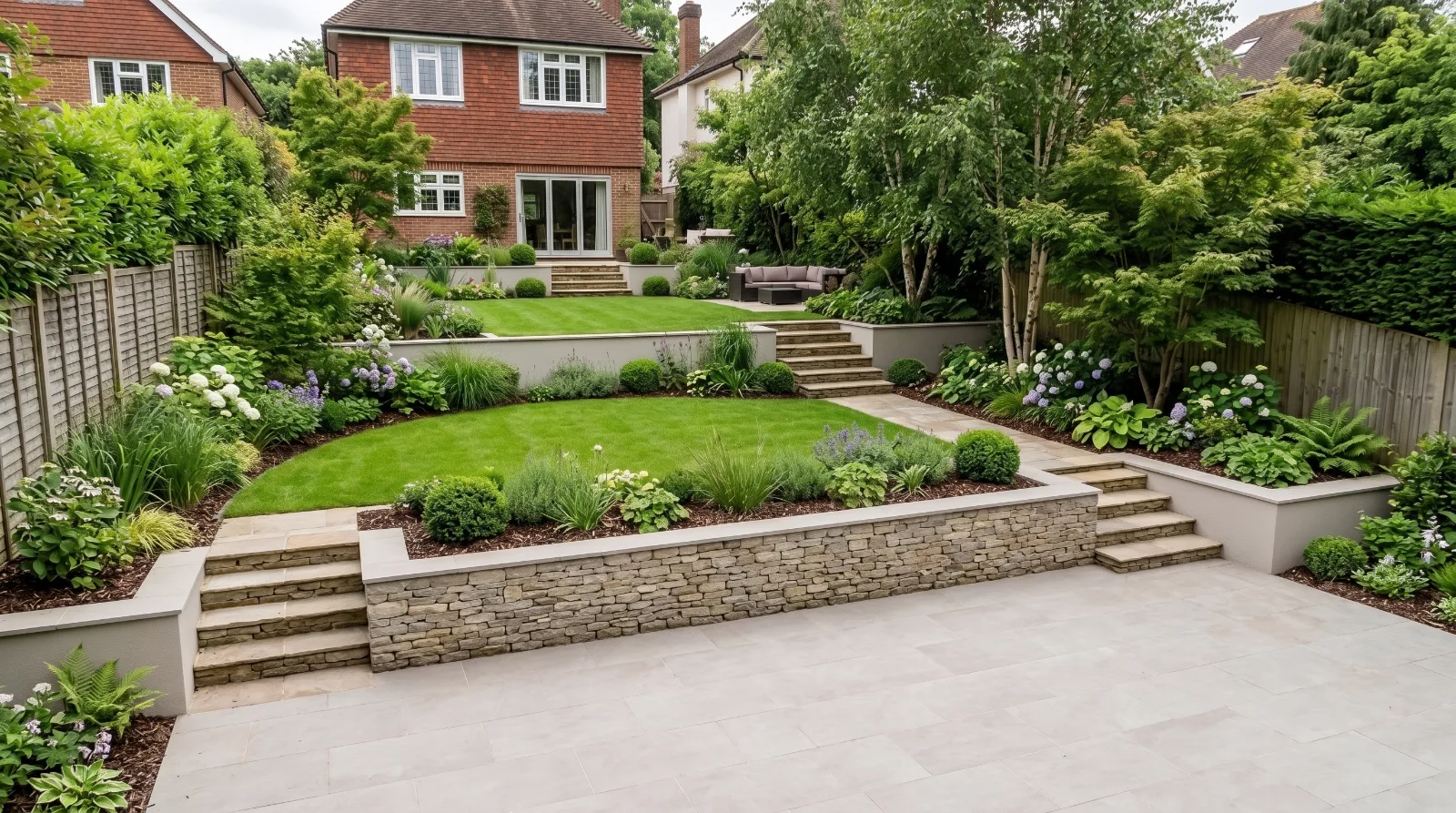
Terraced sections of a sloping garden
A retaining wall is different from an ordinary garden boundary wall because it has to deal with the pressure of the soil behind it.
Signs Your Garden May Need a Retaining Wall
There are several situations where a retaining wall could make a garden much more practical.
Garden situation | Could a retaining wall help? | Why? |
|---|---|---|
Steep or uneven garden | Yes | Creates more usable levels |
Patio needs to sit above the lawn | Often | Holds the higher ground in place |
Soil is falling or eroding | Potentially | Provides a supported edge |
You want terraced planting | Yes | Creates defined planting levels |
Garden has a small change in level | Not always | A planted slope may be simpler |
You want steps between levels | Often | Provides structure around the steps |
The key question is not simply, “Is my garden sloping?” but, “What do I want to achieve with the change in level?”
1. Your Garden Is Steep or Uneven
A retaining wall can be particularly useful when a garden has a significant slope.
Instead of trying to flatten the entire garden, you can create a series of terraces. One level might become a patio, another a lawn and another a planted area.
This approach can turn a difficult slope into several usable spaces.
Terracing does not necessarily mean creating perfectly flat sections throughout the entire garden. The number and size of the levels should be based on the gradient, available space and how you want to use the garden.
2. You Want to Create a Level Patio
A patio is much easier to use when it has a stable, practical level.
If your garden slopes significantly away from the house, simply laying paving over the existing gradient may not give you the space you actually want.
A retaining wall can help create a level terrace for:
Outdoor dining
Garden furniture
An outdoor kitchen
A seating area
A route towards a garden room
The wall itself can also become part of the design, particularly when its material complements the paving and surrounding planting.
3. You Want to Create Different Levels
Not every garden needs to be completely flat.
Creating two or three levels can often make a garden more interesting while giving each area a different purpose.
For example:
House → dining terrace → steps → lawn → planted terrace
This can make a long or sloping garden feel more structured and easier to use.
Retaining walls can also be combined with steps, pathways and planting so that the different levels feel like parts of one garden rather than separate sections.
4. Your Garden Is Losing Soil
Erosion can become a problem on sloping gardens, particularly where heavy rainfall or surface water moves soil downhill.
If soil is repeatedly washing away, the garden may need more than simply adding fresh topsoil or planting more grass.
A properly designed retaining structure can help create a stable boundary between different levels.
However, the wall is only one part of the solution. Drainage and the way water moves through the garden also need to be considered.
Why Is Drainage So Important?
One of the most important things to consider when building a retaining wall is what happens to the water behind it.
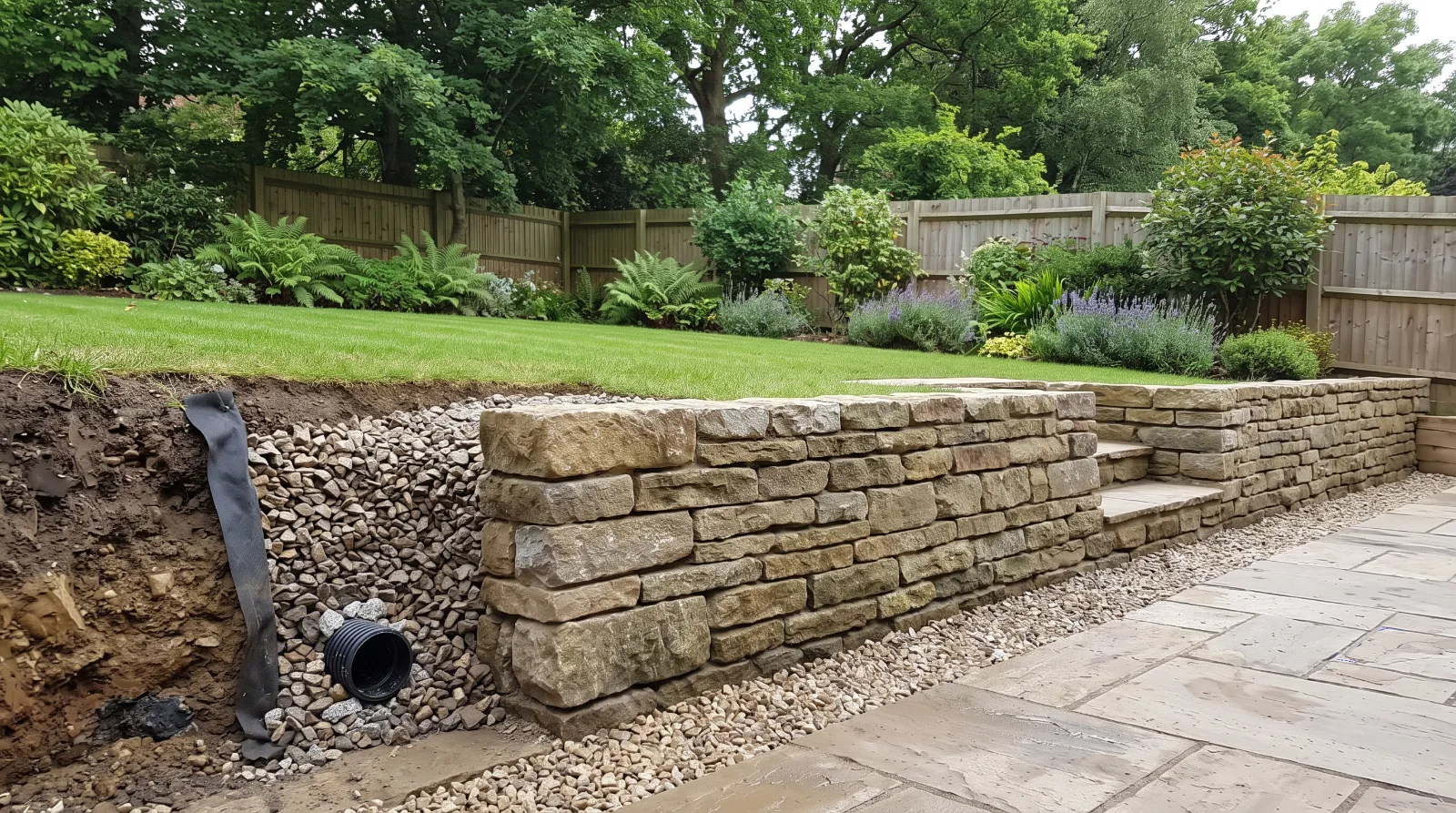
Soil can hold water after rainfall. If that water has nowhere to go, it can build up pressure against the back of the wall.
That is why drainage should be planned alongside the wall itself rather than added as an afterthought. Depending on the site, this can involve drainage pipes, free-draining material behind the wall, channels or other ways of safely directing excess water away.
A wall that looks good from the garden can still have serious problems if the structure and drainage behind it have not been properly considered.
What Can a Retaining Wall Be Made From?
The material you choose will affect both the appearance and the construction of the wall.
Material | Best suited to |
|---|---|
Natural stone | Traditional, natural-looking gardens |
Brick | Homes where you want to complement existing brickwork |
Rendered masonry | Clean, contemporary designs |
Timber sleepers | Informal or lower retaining areas |
Concrete or engineered systems | Projects where strength and structural performance are priorities |
There isn't one material that is automatically right for every garden.
The height of the wall, ground conditions, overall design and the amount of soil being retained all need to be considered before choosing a construction method.
Could You Use Planting Instead?
Sometimes.
A gentle slope may not need a retaining wall at all. A planted bank or graded transition can sometimes be incorporated into the garden without introducing a substantial structure.
This can create a softer, more natural appearance and may be particularly effective where you want a garden to feel informal.
However, once you start trying to create a significant level change, a structural retaining solution may become necessary.
The important thing is not to build a wall simply because the garden has a slope. Start with the result you want and work backwards from there.
How Retaining Walls Can Improve a Garden
A retaining wall does not have to look like a purely functional structure.
When incorporated into the wider garden design, it can help create:
More usable space
Turn an awkward slope into terraces for seating, lawns or planting.
Better garden zoning
Use different levels to create separate dining, relaxing or entertaining areas.
More interesting planting
Raised beds and terraces can create different planting opportunities.
Clearer routes through the garden
Steps and paths can be integrated into the changes in level.
A stronger overall design
Walls, paving and planting can work together to give the garden more structure.
Common Retaining Wall Mistakes
A retaining wall is not something where it pays to focus only on the finished appearance.
Some common problems include:
Ignoring drainage
Water pressure behind the wall can lead to movement or failure, so drainage needs to be considered as part of the construction.
Choosing a wall type based only on appearance
A material that looks good may not be appropriate for the height, ground conditions or loads involved.
Building without considering what is above the wall
A wall supporting a simple planted border is dealing with different loads from one supporting a patio, driveway or other substantial area.
Forgetting about access
Materials, excavated soil and construction equipment all need to get to the work area. Restricted access can have a major impact on how a retaining-wall project is planned.
Treating the wall as a separate feature
The best results come when the wall, steps, paving and planting are designed together.
Can a Retaining Wall Make a Small Garden Better?
It can.
A retaining wall can help a smaller garden make better use of its limited space by creating separate levels.
For example, a raised patio could provide an outdoor dining area while a lower section remains planted or becomes a small lawn.
The aim is not to add as many levels as possible. Too many changes can make a compact garden feel busy.
Instead, carefully chosen level changes can give the garden a clearer layout and make previously awkward areas useful.
Planning a Retaining Wall in Surrey
Every retaining-wall project is different.
A small change in level may need only a simple retaining solution, while a larger slope supporting a patio, driveway or other significant load may require more detailed structural design.
The surrounding drainage, soil, access and existing landscaping also need to be considered.
That is why it is worth looking at the whole garden rather than treating the retaining wall as an isolated feature.
A well-planned wall can create more usable space, improve the layout of a sloping garden and become an attractive part of the overall design.
If you're considering a retaining wall for your Surrey garden, Surrey Oak Landscapes can help you plan the levels, retaining structures, paving, steps, planting and drainage as part of one complete landscaping project.
About the author