Artificial Grass vs Real Grass for Surrey Gardens
Not sure whether to choose artificial grass or real turf? Compare maintenance, appearance, drainage and long-term considerations for Surrey gardens.
Choosing between artificial grass and real grass is not simply a matter of deciding which looks better. The right option depends on how you use your garden, how much maintenance you are prepared to do and what you want from your lawn throughout the year.
Artificial grass can provide a consistent, low-maintenance surface, while a real lawn offers the natural appearance, texture and character that many homeowners prefer.
For Surrey gardens, factors such as shade, drainage, garden usage and existing ground conditions can also influence which option makes the most sense.
Artificial Grass vs Real Grass at a Glance
Real Grass | Artificial Grass | |
|---|---|---|
Appearance | Natural and changes throughout the seasons | Consistent green appearance |
Maintenance | Regular mowing and lawn care | Occasional brushing and cleaning |
Upfront cost | Generally lower | Generally higher |
Wear and tear | Can become worn or muddy | Designed to handle regular use |
Shade | Can struggle in heavily shaded areas | Not dependent on sunlight for growth |
Watering | May need watering during dry periods | Does not need watering to stay green |
Repairs | Can be reseeded or returfed | Damaged sections may need replacing |
Wildlife | Provides a living habitat | Limited compared with a natural lawn |
Neither option is automatically right for every garden. The better choice depends on what matters most to you.
1. Maintenance: How Much Work Do You Want to Do?
The biggest difference for many homeowners is maintenance.
A real lawn needs regular attention to stay healthy. Depending on the season and condition of the grass, this can include mowing, feeding, watering, aerating, scarifying and repairing bare areas.
Artificial grass needs considerably less routine maintenance, but it is not completely maintenance-free. Leaves and debris still need removing, while brushing can help keep the blades upright in areas that receive regular foot traffic.
If you enjoy looking after a lawn, real grass can be rewarding. If you want to spend less time maintaining the garden, artificial grass can be a practical alternative.
2. Which Looks More Natural?
Real grass is difficult to beat for a completely natural appearance.
It has seasonal variation, different shades of green and the texture you expect from a living lawn. It can also recover and change over time as the garden develops.
Artificial grass has come a long way in appearance and can create a neat, consistent finish throughout the year. However, the quality of the product and the standard of installation can make a significant difference to how natural it looks.
For some homeowners, the consistency of artificial grass is exactly what they want. For others, the changing appearance of a real lawn is part of the appeal.
3. Which Is Better for Children and Pets?
Both options can work well for busy family gardens, but they have different advantages.
Real grass provides a soft, natural surface for children to play on, although heavy use can lead to worn or muddy areas, particularly when the ground is wet.
Artificial grass can handle regular foot traffic without developing the same muddy patches and can be easier to keep looking tidy.
For households with dogs, the surrounding drainage and the quality of the installation are particularly important. Artificial grass still needs to be properly cleaned, and the base beneath it needs to be designed to deal with water effectively.
The important thing is to think about how the lawn will actually be used rather than choosing based on appearance alone.
4. What About Shade?
Shade can be a challenge for a natural lawn.
Grass needs suitable growing conditions, and heavily shaded areas can become thin, patchy or prone to moss. This can be particularly frustrating where trees, walls or neighbouring buildings block sunlight for much of the day.
Artificial grass does not depend on sunlight to grow, which can make it an option for areas where maintaining healthy natural grass is difficult.
However, installing artificial grass purely because an area is shaded does not mean the underlying drainage and ground conditions can be ignored.
5. Which Handles Wet Weather Better?
This depends heavily on the installation.
A natural lawn can become muddy when the soil is saturated, particularly in areas with poor drainage or heavy foot traffic.
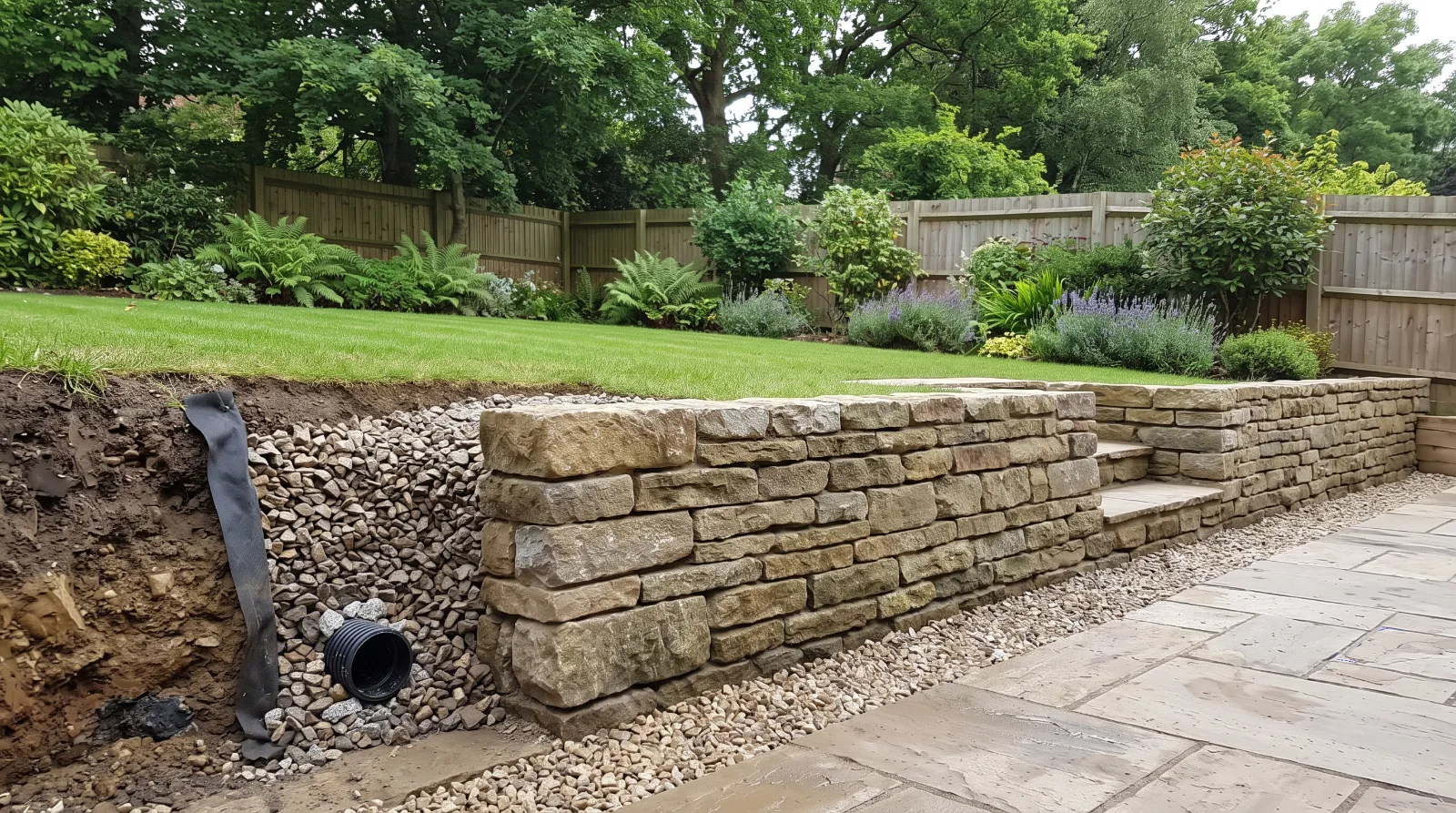
Artificial grass can provide a cleaner surface during wet periods, but the water still needs somewhere to go. A properly prepared base and suitable drainage are essential. Simply laying artificial grass over poorly draining ground will not automatically solve a waterlogging problem.
This is particularly relevant when landscaping Surrey gardens where existing soil, levels and drainage can vary from property to property.
6. Which Is More Environmentally Friendly?
This is one area where the answer is not quite as simple as choosing one option for every garden.
Real grass is a living surface and can support soil life and small forms of wildlife. It also changes naturally with the seasons and can be incorporated into a wider planting scheme.
Artificial grass does not require mowing, feeding or regular watering to remain green, but it is a manufactured material and eventually needs replacing.
If wildlife and a natural garden are priorities, real grass may fit better. If reducing lawn maintenance and water use is more important to you, artificial grass may be worth considering.
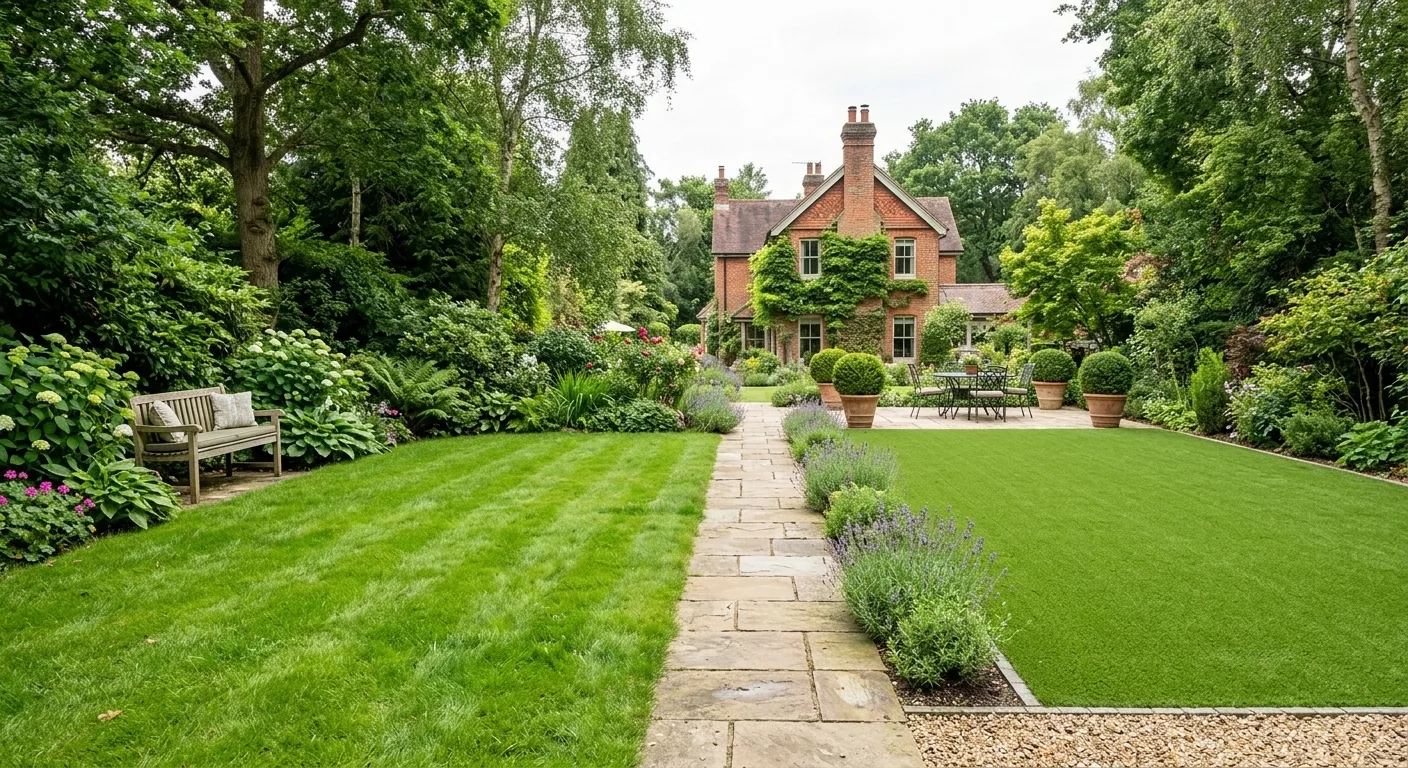
You can also combine the two. There is no rule that says every part of a garden has to use the same surface.
7. What Does Each Option Cost?
Real grass is generally less expensive to install initially, particularly when using turf over a straightforward, well-prepared area.
Artificial grass tends to have a higher initial installation cost because a proper installation can involve excavation, a suitable sub-base, preparation, edging and the artificial grass itself.
However, the ongoing costs and time commitment are different.
With real grass, you need to allow for regular lawn care and occasional repairs or reseeding. Artificial grass requires much less routine maintenance, although it can eventually need repairs or replacement.
Rather than looking only at the initial price, consider how much time and maintenance you are willing to put into the lawn over the years.
8. How Long Will Each Last?
A well-maintained natural lawn can remain part of a garden for many years, but its appearance will change depending on weather, wear, soil conditions and how it is maintained.
Artificial grass is designed as a long-term landscaping surface, but it is not permanent. Heavy use, weather and general wear will eventually affect it, and replacement may be necessary.
The quality of the product, preparation of the ground and standard of installation can all affect how well an artificial lawn performs over time.
So, Which Should You Choose?
There is no single answer for every garden.
Choose real grass if... | Consider artificial grass if... |
|---|---|
You prefer a completely natural lawn | You want a consistently green surface |
You enjoy gardening and lawn care | You want much less routine maintenance |
Wildlife is important to your garden | The lawn receives heavy regular use |
You have suitable growing conditions | Your garden has areas where real grass struggles |
You prefer a lower initial installation cost | You are prepared for a higher upfront installation cost |
For many homeowners, the decision comes down to how they want to use the garden.
A family that spends a lot of time outside may prioritize durability and ease of maintenance. Someone who enjoys gardening may prefer the natural character of a real lawn. A heavily shaded or difficult-to-maintain area may suit artificial grass, while a sunny open garden might be ideal for natural turf.
Can You Have Both?
Absolutely.
You do not necessarily need to choose one option for the entire garden.
For example, a real lawn could be used in a sunny central area, while artificial grass could be considered for a smaller section that receives heavy foot traffic or struggles to grow.
The two surfaces can also be separated with planting, paving or other landscaping features so that they feel like deliberate parts of the same garden.
Getting the Ground Ready Matters
Whichever option you choose, the preparation underneath it can make a major difference.
For real turf, the ground needs to be properly prepared, levelled and suitable for establishing healthy grass.
For artificial grass, excavation, sub-base preparation, drainage, edging and installation all need to be considered.
A good-looking lawn can quickly become disappointing if the ground beneath it has not been prepared properly.
Choosing the Right Lawn for Your Surrey Garden
Artificial grass and real grass can both work well, but the best choice depends on your particular garden rather than a simple list of advantages and disadvantages.
Think about the amount of sunlight, how the space is used, drainage, maintenance, budget and the overall look you want to achieve.
If you are still unsure, looking at the garden as a whole can help. The lawn should work alongside your patios, planting, paths and other landscaping rather than being treated as a separate decision.
Considering new turf or artificial grass for your Surrey garden? Get in touch with Surrey Oak Landscapes for a free, no-obligation quote and discuss the right option for your space.
About the author